

Alginate Oligosaccharide Direct from China’s Original Manufacturer for Quality Assurance
2026-06-22
When it comes to alginate oligosaccharide, purity and reliability aren’t just preferences—they’re prerequisites. Yet, the market is flooded with suppliers claiming top quality, leaving you to wonder who to trust. Enter MacroAlga, China’s original manufacturer, where quality isn’t an afterthought but the foundation. In this article, we peel back the layers on why direct sourcing from the origin matters and how MacroAlga is redefining consistency for researchers, formulators, and innovators alike.
From the Source: The Original Alginate Oligosaccharide Manufacturer
Securing alginate oligosaccharides directly from the original manufacturer eliminates the layers of intermediaries that often dilute product knowledge and consistency. We craft every batch from start to finish, overseeing the extraction from carefully selected seaweed strains through to the precise enzymatic breakdown that yields short-chain oligosaccharides. This vertical integration means the technical team who designed the process is the same team monitoring quality, not a disconnected third party.
That hands-on continuity translates into a product with less variability and clearer traceability. When research teams or formulators reach out with questions about solubility, molecular weight distribution, or biological activity, the answers come from the people who ran the actual production line. No hedging, no delays while someone checks with a supplier upstream. It’s a straightforward channel that often shortens development cycles for partners working on everything from agricultural biostimulants to pharmaceutical excipients.
Being the original manufacturer also means we’ve accumulated decades of niche expertise that off-the-shelf distributors simply cannot replicate. We’ve witnessed how minor adjustments in the hydrolysis conditions tailor the oligosaccharide profile for specific applications, and we routinely collaborate on custom specifications without the usual markup or lead time. For companies tired of navigating vague certificates of analysis and opaque supply chains, that direct link offers a rare combination of technical depth and logistical simplicity.
Purity That Starts at the Production Line
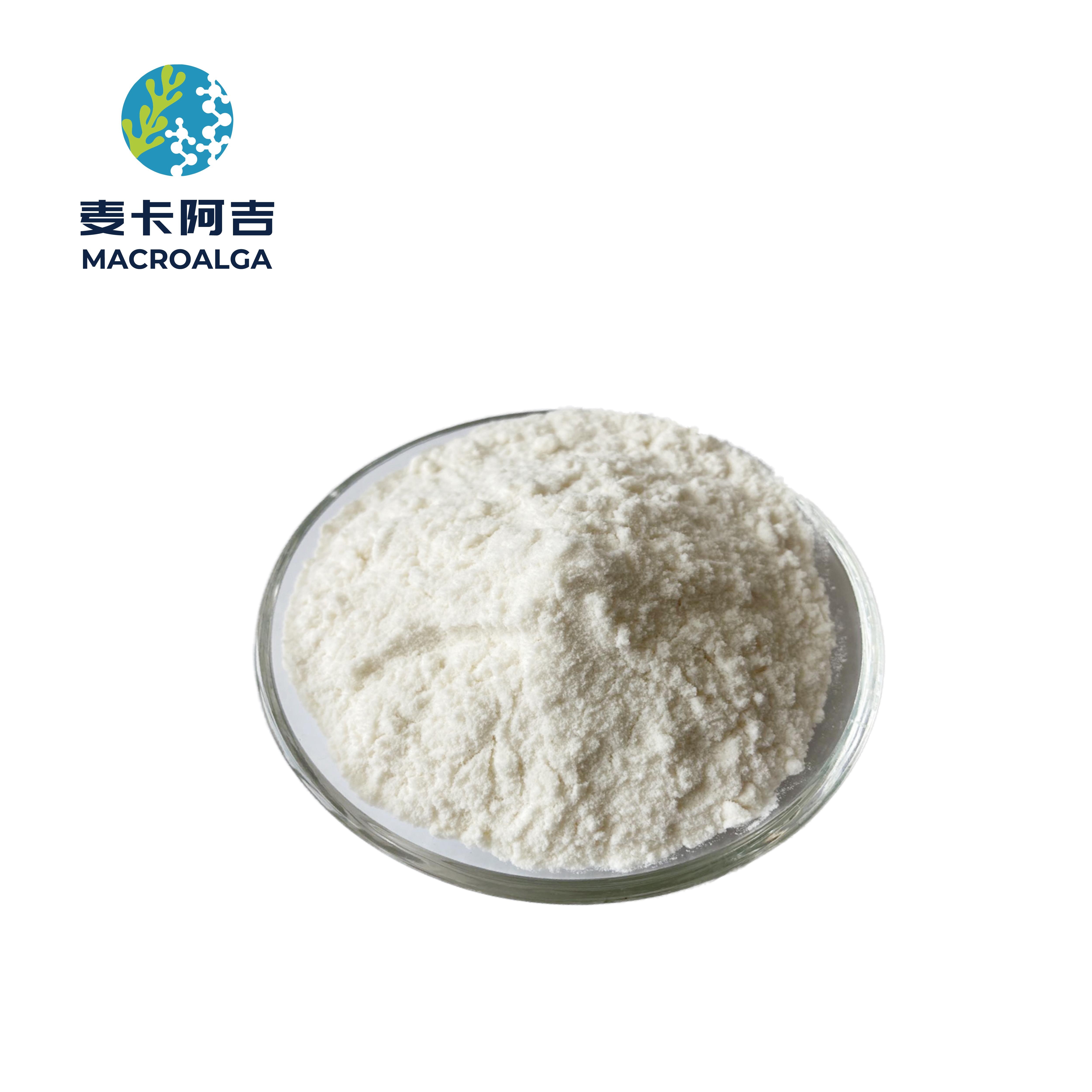
True cleanliness isn't added at the end—it's built in from the very first step. On our production line, every surface, every tool, and every process is designed to prevent contamination before it can happen. We've replaced reactive quality checks with proactive design, so purity becomes a natural outcome of how we work, not an afterthought.
Raw materials enter a closed system where air, water, and handling are meticulously filtered and monitored. Our team treats the production environment like a laboratory, not a factory floor—gowning protocols, stainless steel contact points, and real-time particle counting keep the space unforgiving toward impurities. This means the product you receive is as untouched by outside elements as the moment it was synthesized.
We don't just test batches; we test the process itself daily. Swab samples from equipment, air quality readings, and staff hygiene audits form a living record of control. When a client walks our line, they often remark it feels less like a manufacturing plant and more like a clean continuum, where purity isn't a spec—it's the baseline.
Factory-Direct Supply, No Middlemen
We cut out the middlemen entirely, passing the savings directly to you. When you buy from us, you’re dealing straight with the source—no extra markups, no hidden fees. Every product comes right off the manufacturing line and heads to your doorstep, keeping quality high and prices low.
This direct link means faster lead times and clearer communication. You tell us what you need, and our team on the factory floor gets it done without any loop of go-betweens. It’s a simple, no-nonsense approach that gives you more control over your orders and a better deal overall.
Precision Processing for Consistent Molecular Profiles
Achieving consistent molecular profiles hinges on meticulous precision processing, where every step from sample collection to data normalization is tightly controlled. Variations in sample handling, reagent lot numbers, or instrument calibration can introduce subtle but impactful biases that obscure true biological signals. By standardizing protocols and employing rigorous quality control checkpoints, laboratories can minimize technical noise and enhance inter-experimental reproducibility, ensuring that each profile reflects genuine molecular characteristics rather than procedural artifacts.
The core of precision processing lies in the integration of high-resolution analytical techniques with intelligent data refinement. For instance, mass spectrometry runs are paired with real-time drift corrections, while next-generation sequencing employs error-suppression algorithms to filter out low-fidelity reads. These computational steps, often individually tailored to the sample type, strip away background interference and amplify the signal-to-noise ratio without discarding meaningful low-abundance molecules. The result is a harmonized dataset where even subtle differences between conditions become statistically discernible.
Beyond instrumentation, precision processing demands a holistic view of the workflow, accounting for factors like sample storage duration and freeze-thaw cycles. Automated liquid handling systems reduce human variability, and in-line analytics provide immediate feedback on process health. When these elements coalesce, the resulting molecular profiles are not only consistent across batches but also robustly comparable over time, empowering researchers to draw conclusions with greater confidence and laying a reliable foundation for downstream translational studies.
Beyond Standard: Quality Built Into Every Batch
Real quality isn’t about following a checklist—it’s an uncompromising mindset that shapes every batch we produce. We don’t settle for meeting baseline specifications because true reliability comes from going beyond them. Our process is engineered to catch subtle inconsistencies that others might overlook, turning routine production into a continuous pursuit of excellence. From raw material sourcing to the final seal, each step is governed by a philosophy that questions the status quo and raises the bar for what “standard” really means.
Consistency doesn’t happen by accident, and it certainly doesn’t stem from automated repetition alone. It’s the result of blending meticulous human oversight with adaptive, smart manufacturing techniques. Every batch is examined not just for conformity, but for character—texture, tone, and performance nuances that data sheets rarely reveal. This hands-on vigilance ensures that what leaves our facility isn’t just accepted by criteria, but genuinely worthy of the trust our partners place in it.
We’ve moved past the idea that quality is an inspection stage tacked onto the end of production. Instead, it’s woven directly into the fabric of how we work—through real-time adjustments, transparent traceability, and a refusal to take shortcuts. When you open one of our products, you’re not just getting a item that passed a test; you’re experiencing the cumulative effect of countless small decisions made in favor of durability, purity, and authentic craftsmanship. That’s the difference between ordinary and enduring.
Real-World Performance Backed by Manufacturer Expertise
When you rely on equipment that has to perform day in and day out, there is no substitute for real-world testing conducted by teams who actually design and build the machinery. Our engineers don’t just simulate performance in a lab—they take prototypes into the toughest operating conditions imaginable, from scorching deserts to frozen tundras, measuring every stress point and failure mode until the product outperforms even our own ambitious targets.
That depth of hands-on expertise means we can anticipate challenges that never show up on a standard datasheet. By combining rigorous field data with decades of manufacturing know-how, we refine materials, tolerances, and control systems in ways that a purely theoretical approach would miss. The result is equipment that doesn’t just meet nominal specifications, but continues to deliver consistent output when heat, dust, vibration, and operator variability push it to the edge.
Ultimately, our customers benefit from solutions that have already been battle-tested before they ever reach a production line. The knowledge accumulated across thousands of installations feeds directly into each new generation, giving you not just a machine, but a proven platform backed by engineers who understand exactly why it works—and how to keep it working under real pressure.
FAQ
Alginate oligosaccharide is a low molecular weight derivative of alginate, a natural polysaccharide found in brown seaweed. It’s widely used in agriculture as a plant growth promoter and stress reliever, in healthcare for its anti-inflammatory and immune-modulating properties, and even in food and cosmetics for its gelling and stabilizing effects.
Going straight to the original manufacturer cuts out middlemen, so you get better pricing and direct technical support. It also gives you full traceability and a clearer line of communication if you need custom specifications or consistent bulk supply.
We maintain strict oversight from raw seaweed sourcing to final purification, backed by in-house testing for purity, molecular weight distribution, and bioactivity. Every batch comes with a detailed certificate of analysis, and our facility follows ISO 9001 standards to keep things consistent.
We use a gentle enzymatic degradation method rather than harsh chemical hydrolysis. This preserves more of the active structures and results in a cleaner, more bioavailable product. Our process also minimizes byproducts, so you’re getting something closer to what nature intended.
Our standard minimum order is flexible depending on the grade, but we’re happy to send small samples so you can run your own trials first. Just let us know your intended application, and we’ll match you with the right type.
We pack to shield against moisture and light, using food-grade or pharma-grade materials based on your needs. Shipments go out through reliable freight partners, and we handle all necessary documentation so you don’t have to worry about customs hold-ups.
Conclusion
Sourcing alginate oligosaccharide directly from China's original manufacturer doesn't just mean getting a product—it means tapping into a lineage of production expertise that most suppliers simply can't replicate. With no middlemen diluting accountability, each shipment comes straight from the facility where it was developed, refined, and scaled. The result is a chain of custody so short that every quality parameter can be traced back to the moment raw seaweed is processed. Purity isn't tested in as an afterthought; it's engineered into the very first hydrolysis step and safeguarded through every subsequent stage. When you work with the source, variability is not offloaded onto a distributor's quality control—it's actively prevented by the people who designed the line. This operational closeness gives you something rare in the supply landscape: genuine confidence that what you ordered is exactly what you receive, batch after batch.
Beyond basic compliance, the manufacturer's approach to production sets a different benchmark. Precision processing isn't a marketing term here; it's the discipline of narrowing molecular weight distribution so your formulations behave predictably in real-world applications—whether you're stabilizing a beverage or designing a controlled-release system. Manufacturer expertise becomes a practical asset when you need consistent low-viscosity behavior or specific oligomer profiles that a generic supplier cannot guarantee. Every batch carries the fingerprint of a facility that has moved beyond standard specifications and built quality into its culture, not just its paperwork. Field feedback flows directly back to the production floor, so the product evolves in lockstep with actual performance data. That loop, short and unfiltered, is the true advantage of going factory-direct to the original manufacturer for alginate oligosaccharide quality assurance.
Contact Us
Contact Person: Kevin ZHANG
Email: [email protected]
Tel/WhatsApp: 8613505438449
Website: https://www.macroalga.com/