

Best Medium Voltage Switchgear for Modern Power Systems
2026-08-25
When a power system hiccups, medium voltage switchgear is rarely the first thing anyone blames—until it fails. Modern grids, data centers, and industrial plants demand switchgear that does more than just interrupt fault currents. They need compact designs, smarter protection, and the kind of arc-resistant construction that keeps people safe without sacrificing reliability. That’s where Deepwill enters the conversation. In this guide, we’ll unpack what separates genuinely future-ready medium voltage switchgear from the legacy boxes still lurking in switch rooms, and why Deepwill’s approach is turning heads among engineers who’ve seen too many avoidable outages.
Rethinking Arc Flash Protection in Medium Voltage Design
Traditional approaches to medium voltage arc flash protection often lean heavily on personal protective equipment and post-incident mitigation. But a growing number of engineers are stepping back and noticing that the real opportunity lies upstream—in designing systems that reduce the available fault energy before it ever reaches a worker. A close review of incident reports shows that even well-rated gear can produce dangerous conditions when fault clearing times drift or when maintenance modes are overlooked.
One practical shift involves moving away from blanket assumptions about fault current. Instead of treating arc flash as a static label on a piece of switchgear, designers can use selective coordination, current-limiting fuses, and fast-acting protection relays to actively shrink both the magnitude and duration of an arc event. Zone-selective interlocking, for example, lets upstream breakers communicate with downstream devices, tripping the closest upstream breaker without waiting on standard time delays. This kind of thinking turns protection from a compliance exercise into an engineering strategy.
Rethinking arc flash also means questioning the default reliance on standardized tables. Facilities with unusual configurations, aging cables, or frequent switching operations often fall outside generic assumptions. A more useful approach starts with a realistic risk assessment that accounts for how the equipment is actually operated and maintained. When you pair that operational reality with smarter protection settings, the result is not just a safer arc flash label—it's a design that fundamentally lowers the hazard instead of simply documenting it.
Compact Switchgear Layouts That Keep Maintenance Simple
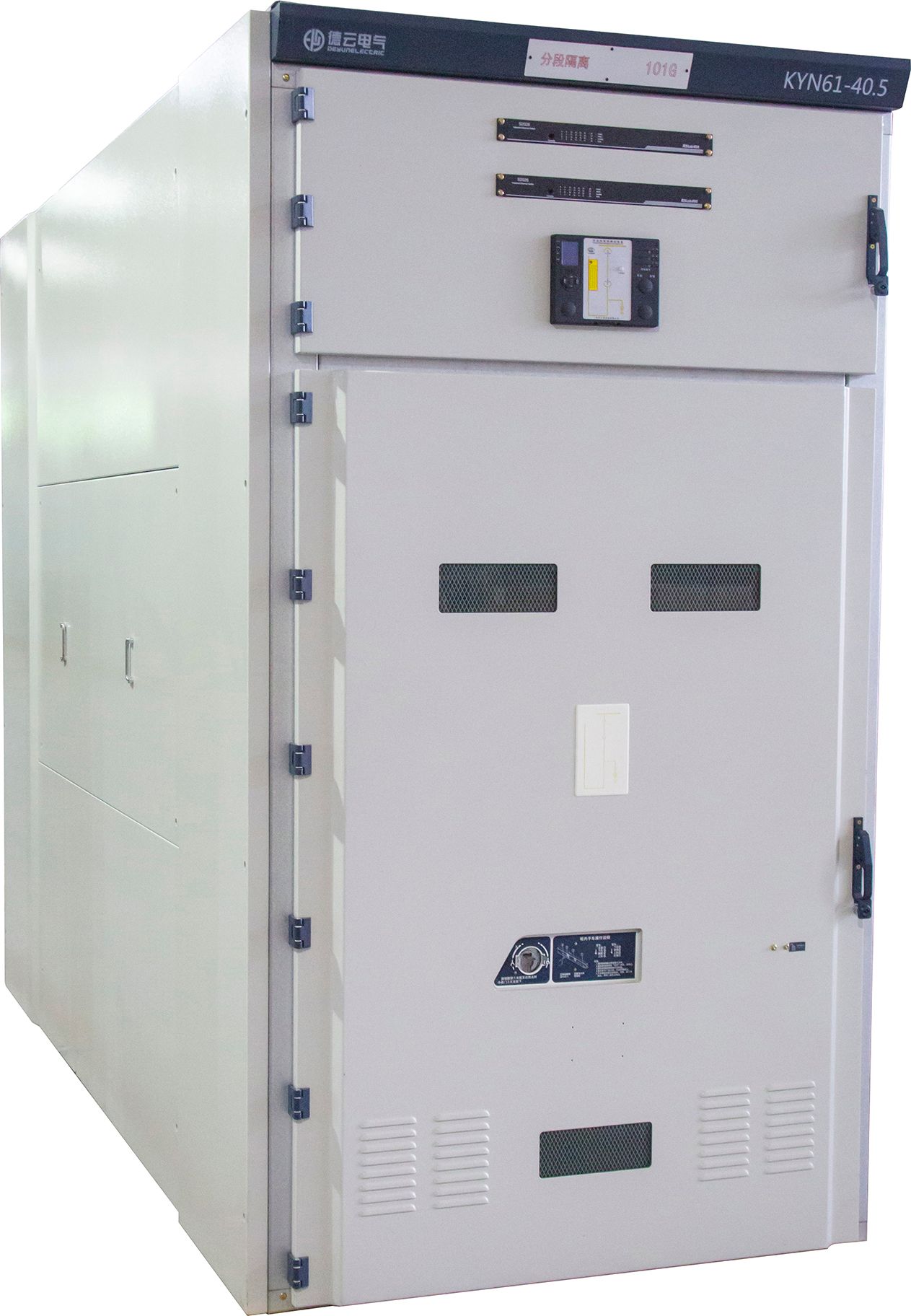
The real advantage of a compact switchgear layout shows up when you need to swap a breaker or check terminations without clearing half the room. By pulling all operator interfaces to the front and keeping cable entry areas at the rear but still accessible through bolted panels, you avoid having to crawl behind the gear or remove adjacent sections. That front-only working clearance often trims a meter or more from the overall footprint, which matters in retrofit plants where every square foot is already spoken for.
Another detail that makes maintenance less painful is the use of horizontal bus compartments isolated from breaker cells. Even in a reduced footprint, if the bus is segregated with its own venting and inspection window, a technician can verify connections without entering the breaker compartment. Manufacturers achieve this by stacking the current transformers and earth switches vertically rather than spreading them sideways, so the lineup stays narrow while the test points and padlock provisions remain easy to reach from a standing position.
The best compact layouts also treat labeling and cable routing as part of the design, not as an afterthought. Instead of forcing cables through a single congested trench, they provide short, clearly marked riser sections at each panel. This means maintenance crews spend less time tracing circuits and more time doing the actual inspection. In practice, that is what “simple maintenance” really means: fewer obstacles, no awkward kneeling or reaching behind live parts, and a layout that respects the person who has to work on it long after installation.
The Rise of Solid Insulation as SF6 Alternatives Mature
For decades, sulfur hexafluoride dominated medium-voltage switchgear thanks to its outstanding dielectric strength and arc-quenching ability. But as carbon pricing and tighter environmental regulations squeeze SF6 out of favor, solid insulation has moved from pilot projects into everyday use. Encapsulating live parts in epoxy resin or silicone rubber eliminates gas entirely, cutting both emissions and equipment footprint.
The maturing of solid insulation is not just a simple substitution. Manufacturers have refined casting techniques and embedded sensors to monitor partial discharge, easing earlier worries about hidden defects. Utilities that once hesitated now see solid-insulated switchgear as easier to maintain, safer in tight spaces, and free from gas handling, leak checks, and reporting paperwork.
That momentum is strongest in distribution networks, where compactness and environmental compliance matter most. Solid insulation removes the risk of slow leaks and the logistical burden of gas recycling. As standards catch up and field data accumulate, the technology is no longer an experimental alternative but a mainstream option for new builds and retrofits alike.
Digital Sensors and the End of Guesswork Maintenance
For decades, maintenance teams relied on schedules, experience, and a fair amount of intuition. A machine would run until something sounded off or a calendar reminder demanded a check. That approach worked well enough when downtime was an inconvenience, but in modern facilities, it is a costly gamble. Digital sensors have flipped the script entirely. Instead of waiting for a failure or servicing equipment on a fixed interval, these small devices constantly monitor vibration, temperature, pressure, and current. The data streams in real time, painting a clear picture of how each asset is actually behaving right now, not how a manual assumes it should behave.
What makes digital sensors so transformative is their ability to detect the early whispers of wear. A slight imbalance in a rotating shaft, a subtle rise in bearing temperature, a tiny drop in lubrication pressure—these are signals that no human inspection can catch early enough to matter. Sensors pick them up immediately, and with the help of edge computing or cloud analysis, they turn raw readings into actionable alerts. Maintenance stops being a guessing game. You no longer replace parts because a spreadsheet says so; you replace them because the data says a failure is days or weeks away. That precision means fewer unnecessary interventions and far fewer surprise breakdowns.
The end of guesswork also changes how teams spend their time. Instead of walking routes with a clipboard, technicians focus on the specific assets that genuinely need attention. Parts are ordered only when a sensor trend crosses a known threshold, not as a precautionary stockpiling measure. The result is a leaner, more confident operation where uptime is protected by evidence rather than hope. Digital sensors do not eliminate the need for skilled humans—they give those humans better eyes and ears, so every decision is grounded in the true condition of the machine.
Protection Schemes for a Grid Full of Renewables
Conventional protection logic was built around synchronous generators that push out large, sustained fault currents. Inverter-based resources flip that assumption on its head. Their fault contribution is often capped just above rated current, and the control system can reshape the waveform within a few milliseconds. That means an overcurrent relay set for the old short-circuit levels may simply watch a fault unfold without ever seeing a pick-up. Protection engineers now have to think less about magnitude and more about signature—phase jumps, sequence components, and rate-of-change patterns that reveal a fault even when the current stays modest.
A practical fix is to blend classical distance or differential schemes with adaptive settings that follow the live topology and available fault current. On a distribution feeder with high solar penetration, the reach of a distance element can shrink during low irradiance or when inverters ride through a voltage dip. Communication-assisted schemes help here, but they bring their own failure modes in a grid where the control room no longer has a single source of truth. Some utilities are experimenting with transient-based protection that uses the traveling wave generated at the fault location, which does not depend on a large steady-state fault current. Pairing this with negative-sequence directional elements gives a much clearer picture when renewables dominate the fault response.
There is also a growing push to make the inverter part of the protection system rather than an obstacle to it. Modern grid codes already require fault ride-through, but a few pilot projects are testing inverters that inject a short, controlled burst of negative-sequence current during faults. This creates a detectable signature for relays without endangering the power electronics. The hard part is coordinating these bursts across many small inverters so they do not cancel each other out or confuse legacy protection. Hardware-in-the-loop testing is becoming the default way to validate such schemes, because no single steady-state simulation captures the interaction between converter controls and protection algorithms.
What Harsh Environments Really Demand from Switchgear
Switchgear in harsh environments rarely fails because a single rating was exceeded. It fails when heat, moisture, and airborne contaminants combine in ways that the original design never anticipated. For example, thermal cycling in a coastal substation draws salt-laden air into the enclosure as it cools overnight. Repeated cycles leave conductive deposits on insulating surfaces, and that thin film is enough to trigger partial discharge long before any visible corrosion appears. The real demand is not for a higher temperature rating on paper; it is for a design that manages the microclimate inside the enclosure and prevents condensation from becoming a continuous electrical path.
Another often-overlooked requirement is tolerance for mechanical abuse. In mining or quarrying sites, vibration from crushers and haul roads does not need to shake the panel apart to cause problems. It loosens busbar joints, wears through cable entry seals, and causes control wiring to chafe against sharp edges. Once a joint loses its specified torque, resistance heating accelerates oxidation, and the connection degrades quickly. Equipment intended for these conditions must be built with locking fasteners, strain relief for every conductor, and busbar supports that do not rely on the enclosure itself for rigidity.
Corrosion resistance is usually treated as a materials selection exercise, but field experience shows that coating thickness and surface preparation matter more than alloy choice in most installations. A switchgear enclosure with a substandard paint system will allow rust to start at cut edges, fasteners, and lifting points, even if the structural steel is otherwise suitable. In chemical plants or wastewater facilities, hydrogen sulfide and chlorine compounds attack exposed copper and silver plating; switching contacts can develop high-resistance films after just a few weeks without operation. The practical answer is a combination of sealed compartments, controlled ventilation, and maintenance procedures that exercise moving parts on a schedule tied to the specific contaminant load, not to a generic calendar.
FAQ
Medium voltage typically covers 1 kV up to 52 kV, but most distribution networks operate between 11 kV and 33 kV. The range matters because modern grids face bidirectional power flows, distributed generation, and highly variable loads. Equipment in this band must handle frequent switching, high fault currents, and still fit into compact substations.
Vacuum interruption has become the default choice for new installations because it requires no gas refilling and stays maintenance-free for decades. SF6 still works but is being phased out in many regions due to its global warming potential. If you need an eco-friendly option, look for vacuum breakers combined with dry air or solid insulation.
Instead of scheduled maintenance, you can now track breaker contact wear, busbar temperature, and partial discharge in real time. These sensors feed data into SCADA or a cloud-based dashboard, allowing operators to spot a developing problem weeks before it causes an outage. That shifts the operating model from reactive repair to predictive intervention.
Arc flash events release enormous energy and can injure personnel or destroy equipment. Modern switchgear should include arc detection via optical sensors, fast-acting earthing switches, and designs tested to IEC 62271-200 for internal arc withstand. A high arc-resistant rating often justifies the extra cost in critical facilities.
No, not without major changes. Indoor panels usually rely on controlled humidity and temperature, while outdoor units need sealed enclosures, anti-condensation heaters, and corrosion-resistant coatings. You can buy dual-rated designs, but they cost more and are heavier. The simplest approach is to specify the installation environment from the start.
Modular switchgear lets you add feeder units as demand grows instead of buying a larger lineup upfront. Withdrawable breaker modules also mean you can replace a single component without taking the whole busbar out of service. Over a 20-year life, that flexibility often saves more money than a cheaper initial purchase price.
Withdrawable designs let you roll out a breaker for inspection or replacement in minutes, but they add mechanical interlocks and sliding contacts that can wear. Fixed designs have fewer moving parts but require a full shutdown for major maintenance. The most reliable modern systems often use withdrawable modules with simplified racking mechanisms and position sensors.
Check the type test reports for high-frequency switching endurance, short-circuit breaking capacity, and compatibility with inverter-based sources. Renewable plants often impose rapid load changes, harmonic distortion, and frequent reclosure operations. Field experience in solar or wind farms is a strong indicator that the gear can handle these stresses without nuisance trips.
Conclusion
The push for better medium voltage switchgear is less about adding features and more about removing hidden failure points. Arc flash protection, for instance, has moved from oversized blast rooms toward smarter relay coordination and venting paths that keep incident energy low without eating floor space. Compact layouts now put cable terminations and breaker trucks within easy reach, so a maintenance crew can isolate and inspect gear without crawling into tight corners. That simple ergonomic shift reduces both downtime and the temptation to skip checks.
On the insulation front, solid dielectric designs have become a quiet workhorse as utilities and industrial plants phase down SF6. They avoid gas handling, leak monitoring, and regulatory paperwork while still holding up under voltage stress. At the same time, embedded digital sensors—tracking temperature, humidity, partial discharge, and contact wear—turn maintenance from a calendar-based chore into a condition-based one. Operators see early warnings instead of reacting to failures, which is exactly what a grid full of intermittent renewables demands.
Protection schemes now need to handle bidirectional fault currents from distributed solar and storage, not just the old one-way flow from a substation. That means faster, more selective relaying and communication between breakers. Harsh environments raise the bar further: coastal salt, desert dust, tropical humidity, or arctic cold all punish weak enclosures. The best switchgear answers with sealed bus joints, corrosion-resistant coatings, and thermal management that doesn't rely on fragile fans. None of this works in isolation—a truly modern medium voltage lineup pairs arc safety, compact service access, solid insulation, sensor feedback, renewable-ready protection, and rugged mechanical design into one coherent package that field crews can actually trust.
Contact Us
Contact Person: Julion
Email: [email protected]
Tel/WhatsApp: 8617351370631
Website: https://www.deyunelectric.com