

Boron Carbide Powder Company Qualities to Evaluate Before You Buy
2026-10-28
Buying boron carbide powder on spec alone is a gamble. The real test of a supplier shows up weeks later—when particle size drifts, purity dips, or a technical question goes unanswered. That's why evaluating company-specific qualities before you buy matters more than the datasheet promises. HUAYI TECH has seen too many buyers learn this the hard way, so we've put together the key checks to run before signing off.
Separating Real Purity from Marketing Numbers
Walk down any supplement aisle and you'll see the word "pure" slapped on nearly every label, often accompanied by a percentage that seems more like a marketing department's wish than a lab result. The truth is, purity claims without third-party verification are about as reliable as a restaurant's self-awarded five-star review. To separate real purity from marketing numbers, look past the front of the bottle and ask a simple question: who actually tested this batch, and can I see the report?
Real purity means the absence of heavy metals, residual solvents, pesticides, and microbial contaminants—not just a high concentration of the main ingredient. Many brands cherry-pick a single favorable analysis while ignoring dozens of other potential impurities. A genuinely pure product will have a certificate of analysis from an independent, accredited lab, and that certificate should match the exact lot number on your purchase. If a company hesitates to share those documents or hides behind "proprietary blends," consider that a red flag, not a feature.
Numbers can be bent in sneaky ways too. A label might boast "99% pure" but fail to mention that the remaining 1% includes compounds you'd never knowingly consume. Or the purity percentage might refer to a raw ingredient before processing, not the final product in your hand. The only marketing number that matters is the one backed by transparent, verifiable testing—everything else is just noise dressed up as science.
Why Particle Size Consistency Shapes Your End Product
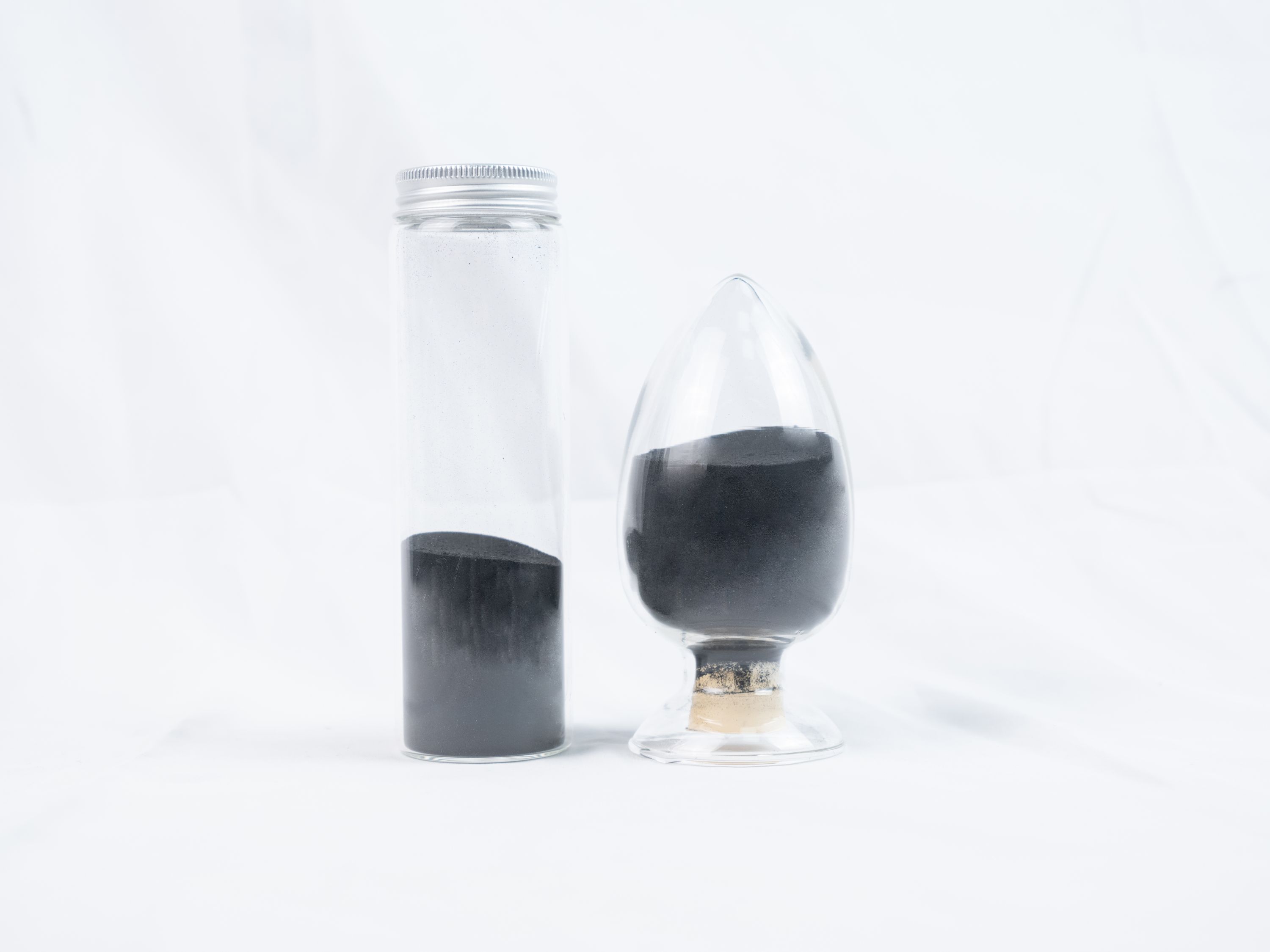
In powder handling, the spread of particle diameters often matters more than the average size. A material with a tight size distribution flows predictably, packs uniformly, and responds the same way to every processing step. When that distribution drifts, even slightly, the downstream effects can range from subtle texture changes in a food product to outright failure in a pharmaceutical tablet press.
Consider two batches of the same pigment: one milled to a narrow band between five and seven microns, the other showing a tail of fines below one micron and a few coarse grains above twenty. The first disperses cleanly in a resin, covering consistently with no specks or streaks. The second clogs nozzles, creates uneven gloss, and forces operators to slow the line just to keep rejects at an acceptable level. The difference isn't the average particle size—it's the consistency of that size from particle to particle.
Achieving this consistency rarely comes from a single magic setting. It demands attention to mill speed, classifier performance, feed rate, and even ambient humidity, because each variable can nudge the distribution in its own direction. The most successful manufacturers treat particle size consistency as a live metric, checking it continuously rather than waiting for a batch to fail. When every particle behaves like its neighbor, the end product becomes far easier to reproduce, scale, and trust.
The Batch Test Routine That Saves Production Headaches
Every line lead knows the sinking feeling when a full shift's output comes back flagged for rework. Our batch test routine started as a simple checklist on a grease-stained clipboard, but it's evolved into the one thing that keeps surprises off the dock. Instead of sampling at the end, we pull three units every forty-five minutes and run them through the same abuse the customer will dish out—temperature swings, voltage dips, even a drop test on the corner that always cracks. It sounds excessive until you realize the alternative is tearing down pallets at 4 a.m.
The real trick isn't the testing itself; it's the log. We don't write down pass or fail—we note the exact knob positions, the ambient humidity, who was on the line, and whether the raw material lot changed mid-shift. That context is what turns a vague "intermittent fault" into "the third reel of Tuesday's shipment had a burr on the sprocket." Fix the burr, and the next batch sails through. Without that detail, you'd chase ghosts for a week while the customer gets angrier.
What makes it stick is that the line workers own the routine, not the engineers. They're the ones who feel the machine's mood shift before a gauge does. When a test fails, the person who ran it leads the five-minute huddle—no blame, just a quick swap of observations. The best part? We haven't had a field return in seven months, and the routine takes less time than a coffee break.
Production Process Clues That Reveal Supplier Standards
You can learn more from a changeover than from any certificate. Watch how the line crew clears the previous job, checks the first-off sample against a retained limit board, and signs off before the next order starts. If the gauges have current calibration stickers and the operators reach for a go/no-go fixture instead of a tape measure, the standards are not just on paper.
Traceability at the workstation is the next tell. A well-run process keeps a traveler or batch record with every lot, and the timestamps match the actual work, not a backfill at the end of shift. Rework gets tagged, quarantined, and logged with a root cause note. When every deviation is visible and tied to a corrective action, the supplier isn't hiding variability; they're controlling it.
Look at the walls and the binders near the line. Control charts with clear upper and lower limits, defect samples pinned beside the inspection point, and tool maintenance logs that are filled in daily, not quarterly, point to a process that has matured past firefighting. Ask an operator what happens when the chart drifts, and if they can explain the adjustment without calling a supervisor, you've found a supplier with embedded discipline.
Packaging and Handling Standards That Preserve Powder Quality
Powder quality hinges on the integrity of its packaging from the moment it leaves the production line. Selecting materials with low moisture vapor transmission rates is non-negotiable—think foil-lined bags or rigid containers with gasketed lids. Even minor oxygen ingress can trigger oxidation in metal-based or organic powders, so many operations now rely on nitrogen flushing before sealing. Handling protocol matters just as much: operators should wear powder-free nitrile gloves to avoid transferring skin oils, and any tooling that touches the material needs to be cleaned and dried to prevent cross-contamination.
Environmental control during handling is where many quality failures originate. Storage areas should maintain relative humidity below 35% and temperature swings under ±3°C to prevent caking or condensation inside packaging. For powders prone to static charge, using ionizing bars or grounding straps during transfer reduces particle adhesion to equipment and helps preserve uniformity. When subdividing or sampling, a laminar flow hood with HEPA filtration keeps airborne particulates from settling into open containers—a common but overlooked source of contamination.
Transport and long-term storage demand their own set of rules. Pallets should be stacked no more than two high for flexible intermediate bulk containers, as excessive weight can compact the powder and alter its bulk density. Vibration during shipping tends to stratify particle sizes, so using anti-vibration mounts or cushioned packaging helps maintain lot-to-lot consistency. Finally, periodic inspection for pinholes, seal creep, or desiccant saturation should be part of the standard operating procedure—catching a compromised barrier early prevents a minor defect from becoming a rejected batch.
Support Beyond the Spec Sheet: What to Expect
A spec sheet tells you that a device has a 5000 mAh battery, but it won't mention how the phone keeps its cool during a marathon gaming session or whether the screen stays readable under harsh sunlight. Real support digs into those unglamorous details. Expect clear guidance on thermal behavior, real-world battery longevity after a year of charges, and how software updates affect day-to-day performance—not just a list of chipsets and megapixels.
You should also expect transparency about limitations. If a laptop’s fan gets noticeably loud under moderate load, or a tablet’s stylus latency creeps up with certain apps, that information should be front and center. Support beyond the spec sheet means owning the weak points and offering practical workarounds or timelines for fixes, rather than hiding behind benchmark scores and marketing bullet points.
Finally, look for a support ecosystem that treats you like a long-term user, not a one-time buyer. That includes accessible repair guides, honest compatibility notes for third-party accessories, and firmware release notes written in plain language. When a company invests in explaining the “why” behind its hardware choices—like why a camera sensor is smaller but performs better in low light—you know you’re getting substance over spec-sheet theater.
FAQ
Look for 95% to 99.5% purity depending on application. Ask for a batch-specific certificate of analysis showing B4C content, free carbon, boron oxide, iron, and silicon. Independent XRD or chemical titration can catch inflated claims.
A narrow distribution with D50 matched to your process is key. For blasting or lapping, angular particles work better; for sintering, spherical or equiaxed powder improves packing. Request SEM images and laser diffraction data from the actual lot, not just a brochure.
They should test every batch for chemical composition, particle size, bulk density, and specific surface area. ISO 9001 or AS9100 certification matters, but so does traceability from raw material to finished powder. Ask how they quarantine and dispose of off-spec batches.
A complete package includes COA, MSDS/SDS, certificate of origin, and if relevant, dual-use export compliance documents. Custom packaging labels and lot numbering are signs of a company that takes accountability seriously.
Request monthly capacity in metric tons and current load. A supplier running near full capacity may struggle with on-time delivery. Ask about safety stock and how they handle rush orders. Contractual penalties for late delivery are a good pressure test.
Vague answers about source of raw boric acid or carbon, unwillingness to share sample lots for pilot testing, inconsistent COA formatting, unusually low pricing without explanation, and lack of direct line to a technical engineer rather than a salesperson.
It can be the difference between a smooth ramp-up and months of trial and error. A good supplier will adjust particle size, surface treatment, or purity for a pilot run, and provide application data from similar industries. If they only sell off-the-shelf grades, you may be stuck optimizing your process around their powder.
Conclusion
Evaluating a boron carbide powder supplier goes beyond glossy spec sheets. Purity claims often hide behind marketing numbers, so ask for third-party test data tied to the exact lot you'll receive, not a generic certificate. Particle size distribution matters just as much: median size alone won't tell you if fines or oversize particles will wreck your sintering or lapping process. Request a full histogram or at least D10/D50/D90 values from multiple batches to see how tight their control really is, because even a small spread can shift your final density or surface finish. A supplier who hesitates to share this level of detail is often masking inconsistency.
Batch-to-batch repeatability is what saves you from production headaches, so probe their testing routine. Do they run XRD for phase purity, oxygen/nitrogen content, and tap density on every lot? Ask for a retained sample policy and whether they can trace raw material origins. Production clues like milling time, classification method, and contamination controls reveal standards. Packaging should be moisture-barrier, vacuum-sealed, and labeled with lot numbers to preserve powder quality. Finally, support beyond the spec sheet means they'll help you dial in processing parameters, not just disappear after the invoice. Choose a company that treats your application as a shared engineering problem, not a transaction.
Contact Us
Contact Person: Junting Leo
Email: [email protected]
Tel/WhatsApp: +86 18615009766
Website: https://www.huayimaterial-china.com/