

Centrifugal Air Compressor Strategies to Reduce Operational Costs
2026-10-27
Rising energy bills and maintenance downtime are quietly eating into your plant's profitability. For facilities relying on compressed air, centrifugal compressors often represent one of the largest single consumers of electricity—yet many operators overlook simple, actionable strategies to cut those costs without sacrificing performance. In this post, we'll explore practical ways to optimize your centrifugal air compressor system, from demand analysis to control upgrades. Drawing on real-world insights from Seize Air, you'll learn how to turn your compressed air system from a cost center into a competitive advantage.
Rethink Pressure Setpoints to Trim Unnecessary Power Draw
Many compressed air, hydraulic, or chilled water systems run with pressure setpoints inherited from outdated assumptions. A common pattern is to keep the header pressure higher than actually needed, just in case some future load spike appears. This cushion often costs far more than it's worth, because compressors and pumps consume power roughly in proportion to the pressure they deliver. Dropping the setpoint by a modest margin—say 5 to 10 psi on a typical plant air network—can cut energy use by several percent without affecting production. The key is to stop treating the old number as sacred and start measuring what the equipment on the floor truly requires.
To find the right lower bound, map out the minimum pressure each critical end-use device demands. Instead of relying on nameplate ratings, install temporary pressure loggers at the farthest or most sensitive points. Let the system run for a week while you gradually step the setpoint down, watching for alarms, slow actuation, or quality issues. You'll often discover that the original setpoint was built around a single marginal application, or simply carried over from an older, leakier distribution network. Once leaks are repaired and piping bottlenecks opened, the required pressure drops further. Treat the exercise as an iterative tuning process, not a one-time change.
Beyond direct energy savings, lowering pressure setpoints reduces wear on seals, valves, and rotary elements, extending maintenance intervals. It also cuts artificial demand: every leak in a compressed air system loses less mass flow at lower pressure, and pumps operate closer to their best efficiency point. Some facilities report a 2% energy reduction for every 1 psi drop on large air systems, though the exact figure varies with compressor type and control strategy. Pair the setpoint adjustment with a control deadband wide enough to avoid short-cycling, and you have a low-cost, high-return measure that leaves most operations completely unchanged day to day.
Where Compressed Air Leaks Hide—and How to Stop Paying for Them
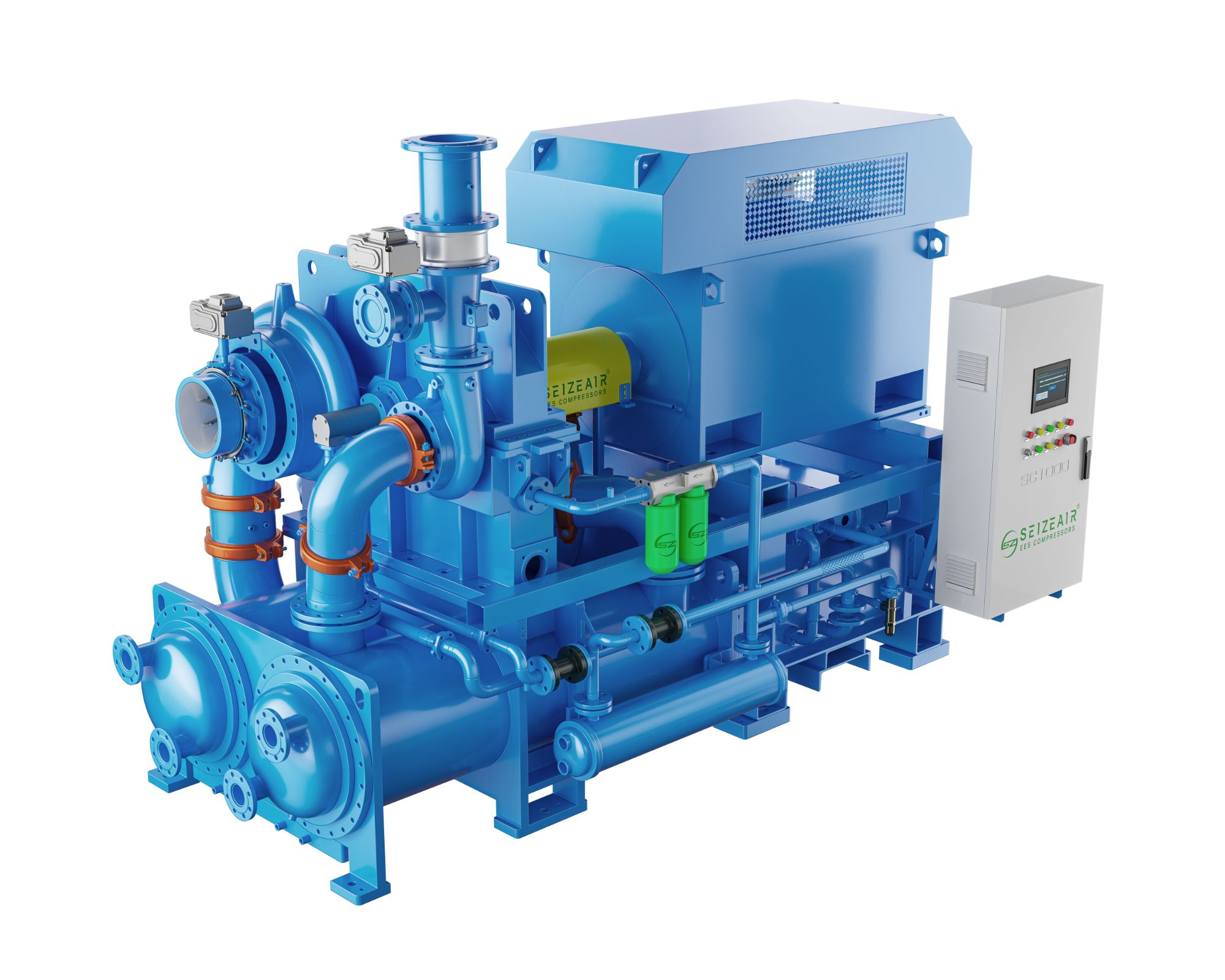
Compressed air leaks rarely announce themselves with a hiss you can hear over the hum of a running plant. They hide in plain sight—threaded fittings that have worked loose over years of vibration, quick-connect couplers that no longer seat fully, tiny cracks in aging rubber hoses, and worn O-rings inside valves and regulators. Even a pinhole in a pipe joint, barely visible to the eye, can bleed thousands of dollars annually. Most facilities only notice the big offenders, while a dozen small leaks quietly drain the same volume as one obvious rupture.
To stop paying for them, you first need to find them. Ultrasonic leak detectors cut through background noise and pinpoint the exact fitting or seal that's losing air, turning an otherwise tedious hunt into a quick walkthrough. For teams without that gear, a spray bottle of soapy water still works—just watch for bubbles at every connection point, especially around filters, lubricators, and hose reels. The key is to check systematically, not just when someone complains about low pressure. A quarterly sweep catches new leaks before they become old expenses.
Fixing leaks is rarely expensive—often it's just tightening a fitting or replacing a two-dollar O-ring. But the real savings come from changing how you treat them. Instead of viewing leaks as a maintenance nuisance, track them as a line item on your energy bill. When every operator knows that a small hiss at a coupling costs more per year than the coupling itself, the culture shifts. You stop paying for compressed air you never used, and your compressor runs fewer hours, which extends its life too.
Turning Waste Heat Into a Second Revenue Stream
Most industrial sites throw away more energy than they realize. The heat bleeding off exhaust stacks, cooling towers, and compressor rooms isn't just a byproduct—it's an untapped asset. With the right capture systems, that thermal output can be converted into electricity, sold back to the grid, or piped to nearby facilities that need low-grade warmth. The first step is an energy audit that maps exactly where and how much heat escapes, then matches those losses to realistic conversion technologies.
One overlooked avenue is direct heat exchange with local agriculture or district heating networks. A data center, for instance, might route waste warmth to greenhouses or fish farms, turning a disposal cost into a monthly check. The key is moving beyond vague sustainability goals and negotiating concrete heat purchase agreements—just like any other utility contract. Even modest temperature differentials can be monetized with organic Rankine cycle units or absorption chillers that flip waste heat into cooling for the host facility.
Don't fall into the trap of waiting for a perfect, grid-scale project. Small, modular heat recovery units can be installed incrementally, paid for out of operational savings. Once one revenue stream is proven, it becomes easier to justify larger investments—and to negotiate better rates with utilities that suddenly see you as a mini power producer rather than just a customer.
Inlet Conditions: The Overlooked Lever for Compressor Efficiency
Compressor efficiency discussions tend to focus on the machine itself—impeller design, motor class, control strategy. But the air or gas entering the compressor sets the baseline for every downstream calculation. Inlet temperature, pressure, and humidity directly shift the density and work required per unit of compressed flow. A seemingly minor rise in inlet temperature, say 5°C, reduces mass flow by roughly 2% while pushing power demand upward. Operators who measure performance only at the discharge side miss this quieter, cheaper point of control.
Inlet pressure drop is another silent drain. Filter elements, intake piping, elbows, silencers, and even poorly placed hoods all add resistance that forces the compressor to pull against a partial vacuum. The machine then works from a lower suction pressure, which raises the effective compression ratio and increases energy per cubic meter delivered. Many sites wait for a filter differential alarm before acting, yet a gradual climb in pressure drop—even within “normal” range—can waste several percent of total power. Low-resistance filter media, shorter intake runs, and larger duct diameters often pay back faster than compressor upgrades.
Humidity and airborne particulates complete the inlet-condition picture. High moisture content adds to the load on downstream dryers and intercoolers, sometimes creating extra pressure drop through condensation. Fine dust and chemical vapors don't just clog filters; they can coat impellers and diffusers, altering aerodynamic behavior and lowering efficiency over time. Locating the intake in a cool, shaded, clean area—and checking inlet conditions during routine rounds—turns a neglected variable into a reliable efficiency lever.
Variable-Speed Drives Aren't Always the Answer—But When They Are
It’s tempting to see a variable-speed drive as a universal upgrade for any motor-driven system, but that assumption quickly falls apart on closer inspection. In applications where the load stays nearly constant—think of a pump moving water through a fixed piping network at a steady rate or a fan running at full speed around the clock—a VSD adds cost, panel space, and a layer of control complexity without delivering meaningful energy savings. The drive itself consumes a few percent of the power it passes through, and its power electronics generate harmonics that may require filtering. For these steady-duty cycles, a simple across-the-line starter or a soft starter often does the same job with fewer failure points and a lower upfront price.
The real payoff shows up when system demand swings widely or when precise speed control changes the process outcome. Take a cooling tower fan that must respond to outdoor temperature shifts, or a supply pump feeding a variable occupancy building: running at 60 percent speed can cut energy use by nearly 80 percent compared to throttling or bypassing. VSDs also eliminate water hammer, reduce mechanical stress during ramp-up, and let operators tune acceleration and deceleration to protect belts, bearings, and seals. If your load profile spends a large share of time below full speed, or if you’re currently wasting energy across a valve or damper, that’s the signal a VSD will earn its keep.
The decision really comes down to the load curve and how often the motor operates away from its design point. Instead of defaulting to a VSD on every new installation or retrofit, pull a few weeks of runtime data, look at flow or pressure requirements, and calculate the energy lost to existing control methods. In many constant-torque or fixed-speed scenarios, the drive will never pay back its installed cost. But in variable-torque applications with high turndown—centrifugal pumps, fans, blowers—the savings are often large enough that the drive pays for itself within months, not years. That contrast is exactly what the title suggests: not always the answer, but when the load varies, it’s hard to beat.
Right-Sizing the Fleet: Why One Big Unit Beats Several Small Ones
Running five small delivery vans costs more than running one large truck, even when the total payload matches. Fuel burn per mile, insurance premiums, and scheduled maintenance climb with every additional engine. Consolidating routes into a single high-capacity unit trims those duplicated fixed costs and simplifies driver scheduling.
Beyond the balance sheet, fewer vehicles mean fewer failure points. A single unit with a well-stocked spare parts kit and one trained operator is easier to keep on the road than a scatter of smaller assets that each need their own inspections, tires, and brake jobs. When demand dips, you idle one machine instead of paying to store and insure four.
Utilization tells the same story. Three half-empty vans can't take on a sudden bulk order without extra runs, but one large truck with spare capacity absorbs the spike without adding headcount. That slack also buys room for unexpected maintenance windows, so a single breakdown doesn't ripple through the whole schedule.
FAQ
Focus on pressure band tightening, inlet temperature management, and eliminating artificial demand. Many plants run higher discharge pressure than needed; dropping setpoints even a few psi reduces power draw noticeably. Keeping intake air cool and filters clean also helps the machine work less for the same output.
Centrifugal compressors throw off a lot of heat. Instead of rejecting it through cooling towers, capture it for process water preheating, boiler makeup, or facility heating. A properly sized heat exchanger can offset fuel or electric heating costs and pay for itself within a couple of years.
Compressed air leaks are invisible and easy to ignore, but a small leak can waste thousands of dollars per year. An ultrasonic leak survey during non-production hours finds most issues quickly. Repairing fittings, hoses, and flange connections usually costs very little compared to the ongoing energy loss.
If air demand fluctuates, a variable speed drive lets the compressor match output to actual load instead of running at full speed and blowing off excess. This avoids repeated start/stop cycles and keeps the unit running in its most efficient range, cutting electrical consumption significantly during partial load periods.
Cleaner intake air reduces fouling of impellers, intercoolers, and aftercoolers. Installing high-quality filtration and locating the intake away from dust, moisture, and chemical vapors keeps heat transfer surfaces clean longer. That means less frequent cleaning, better aerodynamic efficiency, and lower maintenance labor over time.
Switching from basic load/unload to a master control system that coordinates multiple compressors prevents units from fighting each other. Setting the right pressure cascade and using storage receivers to buffer transient demand lets you run fewer compressors during off-peak hours, which directly trims energy bills.
Condensate drains that stick open waste compressed air continuously. Using zero-loss drains or timed electronic drains ensures only water is removed, not air. This is a small component change, but across multiple drain points it can add up to measurable energy savings each month.
Monitoring intercooler pressure drop, checking for fouling, and verifying impeller clearances are high-return tasks. When coolers clog or clearances drift, efficiency drops quickly. A condition-based maintenance plan that uses vibration and temperature trends can prevent costly breakdowns and keep specific power consumption near design levels.
Conclusion
Operators often run centrifugal compressors at pressure setpoints well above actual demand, wasting energy with every extra psi. A careful audit of end-use requirements lets plants lower discharge pressure in small increments and measure the drop in specific power. The savings multiply when combined with a systematic leak hunt; compressed air leaks rarely announce themselves, but ultrasonic detectors and regular walk-throughs during shutdowns reveal couplings, fittings, and drain valves bleeding money. Fixing just a handful of obvious leaks can trim total air demand by 10–20 percent, which directly reduces the work the centrifugal unit must do.
Beyond fine-tuning pressure and plugging leaks, waste heat recovery turns the compressor's cooling system into a useful resource. Heat exchangers can preheat boiler feedwater or warm facility spaces, offsetting fuel costs that would otherwise be purchased. Inlet conditions deserve equal attention: reducing inlet air temperature by a few degrees, keeping filters clean, and avoiding humid or dusty intake locations all lower the energy needed per unit of compressed air. When demand swings widely, a variable-speed drive on the right compressor pays for itself, but on a base-loaded machine it often adds cost without benefit. Finally, consolidating multiple small units into one properly sized centrifugal compressor typically yields lower maintenance, better part-load behavior, and fewer leak points, making the whole air system cheaper to run.
Contact Us
Contact Person: Mia
Email: [email protected]
Tel/WhatsApp: +86 19821985894
Website: https://www.seize-air.com