

Chemical Printing and Dyeing Membrane Filter Press Supplier: How to Choose the Right Partner
2026-08-29
Selecting a membrane filter press for chemical printing and dyeing involves more than horsepower and plate size. The wrong choice often shows up months later as poor filtrate quality, leaking plates, or a supplier that disappears when you need spare parts. Sinou knows this landscape firsthand, having supplied plants where uptime and dry cake disposal are non-negotiable. This guide walks through the practical checks you should run before placing an order—from material compatibility to after-sales support—so your filtration system doesn’t become the bottleneck.
Membrane Material Compatibility Determines Whether You're Buying a Solution or a Headache
When a membrane swells, cracks, or delaminates after three weeks in a process stream, the purchase price suddenly looks irrelevant. Compatibility isn't a box to tick on a datasheet; it's the difference between a system that runs unattended and one that demands constant attention. A PVDF membrane might handle aggressive oxidizers but struggle with certain ketones, while a PTFE membrane laughs at solvents but can't be heat-sealed into a low-cost housing. Ignore these material limits and you'll learn them through downtime and replacement costs.
Real compatibility testing means exposing the membrane to the actual fluid mixture at operating temperature, not just the major component. Trace amounts of a plasticizer or a cleaning agent can attack a polymer that appears perfectly stable on paper. Ask for chemical resistance data from the manufacturer, but also run a simple soak test with your own process liquid. A membrane that survives a 72-hour immersion without visible degradation or a measurable change in bubble point is far more likely to be a solution than a headache.
Filtration Precision Claims Mean Nothing Without Dyehouse-Specific Proof
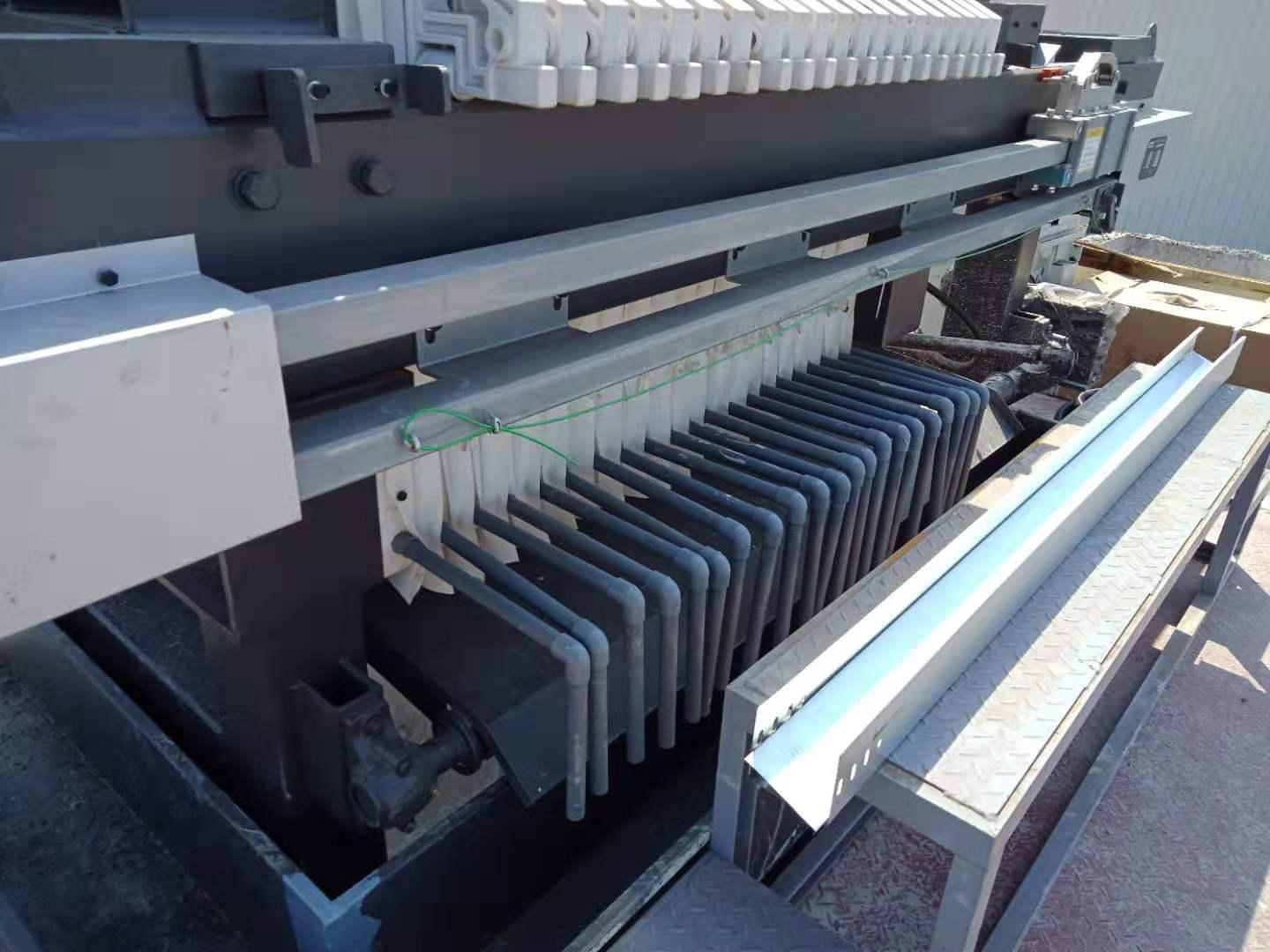
A filter's micron rating printed on a spec sheet rarely survives contact with actual dyehouse chemistry. Lab tests use clean water and a single contaminant, but production runs throw disperse dyes, surfactants, and variable pH at the membrane all at once.
The only meaningful validation is a trial inside your own dyehouse, tracking pressure drop and colour consistency over hundreds of cycles. Without that, any precision claim is just marketing dressed up as engineering.
Ask for on-site performance data, not just a certificate. If a supplier cannot show how their filter handles your exact dye class, temperature swings, and backwash routine, the stated precision is irrelevant.
Look for Suppliers Who Discuss Sludge Dryness and Cycle Time Honestly
A surprising number of equipment vendors avoid giving straight answers about final moisture content and total drying time. They might quote a "typical" range that sounds impressive but collapses under real-world sludge variability. The suppliers worth your time are the ones who ask about your feedstock first—its initial solids, viscosity, and seasonal changes—before they even mention a number. That kind of response tells you they know dryness and cycle time aren't fixed specs; they shift with what you feed the machine.
Pay attention to how a supplier talks about trade-offs. Honest vendors will tell you that pushing for very dry output often lengthens cycle time or raises energy use. They'll give you a curve or a table showing what to expect at different moisture targets, and they'll flag where the data comes from—pilot tests, similar installations, or just estimates. If someone insists their dryer always hits 90% solids in under two hours regardless of sludge type, that's not confidence; that's a red flag.
Ask for references where the sludge characteristics match yours, and then ask those operators about actual cycle times and any gaps between promised and delivered dryness. Few suppliers volunteer this information, but the ones that do are usually the ones you can build a long-term relationship with.
Spare Parts and Service Response Time Are Part of the Machine, Not an Add-On
When a critical component fails, the clock starts ticking. The gap between downtime and recovery isn't just about having a technician on call; it hinges on whether the right spare part sits on a shelf nearby or needs to be shipped from another continent. Every hour of waiting chips away at throughput, schedule integrity, and customer trust. Treating spare parts as a separate logistics challenge misses the point—they are as integral to machine availability as the motor or the control system. A machine without a rapid, reliable supply of its wear items and failure-prone modules is only half-specified.
Response time follows the same logic. A four-hour onsite guarantee means little if the diagnosis drags on or the required board isn't in the van. Leading operations map their spare parts inventory against actual failure histories, not generic recommendations. They stock locally what fails locally, pre-stage kits for scheduled shutdowns, and build service level agreements that include parts delivery as a core metric. This turns maintenance from a reactive scramble into a predictable routine, where the machine's uptime is designed rather than hoped for.
The real difference shows up during unplanned events. A line that loses a drive on a Tuesday afternoon should be back running by Wednesday morning—not because of luck, but because the spare was already on site and the service team knew the swap procedure cold. That kind of resilience doesn't come from a bolt-on warranty or an emergency hotline. It comes from treating spare parts and response time as design parameters, just like load capacity or cycle speed. Ignore them, and the machine's true performance ceiling drops far below its brochure numbers.
A Real Partner Will Suggest Pilot Testing Before You Commit Capital
A genuine business partner doesn’t push you toward a massive upfront investment. Instead, they propose a small-scale pilot to test assumptions, workflows, and actual demand before any serious money is on the table. This isn’t hesitation—it’s discipline. The best partners know that a pilot creates a safe environment to measure real performance without the pressure of full commitment.
In practice, this might look like a limited rollout in one market, a short-term contract with a subset of users, or a paid proof-of-concept with clear success metrics. The partner helps define what “good” looks like beforehand, so the decision to scale becomes data-driven rather than emotional. That approach protects both sides and forces honest conversations about fit and feasibility.
If someone dismisses the idea of pilot testing or insists you go all-in immediately, treat that as a red flag. A real partner earns your trust by demonstrating value incrementally—and by being willing to walk away if the pilot reveals mismatched expectations. That willingness to test before scaling is what separates a long-term ally from a vendor chasing a quick sale.
Evaluate Total Operating Cost, Not the Sticker Price on the Filter Press
A low upfront bid can quietly hide a machine that bleeds money every cycle. Instead of fixating on the purchase price, dig into the details that show up on your monthly utility bill and maintenance log. For instance, a filter press with undersized hydraulics may cost less on paper but consumes far more electricity per batch. Over a year of three-shift operation, that difference alone can wipe out the initial savings several times over.
Then there is the cost of downtime and consumables you rarely see in a brochure. Cheaper plates and cloths wear faster, forcing more frequent replacements and longer periods when the press is out of service. Factor in the labor hours spent cleaning, unclogging, or adjusting a poorly designed machine. A slightly higher-priced press with better plate alignment, faster cycle times, and lower cloth consumption often delivers a total cost per ton of dry solids that is 20–30% lower within the first two years.
Ask for the real number: what does it cost to run this press for 5,000 hours? That means requesting verified energy consumption at full load, actual cloth life under your slurry conditions, expected plate wear, and mean time between failures for pumps and valves. Once you add these up, you will often find that the sticker price is the smallest line item in the whole decision.
FAQ
A dependable partner typically demonstrates deep process knowledge, particularly with high-color, high-COD effluent. They ask about your specific dye classes and chemical additives rather than offering a one-size-fits-all unit. You'll notice they discuss plate materials, cloth compatibility, and achievable cake dryness before pushing a quote, and they can show real performance data from similar textile wastewater installations.
Plate design matters more than many buyers expect. For dyeing sludge, recessed chamber plates with an integrated membrane can squeeze extra moisture after the initial feed cycle. The plate's corner feed or central feed layout affects how evenly the cake builds. A supplier worth partnering with will analyze your slurry's solids content, pH, and temperature before recommending polypropylene plates or a more chemical-resistant alternative.
Filter cloth is often the first component to fail if chosen poorly. Dye baths may contain acids, alkalis, or solvents that degrade standard polypropylene cloth over time. A knowledgeable supplier will match cloth material and weave to your chemical profile, balancing permeability, cake release, and service life. Asking for cloth samples and small-scale trials before committing is a practical way to gauge a supplier's competence.
Request pilot testing with your actual wastewater, not just vendor-provided slurry. Ask for references from printing and dyeing plants with similar effluent volumes and dye types. Look for data on cycle time, cake solids percentage, filtrate clarity, and chemical consumption. A supplier that encourages third-party inspection or offers a trial rental often has more confidence in their equipment than one that only shares brochures.
Membrane filter presses operate under repeated mechanical stress and chemical exposure. Even a well-built machine needs periodic membrane replacement, cloth changes, and hydraulic system checks. A partner with local service engineers, spare parts stock, and responsive troubleshooting can prevent days of downtime. The cheapest upfront quote can become the most expensive if you wait weeks for a diaphragm or struggle with alignment issues later.
Polypropylene is common, but not always sufficient. For hot, acidic, or solvent-laden dye wastewater, consider EPDM, NBR, or PTFE-coated membranes depending on chemical compatibility and temperature range. The right supplier will not simply say membrane press but will discuss membrane thickness, squeeze pressure, and whether a mixed pack of plates would improve dewatering for your varying batch loads.
Beyond cake dryness, monitor filtrate turbidity, cycle duration, chemical conditioning dosage, and plate opening frequency. A good supplier will help you set baseline values during commissioning. If cake release becomes inconsistent or filtrate solids rise, that often points to cloth blinding or uneven membrane inflation—issues a proactive partner should diagnose quickly rather than waiting for a breakdown.
Listen to how they talk about discharge limits, sludge disposal costs, and water reuse potential. A supplier focused only on filtration may miss the bigger picture. A valuable partner will ask about your local COD, color, and heavy metal limits, then suggest a filter press configuration that reduces sludge volume and improves filtrate quality enough to lower downstream treatment burden. That kind of thinking separates transaction-oriented sellers from long-term support partners.
Conclusion
Choosing a membrane filter press supplier for chemical printing and dyeing wastewater is less about catalog specs and more about whether the vendor understands dyehouse chemistry. Start with membrane material compatibility—polypropylene, EPDM, or NBR may look interchangeable on paper, but reactive dyes, surfactants, and high-temperature liquors attack them differently. A supplier who cannot explain why a specific membrane grade survives your exact bath composition is selling you a future leak problem. Equally telling is their attitude toward filtration precision. Blanket claims of “2 micron absolute” mean little without pilot logs from actual print paste washdowns or indigo oxidation liquors. Ask for dyehouse-specific retention curves and backwash recovery data, not generic wastewater brochures.
Beyond hardware, pay attention to how openly a supplier discusses sludge dryness and cycle time. If they promise 65% cake solids without asking about your conditioning chemicals or cloth type, walk away. The same applies to spare parts and service response—membrane plates, center-feed gaskets, and PLC actuators are not afterthoughts; they determine whether a two-day breakdown becomes a two-week production loss. A genuine partner will propose a pilot rental unit before you commit capital, because dye liquor variability cannot be modeled from a spreadsheet. Finally, ignore sticker price. Compare energy per cycle, polymer consumption, membrane replacement intervals, and labor hours over five years. A slightly cheaper press that produces wetter sludge and requires quarterly membrane swaps will quietly erase your initial savings. The right supplier talks in your plant’s numbers, not their brochure’s.
Contact Us
Contact Person: HaiYan
Email: [email protected]
Tel/WhatsApp: +86 18957325588
Website: https://www.senyoubeton.com/