

China USB4 Cable: The Future of High-Speed Data Transfer
2026-10-15
The humble USB cable rarely gets much attention—until it becomes the bottleneck between you and your work. China's USB4 cable technology is changing that in a big way, pushing transfer speeds into territory once reserved for internal drives. And if you're looking for where that future is being built right now, EBCYX is a name worth remembering.
What Does 40Gbps Actually Feel Like on a USB4 Cable?
Plug in a 40Gbps USB4 cable and the first thing you'll notice is how mundane it feels. There's no fanfare, no blinking lights beyond the usual charge indicator. But drag a 200GB folder of raw video from your desktop to an external NVMe SSD and the transfer bar barely has time to appear before it's done. Tasks that once meant a coffee break now finish while you're still reaching for the mug. It's the kind of speed that quietly rewires your expectations—you stop planning around file transfers and start treating them as background noise.
Where 40Gbps really shows its personality is with multiple devices. A single USB4 port can drive two 4K displays at 60Hz, deliver up to 100W of power, and still move data at near-maximum throughput. Connect a dock and suddenly your laptop becomes a workstation without a single hiccup. External GPUs, 8K monitors, high-speed network adapters—they all feel native, not like compromises. The bandwidth is wide enough that latency disappears, and you forget which drive or display is physically attached.
Of course, it's not magic. To actually feel 40Gbps, every link in the chain needs to support it: the host port, the cable, and the peripheral. A passive copper cable longer than 0.8 meters may drop to 20Gbps, and a mismatched Thunderbolt 3 device might cap at 10Gbps. But when everything aligns, the experience is almost boring. That's the strange truth about next-gen speed—it doesn't feel futuristic. It just feels like the computer finally got out of your way.
USB4 Isn’t Just Faster File Transfers
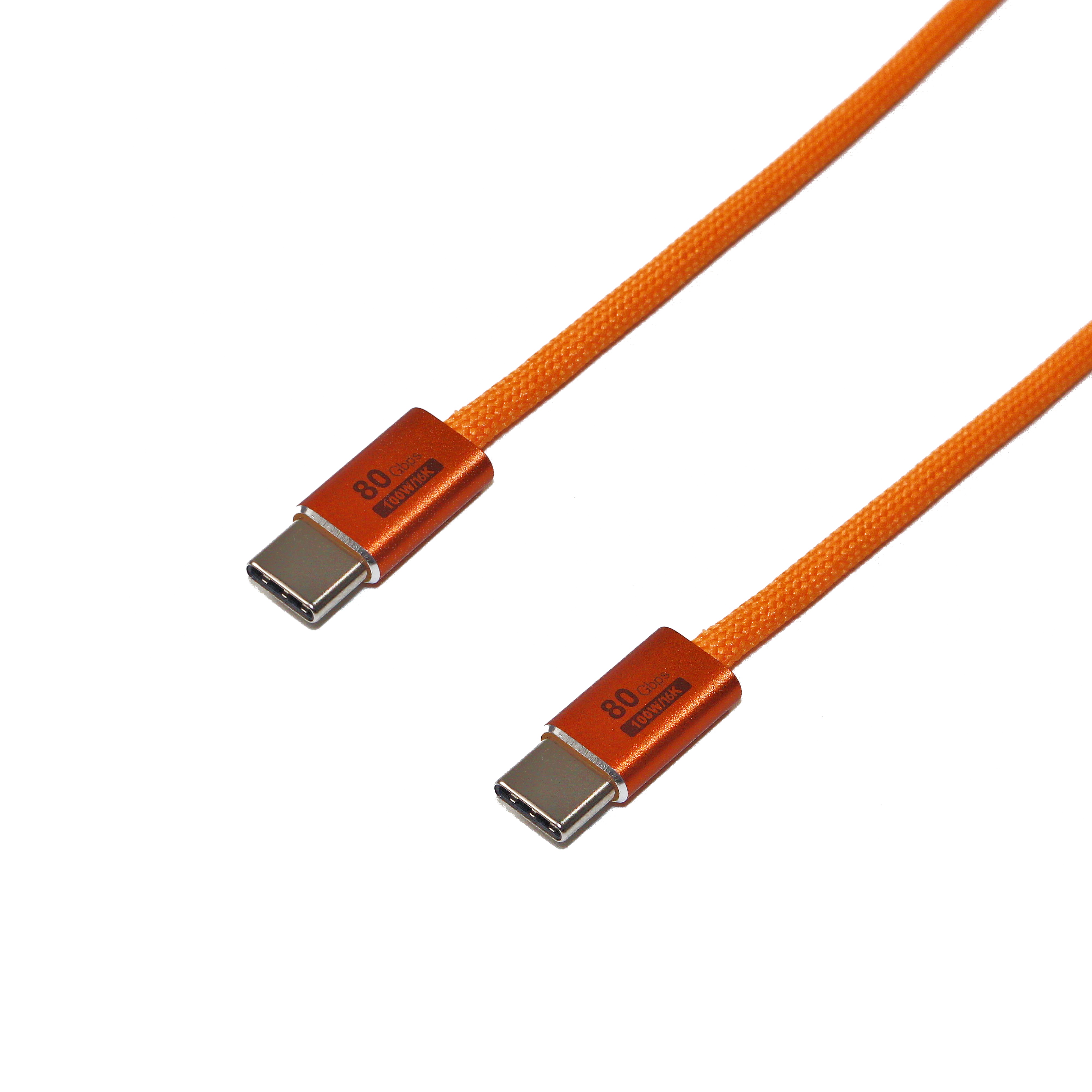
USB4 arrives with a headline number that grabs attention—up to 40Gbps, double the previous max of USB 3.2. But fixating on raw transfer speed misses the bigger story. The standard integrates Thunderbolt 3 technology, which means a single USB4 port can simultaneously carry data, video, and power without needing separate cables or dongles. That convergence is what actually changes how you use your desk setup.
Take display output as an example. A USB4 port can drive two 4K monitors at 60Hz or one 8K display, thanks to native support for DisplayPort 2.0 and PCIe tunneling. For laptops, this means a single port can replace HDMI, DisplayPort, and a dedicated charging brick. Docks become simpler, and even eGPUs can connect over the same connector you use for a flash drive. It's not just about moving files from point A to point B faster; it's about reducing the cable clutter and port confusion that have plagued USB for years.
Power delivery also gets a boost. USB4 mandates support for USB Power Delivery up to 100W, though many implementations now push 140W or higher with the newer EPR spec. That's enough to charge a 14-inch MacBook Pro or most ultrabooks at full speed while also running an external SSD and a 4K monitor. Combine that with backward compatibility with USB 3.x and USB 2.0, and the real selling point becomes clear: you're not just getting a faster pipe—you're getting one port that can finally handle almost everything.
How Chinese Manufacturers Are Redefining USB4 Cable Value
For years, the USB4 cable market moved at a predictable pace: specs ticked upward, prices held firm, and the usual players guarded their margins. Chinese manufacturers quietly dismantled that equation, treating high-speed data transfer not as a premium badge but as a baseline expectation. They rebuilt the cost structure from the ground up, sourcing raw copper and control chips at scale, and then passed those savings down the supply chain without the typical retail markup dance. The result is a cable that delivers 40Gbps throughput, 240W power delivery, and 8K video support at a fraction of what the category once commanded.
What distinguishes this shift isn't just aggressive pricing—it's an obsession with practical durability. Instead of copying established designs, many factories now run their own stress tests: repeated bends at extreme angles, connector pull-force measurements, and thermal cycling under full load. Some have moved to reinforced strain reliefs and thicker gauge internal wiring while keeping the outer jacket slim enough for daily carry. That focus on real-world wear patterns, rather than lab-only certification, means budget-friendly cables are now outlasting their more expensive counterparts in real desk setups.
There's also a cultural change in how these manufacturers approach iteration. Rather than waiting for the next USB revision to dictate product lines, they respond to user feedback within weeks—adjusting connector tolerances, tweaking e-marker chips for better host compatibility, or offering shorter lengths that work better for mobile hubs. This rapid loop has turned "value" into something more than price per gigabit. It now includes resilience, cross-device reliability, and a willingness to fix flaws without launching a whole new SKU. For buyers, that means fewer compromises and a clearer sense that the cable in their bag was built by people paying attention to how it actually gets used.
The Desk Cleanup USB4 Cables Finally Make Possible
For years, the dream of a single cable running from laptop to monitor, dock, and peripherals stayed just out of reach. USB4 changes the math. It carries 40Gbps data, DisplayPort 2.0 video, and up to 240W power delivery over one connector. That means the tangle of HDMI, Ethernet, USB-A, and barrel chargers can finally go into a drawer.
The real desk cleanup is not about hiding cables; it is about removing the need for them. A single USB4 cable can drive dual 4K displays, connect a fast NVMe SSD, and charge the laptop at the same time. The old docking station with its own power brick becomes optional, and the desk gains back several square inches of usable space.
What makes this possible now is that USB4 finally enforces enough bandwidth and power in one spec. Early USB-C promised this but often fell short in real devices. USB4's stricter requirements mean fewer surprises where a feature works on one laptop but not another. The result is a desk where the only visible wire is the one you chose to keep.
Multi-Monitor Docking Without the Cable Chaos
Most desks end up looking like a wiring diagram gone wrong the moment you add a second or third screen. There’s the HDMI snaking behind the stand, a DisplayPort adapter dangling off the edge, and a separate power brick for every device. A good multi-monitor dock changes that by collapsing all those connections into one tidy path back to your laptop. You plug in a single cable, and the displays, peripherals, and charging all fall into place without a nest of cables under your desk.
The trick isn't just adding more ports — it's arranging them so you rarely have to think about them. Dual HDMI or DisplayPort outputs sit at the back, the upstream cable routes neatly to one side, and the front stays clean for quick-access USB ports. This way the dock becomes a permanent part of your desk, not another gadget you wrestle with every morning. Monitors stay connected, the laptop comes and goes with one click, and the whole setup feels less like a tech project and more like a piece of furniture.
What really kills cable chaos is consistency. When the same dock drives your office monitors, your home displays, and your travel screen without swapping adapters or digging behind the desk, you stop noticing the hardware entirely. You notice the extra desk space, the fewer tangles, and the fact that setting up for a full workday takes about five seconds.
A USB4 Cable That Survives Your Next Hardware Upgrade
Most USB cables end up in a drawer the moment you swap laptops or monitors. This one is built to skip that cycle. It handles the full 40Gbps data rate of USB4, drives a single 8K display or dual 4K screens, and carries up to 240W of power over the same connector. The built-in e-marker chip lets the cable advertise its exact limits, so your next laptop, dock, or external GPU won't have to guess what it can do.
You don't need to replace every peripheral at once either. The cable steps down cleanly to USB 3.2, USB 2.0, and existing USB-C alternate modes, so your current SSD, card reader, or 4K monitor keeps working while you upgrade piece by piece. That backwards compatibility means the cable spends less time as a spare and more time actually plugged in.
Durability is where cheap cables fall apart—literally. The reinforced neck and braided jacket resist the daily bend behind a desk or inside a bag, while the internal shielding keeps signal clean even next to a power brick. Instead of buying a new cable with every hardware refresh, you buy one that's ready for the next three.
FAQ
A USB4 cable isn't just another USB-C cord. It builds on the Thunderbolt 3 protocol to deliver up to 40Gbps bidirectional data transfer, nearly double what USB 3.2 Gen 2x2 can manage. Unlike previous generations that allocate fixed bandwidth to data and video, USB4 dynamically adjusts lanes, so a single cable can juggle 4K video, fast external storage, and power delivery without choking.
Chinese manufacturers have spent years perfecting high-frequency signal integrity and ultra-thin shielding for mainstream electronics. The scale of production keeps costs down while rapid engineering cycles let factories jump on new USB-IF specs quickly. That combination means you can find a certified 40Gbps cable from Shenzhen at a price that Western brands struggle to match, often with the same internal components as big-name OEMs.
In ideal conditions yes, but real-world speeds depend on cable length, construction quality, and whether it is passive or active. Passive cables under 0.8 meters usually hit full 40Gbps reliably. Beyond that, attenuation kicks in unless the cable uses active retimer chips. Poor soldering, thin gauge wire, or missing eMarker chips can silently downgrade you to 20Gbps or even USB 3.1 speeds, so the brand's quality control matters more than the country of origin.
Yes. USB4 maintains full backward compatibility with USB 2.0, USB 3.2, and Thunderbolt 3. Plug a USB4 cable into a USB 3.0 hard drive and it works, just at the older speed. With a Thunderbolt 3 laptop, it also works because USB4's spec incorporates TB3. The catch is that older devices can't unlock USB4's 40Gbps or dynamic bandwidth features; the cable simply falls back to the highest common standard.
Look for the USB-IF certified logo or at least a clear statement of 40Gbps and eMarker chip presence. A braided jacket, reinforced strain relief near connectors, and gold-plated pins are good signs but not guarantees. User reviews that mention actual transfer tests with NVMe enclosures are more useful than marketing claims. Avoid no-name cables that cost only a few dollars and list every high-speed spec imaginable, because a genuine 40Gbps cable with proper shielding cannot be that cheap.
USB4 collapses multiple proprietary connections into one. A video editor can daisy-chain two 4K monitors, run an external NVMe RAID at 3GB/s, and charge the laptop, all from a single port. External GPU enclosures, once limited to Thunderbolt 3, now work over USB4 with similar bandwidth and lower latency. That makes thin-and-light laptops feasible as desktop replacements, and the cable itself becomes the only wire you need on a desk.
The biggest myth is that every USB-C cable is a USB4 cable. Most USB-C cords on the market are USB 2.0 or USB 3.2, and they physically fit but lack the extra shielding and high-speed data lanes. Another misconception is that longer always means better. For passive cables, shorter is faster; a 2-meter passive cable may drop to 20Gbps while a 0.5-meter one hits 40Gbps. Finally, buying a USB4 cable won't speed up a device that only has a USB 3.0 port.
Conclusion
The moment you plug in a China-made USB4 cable, the spec sheet's 40Gbps stops being a number. A 50GB project folder transfers in about ten seconds instead of several minutes on older USB 3.2. But the real surprise is that speed alone isn't the headline. USB4 carries data, video, and up to 100W of power simultaneously, which means a single cable can drive two 4K monitors, charge a laptop, and keep external storage running without a pile of adapters. For anyone juggling a cluttered desk, this is the cleanup you've been postponing. Chinese manufacturers have been quick to push USB4 cables into the sub-$20 range without cutting corners on shielding or connector durability, making the jump from USB-C 3.2 or Thunderbolt 3 less of a premium purchase.
Multi-monitor setups become far less chaotic because one USB4 cable from a laptop to a dock can handle dual display outputs and several USB peripherals at once. No more separate HDMI, DisplayPort, and charging bricks tangled behind the monitor stand. And unlike previous cable generations where a new laptop port meant replacing half your accessories, a good USB4 cable built to the full 40Gbps and 240W power spec will remain relevant through your next hardware refresh. Whether you're editing 8K footage off an external NVMe enclosure or just want a clean way to connect a work laptop at home, the China USB4 cable's mix of raw bandwidth, power delivery, and aggressive pricing is quietly making it the default choice for high-speed data transfer.
Contact Us
Contact Person: David Yang
Email: [email protected]
Tel/WhatsApp: 8615814734054
Website: https://www.ebcyx.com/