

Chinese UV Piezo Inkjet Printer: Advanced Technology for Precision Industrial Printing
2026-07-01
In the world of industrial printing, precision and reliability aren’t just goals—they’re necessities. Chinese UV piezo inkjet printers are rapidly redefining what’s possible, combining rugged engineering with pixel-perfect accuracy. At the heart of this shift is Danmajet, a brand pushing boundaries with advanced drop-on-demand technology that handles everything from delicate packaging to durable product marking. If you’ve ever wondered how modern factories achieve such consistent, high-resolution output at speed, you’re about to discover the engine behind it all.
The Core of UV Piezo Inkjet: How It Redefines Precision
At the heart of UV piezo inkjet technology lies an almost obsessive control over droplet formation. Unlike thermal systems that boil ink to create bursts, piezoelectric printheads physically deform a crystal to eject each droplet on demand. This mechanical ejection allows for precise waveform tuning—adjusting the pulse shape, voltage, and timing to suit different fluid viscosities. The result is a droplet size and placement accuracy that thermal methods struggle to match, often delivering consistent volumes down to single picoliters. That kind of repeatability transforms what’s possible in printing on irregular or delicate substrates.
What truly sets this approach apart is how UV-curable chemistry capitalizes on that precision. The moment a droplet lands, UV light freezes it in place, sidestepping the absorption and spreading issues that plague solvent or water-based inks. This instant curation locks the dot shape exactly where it strikes, preserving sharp edges and fine detail even at high speeds. The combination eliminates bleed and feathering, letting designers print micro-text, complex patterns, or variable data with near-photographic quality on everything from glass to flexible packaging.
In practice, this redefinition of precision opens up applications previously off-limits. Direct-to-shape printing becomes viable because the non-contact jetting handles contours without distortion. Industrial marking gains durability and speed, embedding codes that survive harsh environments without smudging. Rather than just improving print quality, the core technology fundamentally shifts the boundaries of what can be decorated or encoded—making precision a design tool rather than a mere specification.
Inside the Printhead: Piezoelectric Innovation at Work
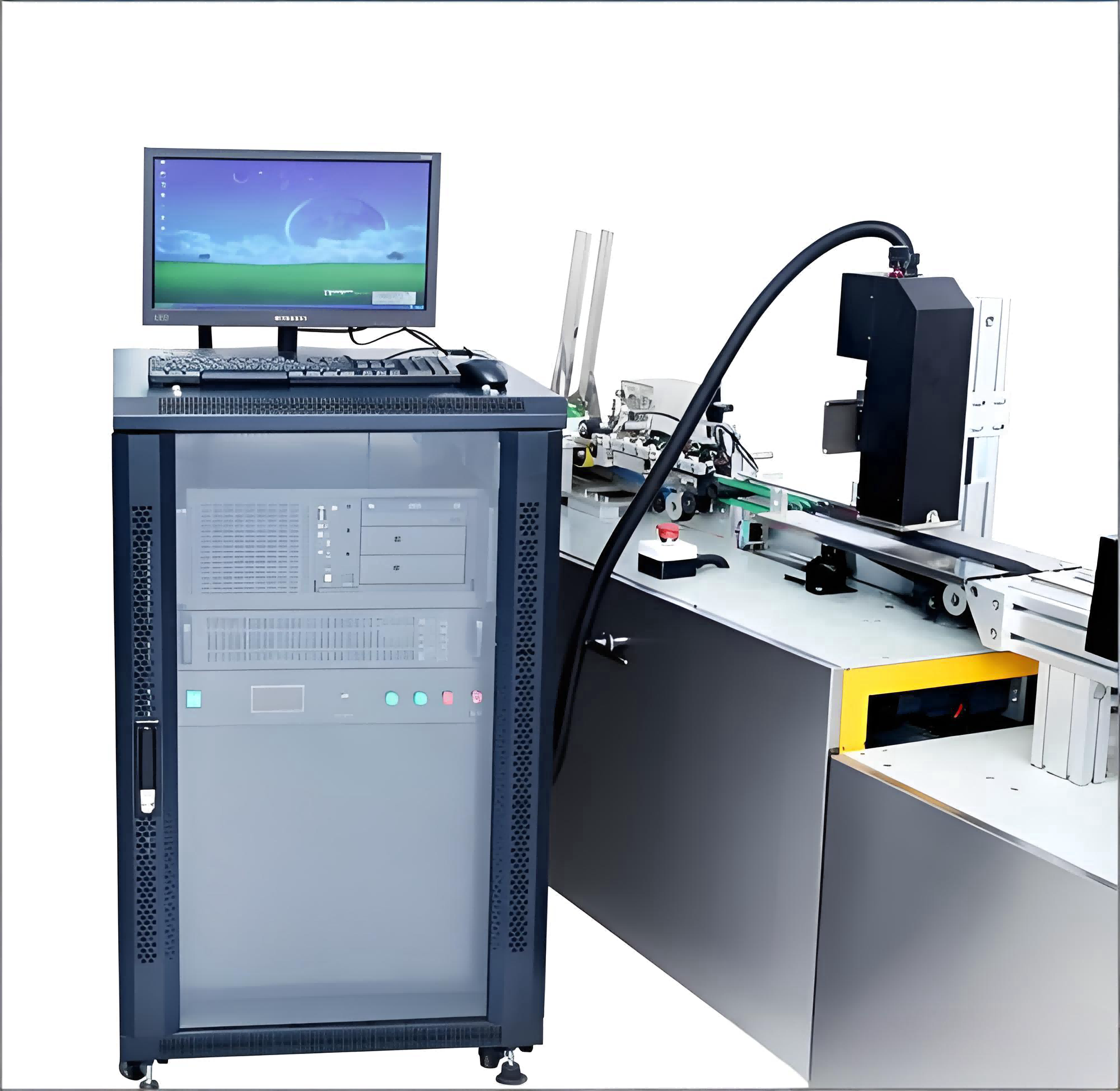
Inside every advanced inkjet printer lies a quiet revolution, all centered on a tiny, unassuming component: the piezoelectric element. Unlike traditional thermal printheads that rely on boiling ink to create bubbles and force out droplets, piezoelectric printheads harness the peculiar ability of certain crystals and ceramics to change shape when an electric field is applied. This deformation happens in microseconds, flexing a membrane that expels ink with surgical precision. There’s no heat involved, so the ink formulation stays stable, opening the door to a wider range of inks, from delicate dye-based fluids to thick UV-curable resins and textile pigments.
The real genius is in the control. Each nozzle in a piezoelectric printhead acts independently, governed by finely tuned voltage pulses that determine how much the piezo material bends, and for how long. This translates into drop sizes that can vary from picoliters to nanoliters mid-print, allowing for stunning gradations, razor-sharp edges, and perfectly smooth solid areas—all without sacrificing speed. Engineers have pushed the technology to the point where printheads pack thousands of nozzles, firing in unison at tens of thousands of droplets per second, coordinating vibration and meniscus behavior to eliminate satellite drops and mist. It’s a symphony of micro-mechanics where even a subtle waveform tweak can mean the difference between a flawless print and a faint banding artefact.
What often goes unnoticed is how this innovation extends well beyond the printing industry. The same piezo-driven droplet-on-demand principle is being adapted for bioprinting living cells, manufacturing OLED displays, and dispensing conductive coatings in electronics. The durability of piezo printheads—often engineered to perform billions of cycles without degradation—makes them a workhorse in the background of modern manufacturing. So the next time you look at a photograph, a decorated ceramic tile, or even a custom-printed piece of packaging, there’s a good chance a humble flake of ceramic, bending silently under a pulsing voltage, played an invisible but pivotal role.
From Concept to Product: Chinese Engineering in Focus
The journey begins with a spark of ingenuity, often sparked by pressing real-world needs—be it bridging vast terrains or powering megacities sustainably. Chinese engineering teams thrive on turning audacious ideas into tangible blueprints, blending centuries-old wisdom with cutting-edge digital tools. From the initial sketches of a high-speed rail corridor to the intricate simulations of a skyscraper that twists skyward, every concept is stress-tested through rigorous feasibility studies. Collaboration is key here: local experts, international consultants, and sometimes even community feedback shape the early drafts, ensuring that the final design is not just innovative but deeply rooted in practical context.
Then comes the gritty phase of prototyping and pilot runs, where theories meet friction. In projects like the Hong Kong-Zhuhai-Macao Bridge, engineers constructed scale models and subjected them to typhoon-level forces, learning from each crack and oscillation. Material science plays a starring role—new alloys and composites are often cooked up in labs to withstand the unique demands of a project, whether it's corrosion from sea spray or the weight of a million daily commuters. Supply chains hum with precision as components are manufactured across provinces and assembled with near-obsessive coordination. The focus is less on speed and more on resilience; a single miscalculation in a tunnel boring machine's path could set things back not days, but months.
Finally, the product emerges—not just as a structure or system, but as a testament to a long chain of problem-solving. The finished artifact often surprises onlookers: a bridge that seems to float on mist, a railway that shrinks a 12-hour journey into three. Yet the real marvel lies in the invisible layers—the seismic dampers hidden within walls, the algorithms that optimize energy use in real time, and the maintenance corridors designed for a century of service. Each project, from the sleekest airport terminal to the deepest undersea tunnel, carries a quiet narrative of adaptation and relentless refinement, showcasing a philosophy where engineering serves both function and a deep respect for the human and natural landscapes it inhabits.
Material Versatility: Printing Beyond Paper and Plastics
The conversation around 3D printing often starts with thermoplastics, but the technology has quietly outgrown that narrow frame. Today's systems handle metal powders that fuse into aerospace-grade brackets, ceramic slurries that become bone scaffolds, and even bio-inks laden with living cells. A single print run can combine flexible and rigid materials, or embed conductive traces directly into structural parts, blurring the line between prototyping and end-use production.
In medical device manufacturing, this versatility translates to patient-specific implants printed from titanium alloys that promote bone ingrowth, or dissolvable stents tailored to a child's growing anatomy. Architects experiment with sand and binder-jetting to cast intricate molds, while fashion designers extrude silicone onto fabric for seamless hybrid garments. Each material shift demands recalibrating parameters like laser power or deposition speed, but the payoff is access to properties no single-material process could deliver.
Moving beyond paper and plastics also redefines what we consider "printable." Conductive graphene composites, luminescent quantum dot filaments, and carbon-fiber-reinforced nylons are just the start. The real shift is in mindset: manufacturers are learning to design with material gradients and multi-functionality baked in, rather than assembling discrete components. This is additive manufacturing maturing into a true production platform, where the raw material palette is as varied as the applications themselves.
Operational Edge: Speed, Stability, and Low Maintenance
Fast response times and rock-solid reliability aren’t just nice to have—they’re what keep teams shipping without second-guessing their tools. When a platform handles spikes gracefully and recovers from hiccups before anyone notices, you stop worrying about the plumbing and focus entirely on building what matters.
The real win is how little upkeep it demands. No babysitting cron jobs, no hand-holding overnight deploys. The system tunes itself, patches cleanly, and rarely interrupts your flow. That quiet consistency means fewer late-night pages and more uninterrupted deep work—exactly the kind of operational calm that compounds into faster delivery cycles.
Over time, that stability becomes a competitive habit. Teams stop planning around tool fragility and start trusting their velocity. The result isn’t just uptime stats—it’s an environment where speed feels sustainable because the foundation never wavers.
Real-World Impact: Industrial Applications That Deliver
The gap between lab-scale prototypes and shop-floor solutions can be immense. What sets a truly valuable industrial application apart is its ability to withstand the relentless demands of production environments—vibration, dust, extreme temperatures, and 24/7 operation. We’ve seen condition-monitoring systems slash unplanned downtime by over 35% in heavy manufacturing, and computer vision tools that catch microscopic defects human eyes routinely miss. These aren’t concepts; they’re deployed today, saving millions while improving safety standards.
Beyond efficiency, the most compelling applications redefine what’s possible. Consider precision agriculture where multispectral imaging and automated sprayers cut chemical use by half without sacrificing yield, or logistics hubs where autonomous mobile robots move goods with 99.8% accuracy in cavernous warehouses. The common thread isn’t just clever algorithms—it’s rugged hardware, intuitive interfaces, and a deep understanding of the workflows people actually rely on. When done right, the technology fades into the background and the results speak for themselves.
FAQ
UV piezo inkjet printers use piezoelectric printheads that precisely control droplet size and placement, enabling high-resolution output. The instant UV curing ensures sharp details and prevents ink spread, which is crucial for industrial applications requiring fine lines, small text, or complex patterns on various substrates.
Unlike thermal inkjets that use heat to eject ink, piezo technology relies on mechanical deformation of crystals, allowing a wider range of ink chemistries, including UV-curable inks. This results in better adhesion, durability, and compatibility with industrial materials. Chinese manufacturers have refined this technology to deliver competitive performance and cost-effectiveness.
UV piezo inkjet printers can handle a vast array of substrates, from rigid materials like glass, metal, ceramic, and wood to flexible media such as PVC, leather, and textiles. The key is the UV ink’s ability to adhere and cure instantly, making it versatile for signage, packaging, promotional items, and electronic components.
Regular maintenance is straightforward but essential: periodic printhead cleaning to prevent clogging, ensuring proper UV lamp function, and using high-quality, compatible inks. Many Chinese models feature automated maintenance systems that reduce manual intervention, extending the printer’s lifespan and minimizing downtime.
UV curing is near-instantaneous, eliminating the drying time needed for solvent or water-based inks. This dramatically boosts throughput for industrial settings. Modern LED-UV lamps used in many Chinese printers consume less energy than traditional mercury lamps and have longer lifespans, contributing to lower operational costs.
Yes, many high-end Chinese UV piezo models offer resolutions up to 1440×1440 dpi or higher, with precise dot control that meets the requirements for PCB legend marking, component identification, and even solder mask application. The droplets can be as small as a few picoliters, ensuring sharp, durable prints on electronic assemblies.
UV-curable inks are typically free of volatile organic compounds (VOCs), making them more eco-friendly than solvent-based alternatives. The instant curing also reduces the risk of smudging or hazardous waste. Additionally, LED-UV systems emit less heat and no ozone, improving workplace safety.
Leading Chinese brands provide comprehensive support, including remote diagnostics, multilingual technical assistance, and readily available spare parts. They often offer customization for integration into existing production lines, with engineers trained to handle software compatibility, workflow optimization, and operator training to ensure smooth adoption.
Conclusion
At the heart of the Chinese UV piezo inkjet printer lies a sophisticated piezoelectric printhead that redefines precision in industrial printing. By harnessing precisely controlled electrical pulses to deform the piezo crystals, the system ejects ink droplets with sub-picoliter accuracy, achieving razor-sharp details and consistent repeatability. This innovation is the product of dedicated Chinese engineering, which has turned ambitious concepts into reliable hardware capable of operating around the clock. The result is a platform that delivers not only exceptional print quality but also the robustness needed for demanding production environments.
Beyond its core printing technology, the printer excels in material versatility, handling substrates far beyond standard paper and plastics—from glass and metals to textiles and ceramics. UV-curable inks cure instantly under integrated LED lamps, enabling immediate further processing without smudging or waiting. The operational edge is equally impressive: high-speed continuous output pairs with inherent stability and minimal maintenance requirements, reducing downtime and total cost of ownership. These attributes have unlocked real-world impact across industries, including electronics manufacturing, packaging decoration, and large-format signage, where precision and efficiency directly translate into competitive advantage.
Contact Us
Contact Person: Jacky
Email: [email protected]
Tel/WhatsApp: 086 15000607053
Website: https://www.danmajet.com