
Custom Grinding Machine Solutions: Precision-Engineered for Your Unique Needs
2026-05-19
Every production floor has its quirks—those nagging inefficiencies that off-the-shelf grinders simply can’t fix. Imagine a machine shaped around your exact tolerances, materials, and workflow. That’s where WINNRUI CNC steps in. Our custom grinding machine solutions are built from the ground up to tackle your toughest challenges, turning precision into a competitive edge. Ready to see what a truly tailored system can do?
Where Standard Machines Fall Short
Standard machines are built for a world of averages, but few real-world tasks fit neatly into that mold. When you need to handle delicate glass vials one moment and heavy metal castings the next, a conventional setup demands time-consuming changeovers or entirely separate systems. They lack the sensory feedback and adaptive intelligence to switch between fragile and robust without risking damage or sacrificing speed. This rigidity forces compromises that eat into both productivity and quality.
Another silent failure of generic automation is its inability to cope with chaotic, high-mix environments. Most standard machines expect a predictable stream of uniform inputs, but production floors are messy—parts arrive inconsistently, surfaces vary, and environmental conditions shift. Without the ability to adjust in real time, these machines either jar to a halt or produce unreliable results, leaving human operators to fill the gaps. It’s a hidden tax on efficiency that many accept as inevitable.
Perhaps the most overlooked shortfall is the cognitive load these machines place on people. When every anomaly triggers a manual override or a complex reprogramming sequence, skilled workers become babysitters rather than problem-solvers. The deeper issue is that standard machines were never designed to learn from their mistakes or share insights across a fleet. They remain islands of fixed logic in a world that demands fluidity, making it increasingly clear that the gap isn’t just in performance—it’s in philosophy.
Engineering for the Micron, Not the Catalog
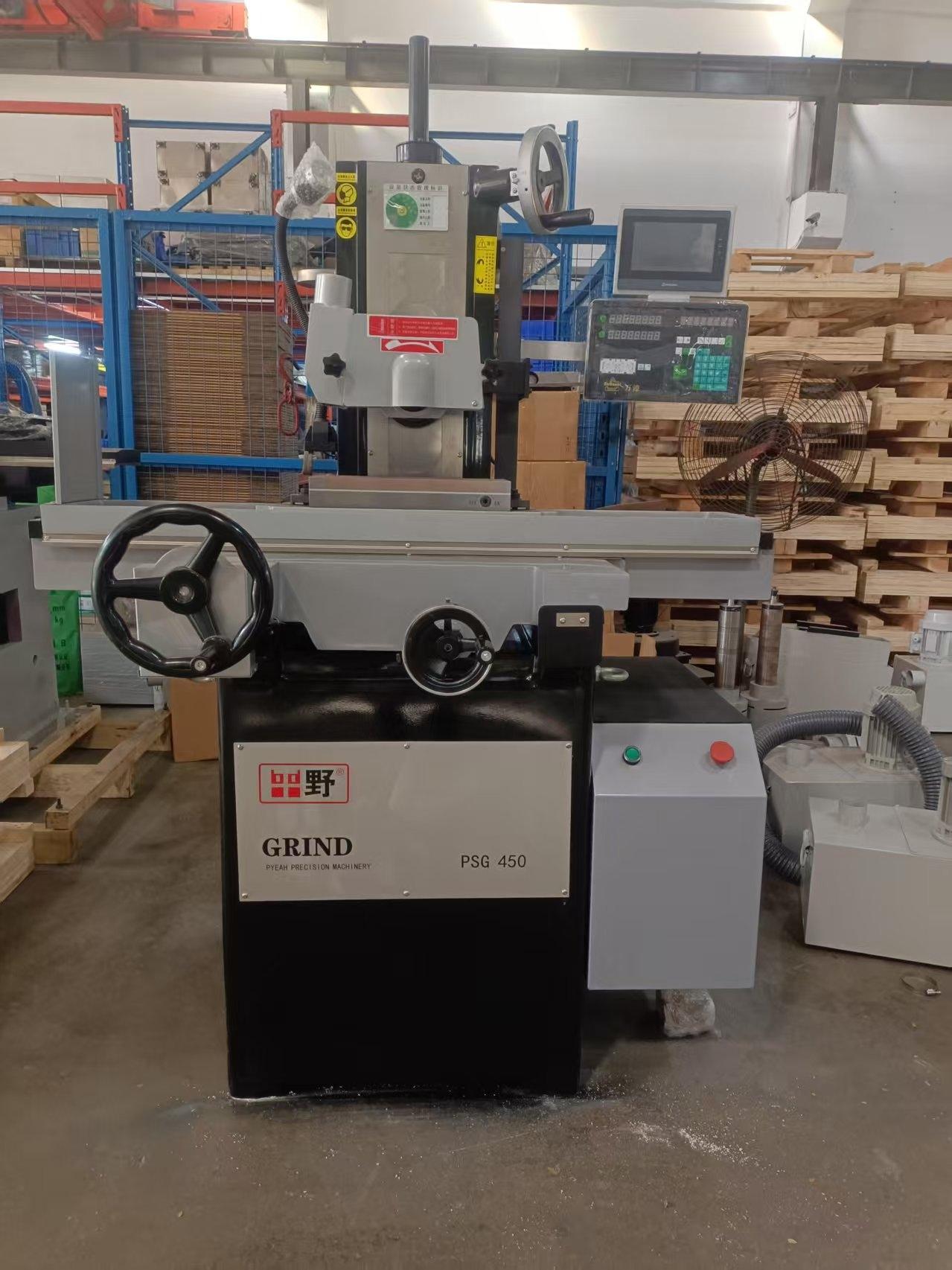
Most off-the-shelf components are engineered for broad compatibility, not for the exacting demands of sub-micron applications. When a positioning stage must hold 10-nanometer repeatability under vacuum, or a fixture needs to compensate for thermal drift measured in parts per million, the catalog simply falls short. We start from the physics of the problem—material creep, surface flatness, actuator resolution—and design every element around those constraints. That often means scrapping the notion of a standard part entirely and machining a monolithic flexure from a single block of Invar, or winding a voice coil with a custom pitch to eliminate cogging at slow speeds.
This mindset reshapes the development process. Instead of adapting a design to available bearings, we might integrate a porous-media air bushing that distributes pressure across 40% of the surface, achieving nanometer-level runout. Instead of accepting a generic encoder, we may pattern a scale directly onto a glass-ceramic substrate to match the coefficient of expansion of the payload. These aren’t catalog items—they’re solutions born from a deep understanding of metrology, dynamics, and the specific environment, whether it’s a synchrotron beamline or a wafer inspection tool. The benefit isn’t just hitting a target number on a datasheet; it’s that the motion system behaves predictably over years of service, with minimal hysteresis and no need for constant recalibration.
The payoff surfaces in quiet ways: an optical assembly that stays aligned after a 20-degree temperature swing, a grinding spindle whose axial error motion is measured in two-digit nanometers, a hexapod that doesn’t sacrifice stiffness for its six degrees of freedom. Customers who once settled for “good enough” from a catalog find that a designed-from-scratch micron-level approach unlocks throughput or yield improvements they hadn’t thought possible. It changes the conversation from “which part number fits” to “what do you actually need the machine to do.”
From Your Blueprint to the Shop Floor
Taking an idea from a detailed drawing to a tangible product involves more than just passing documents between departments. It starts with a shared understanding that the lines on a page represent real materials, tolerances, and assembly steps. Every mark on the blueprint triggers a cascade of decisions about machining, welding, and finishing. The goal is to catch potential snags before they reach the floor, saving time and reducing waste.
Once the design is locked, the focus shifts to translating those specifications into a language the shop team can act on without confusion. This often means simplifying complex callouts, adding notes about fixture setups, or highlighting critical dimensions. Skilled tradespeople rely on this clarity to avoid guesswork. When the blueprint becomes a practical guide rather than an idealistic sketch, the gap between engineering and production narrows considerably.
The real test comes when the first prototype hits the assembly station. Feedback from the floor might reveal that a hole pattern is hard to drill consistently, or that a bend radius works better on paper than with the available press brake. That loop of observation, adjustment, and rework is where a drawing truly becomes a functional part. Embracing this iterative process builds not just better products, but a stronger connection between the people who design and those who build.
When Complex Geometries Demand a Different Approach
Complex geometries often resist the standard toolkit of straight lines and uniform curves. When a structure demands a fluid, organic shape—like the sweeping roof of a concert hall or the asymmetric contours of a prosthetic device—traditional design methods stumble. The usual blueprints and linear calculations give way to surfaces that twist in multiple directions and volumes that defy predictable stress patterns. This is where the familiar rules start to feel insufficient, and the real challenge becomes finding a way to translate such irregular forms into something buildable, functional, and true to the original vision.
Embracing these geometries usually means stepping outside the comfort of conventional software and fabrication processes. Parametric modeling becomes indispensable, allowing designers to manipulate curves and surfaces through algorithmic relationships rather than hand-drawn approximations. Instead of trying to force a unique shape into a predefined grid, the workflow adapts to the form itself. Similarly, manufacturing methods shift toward additive techniques or multi-axis CNC machining, which can carve out or build up material in ways that subtractive, straight-line cutting cannot. The goal isn't just to replicate a complex shape, but to do so without compromising material integrity or budget.
Perhaps the most overlooked dimension is the collaborative leap required. Engineering, material science, and art start to blur together when a geometry pushes boundaries. A sculptor’s intuition might inform a structural engineer’s load calculations, or a biologist’s understanding of cellular structures could inspire a new support framework. This cross-pollination rarely thrives in rigid corporate silos, so teams often reconfigure themselves around the problem. The result is rarely a straightforward linear process—it's more a series of experiments, failures, and breakthroughs that finally align to give shape to the impossible.
The Quiet Advantage of Purpose-Built Grinding
Purpose-built grinding machines are engineered from the ground up for a specific task, rather than being general-purpose tools adapted for multiple uses. This focused design means every component—from the motor to the spindle to the housing—works in harmony, reducing unnecessary vibration and friction. The result is often a noticeably quieter operation, something that machine shops and fabrication facilities rarely celebrate but definitely appreciate once they experience it.
Quieter grinding isn't just about comfort; it directly impacts workplace safety and precision. Excess noise can mask warning signals from other machinery or create fatigue that leads to mistakes. With less background din, operators can stay more alert and maintain tighter tolerances throughout long shifts. Over time, this quiet advantage adds up to fewer errors, less rework, and a less stressful environment for everyone on the floor.
Moreover, the reduced vibration inherent in purpose-built designs extends tool life and cuts down on maintenance. Parts don't rattle loose as often, and the machine doesn't fight itself the way a one-size-fits-all solution can. While the upfront cost might be higher, the long-term return comes in the form of consistent output and a workspace where you can actually hold a conversation near a running grinder—without shouting.
A Partnership That Extends Beyond the Machine
When you choose our equipment, you're not just getting a piece of technology—you're gaining a team that genuinely cares about your success. From the moment we deliver, our engineers work side by side with your staff, learning your workflows and tailoring solutions that fit like a glove. It's a connection built on trust, not just transactions.
We stay close long after installation day. Need to scale up production? We’ll help reconfigure your setup. Hit an unexpected challenge at 2 a.m.? You’ll reach a real person who knows your system inside out. It’s the kind of partnership where distance and time zones don’t matter because we’re always thinking about your next move.
But the real depth lies in the shared vision. We don’t just supply machinery; we exchange ideas, celebrate your wins, and troubleshoot together when things get tough. Over the years, many of our clients become friends, and that human element transforms what could be a simple vendor relationship into something truly lasting.
FAQ
Pretty much any sector where precision material removal is critical. We've built systems for aerospace turbine blade finishing, medical implant contouring, even automotive gear tooth refinement. It's less about the industry and more about whether your process demands tolerances or geometries that off-the-shelf equipment can't handle.
If you find yourself constantly tweaking setups, accepting slightly off results, or piecing together auxiliary tooling every time you start a batch, that's your first clue. Typically, if your workpiece has non-standard contours, requires simultaneous multi-axis finishing, or you're chasing single-digit micron tolerances repeatedly, a stock machine just won't cut it—literally and figuratively.
Absolutely. It begins with a deep dive into your specific application: we look at material properties, desired cycle time, floor space constraints, and automation goals. Then our engineering team sketches out a platform concept, often integrating modular components we've refined over decades. You'll review 3D models and simulation data, and we iterate until the design not only meets specs but feels intuitive for your operators.
We design for adaptability from day one. That might mean leaving room for additional spindles, planning software controls that accept new grinding profiles, or building the base frame with mounting pads for future robotic loading. Many clients come back years later for retrofits, and the goal is to make that upgrade path as straightforward as possible.
We lean heavily on proven subsystems—spindles, ways, dressing units—that have thousands of hours of field history. Before shipment, every machine goes through a grueling runoff at our facility using your actual production parts and parameters. Once installed, we monitor initial performance data remotely. It's not just about passing a test; we want you to see consistent output year after year.
Typically, from finalized design to delivery, you're looking at a range of 5 to 9 months. That can shrink if we can leverage existing modules from previous projects, or expand if there's extensive R&D involved. We'll give you a realistic schedule during the proposal stage, and we pride ourselves on hitting those dates.
Initially, the price tag might raise an eyebrow, but when you factor in scrap reduction, faster changeovers, and less operator intervention, the payback period often lands under two years. Plus, you avoid the hidden costs of endless tweaking and the downtime that comes with trying to make a square peg fit a round hole.
Conclusion
Off-the-shelf grinding machines often hit their limits when geometries drift beyond the ordinary or tolerances tighten into the micron range. Standard catalog solutions, designed for broad appeal, rarely account for the intricate dance of material, surface finish, and part complexity that defines truly specialized work. That's where an engineered-from-scratch approach changes the game. Instead of forcing your design to fit an existing machine, the process begins with your blueprint—transforming it into a dedicated grinding system where every axis, spindle, and workholding configuration is purpose-built for the task. This shift from "what's available" to "what's necessary" eliminates compromises, enabling micron-level precision without the constant adjustments that commodity machines demand.
Complex contours, thin-walled sections, or challenging materials call for more than just a modified off-the-shelf unit; they require a grinding solution that treats the entire process as one integrated system. Purpose-built machines bring a quiet advantage—consistency that doesn't fade over a shift, rigidity that suppresses chatter before it starts, and often a smaller footprint because nothing unnecessary is bolted on. Beyond the hardware, the real difference emerges in the partnership: a close collaboration that begins with application analysis, continues through installation, and extends into responsive support long after the machine is running. It's not just about delivering hardware; it's about co-creating a process that turns your most demanding part prints into reliable, repeatable reality on the shop floor.
Contact Us
Contact Person: Tim
Email: [email protected]
Tel/WhatsApp: +86 15522553731
Website: https://www.winnrui-cnc.com/