

Fire Retardant Clothing Factory: Delivering Durable Protection for High-Risk Industries
2026-09-28
Every day, workers in welding, oil and gas, and electrical maintenance put their trust in a single layer of fabric. That trust can only be earned through relentless testing and manufacturing precision—which is exactly what sets DROTEX apart as a fire retardant clothing factory. But durable protection isn’t just about meeting a standard; it’s about surviving the unexpected. In this post, we’ll pull back the curtain on how high-risk industries get the flame-resistant gear they deserve—without cutting corners.
How We Test Fire Retardant Fabrics Beyond Industry Minimums
We don't stop at a single vertical flame test. Every FR fabric batch gets subjected to a sequence of edge ignition, surface flash, and repeated direct flame contact—often at exposure times two to three times longer than the certification baseline. We also induce molten metal splash and arc flash simulations where relevant, soaking the material in conditions that mimic accidental workplace events rather than clean lab scenarios.
Durability is tested the hard way. After 50 industrial wash cycles with aggressive detergents and high-heat drying, samples are re-evaluated for flame resistance, tear strength, and dimensional stability. If a fabric loses more than 5% of its original FR performance or shows pilling, seam slippage, or shrinkage beyond our internal threshold, it fails.
Our most revealing tests happen on a thermal manikin equipped with heat flux sensors. We dress it in full garments made from the fabric, expose it to flash fire conditions, and map predicted burn injury across the body. Then we repeat the test with the worker moving—reaching, crouching, turning—to see if bunched fabric or exposure gaps compromise protection. That's data no minimum standard asks for.
Why Layered FR Protection Works Better for High-Risk Work Zones
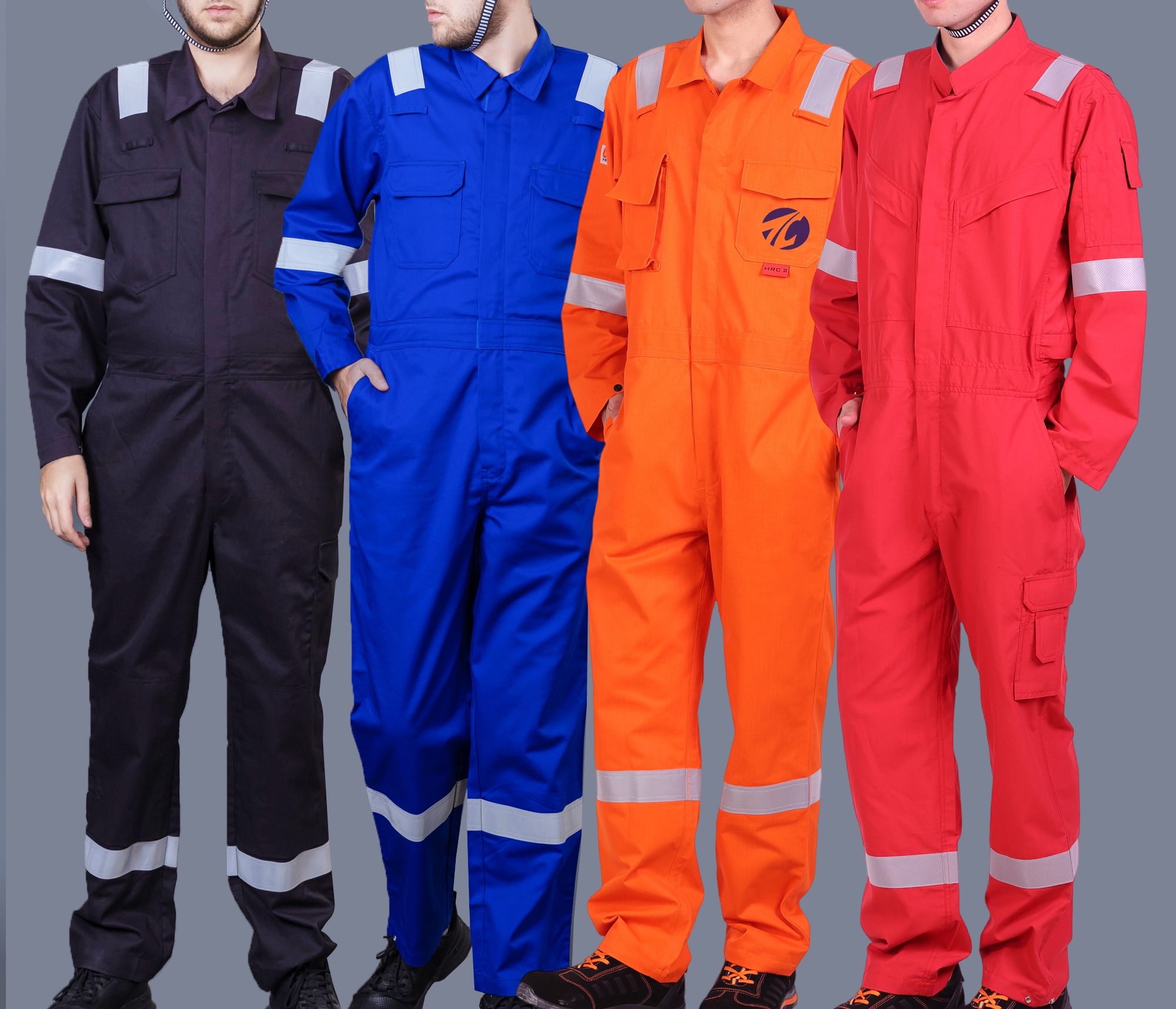
High-risk work zones rarely throw just one hazard at a person. A technician might move from a flash fire zone to a spot with heavy radiant heat, then kneel on abrasive grating all within the same hour. A single thick FR garment has to make too many compromises—it may block flame but trap sweat, or hold its shape while feeling stiff and restrictive. Layered protection avoids that trade-off by letting each piece do a specific job. The base layer wicks moisture away from skin and reduces the chance of steam burns, the mid layer adds warmth without bulk, and the outer shell takes on direct flame, sparks, and rough contact. That combination works as a system rather than one overstuffed barrier.
The real payoff shows up in how people actually move and work. In an arc flash or flash fire, the seconds needed to escape matter more than anything else. Heavy single-layer gear often slows workers down and gets left unzipped or even removed when it becomes uncomfortable. Layered FR systems fit closer to the body, allow a fuller range of motion, and can be adjusted for the task. Strip off the outer layer during a hot afternoon repair, then add it back before entering a confined space with higher exposure risk. That kind of flexibility keeps protection on the body all shift long, and consistent use is what lowers injury rates far more than any single fabric weight ever could.
Matching Fire Retardant Gear to Arc Flash and Molten Metal Hazards
Selecting the right fire retardant gear for arc flash and molten metal exposure isn't just about checking a box for compliance. Arc flash events deliver intense radiant heat in a fraction of a second, while molten metal hazards involve heavy splatter that can stick to fabric and transfer heat over time. A garment that performs well in one test may fail in the other scenario, so the evaluation needs to weigh both the fabric's arc rating and its resistance to molten metal adhesion. For example, some inherently flame-resistant fibers excel at preventing molten metal from sticking, but might require additional layering to reach the arc protection level needed for high-energy electrical environments.
Beyond the fabric itself, the design and fit of the gear matter just as much. Loose cuffs or open pockets can trap molten metal splashes, turning a minor exposure into a serious injury. For arc flash protection, the garment must maintain its integrity against the thermal blast, which means reinforced seams and closures that won't fail under sudden heat stress. When matching gear to both hazards, look for garments that have been tested to relevant standards such as ASTM F1506 for arc flash and ASTM F955 for molten metal, but don't rely on certifications alone. Field experience shows that combining a high arc-rated outer layer with a non-melting base layer offers better overall defense than a single heavier garment that compromises mobility and heat stress management.
Inside the Factory Where Every FR Garment Is Traceable from Yarn to Delivery
The moment a cone of flame-resistant yarn arrives on the loading dock, it gets a digital passport. That identifier doesn't just sit in a database—it travels physically with the material, printed on labels that survive washing, cutting tables, and sewing stations. The result is that every finished garment can be traced back not just to a production batch, but to the exact spinning line and fiber lot that went into it.
On the factory floor, traceability is built into the workflow rather than bolted on afterward. Operators scan the yarn passport at each transition point: when the fabric is dyed, when panels are cut, when a zipper is attached. If a quality check flags a seam or a shade mismatch, the system can isolate the problem to a specific shift, machine, or even an individual spool—without shutting down the whole line.
At the end of the line, the same data follows the garment to packaging and shipping. A final scan links the finished piece to its entire production history, which the customer can access via a simple code on the label. That means a safety officer standing in a warehouse doesn't have to guess whether the FR protection is intact—they can see the exact path from yarn to delivery, including every test and inspection along the way.
The Hidden Weak Points in Standard Fire Retardant Workwear
Most buyers assume a flame-resistant garment is uniformly protective, but the fabric itself often outlasts the stitching. Standard FR workwear may use thread that chars or melts under heat, letting seams split open at exactly the wrong moment. Look closely at the cuffs, collar, and zipper tape—these high-stress zones are frequently the first to fail because they rely on non-FR components or single-stitch construction.
Another weak point hides in how the gear gets washed. Over time, hard water minerals, fabric softeners, or residual oils build up on the surface and can compromise the charring behavior that FR fabrics rely on. Workers also tend to layer non-FR base garments underneath, which can melt into the skin even when the outer layer holds. If the care label is ignored or the garment isn't inspected for thinning, the protection rating becomes little more than a guess.
What Actually Makes Fire Retardant Clothing Durable After 100 Industrial Washes
Many people assume that fire retardant garments lose their protective qualities because the chemical finish washes out. That can be true for some treated cotton, but the models that survive 100 industrial cycles usually rely on inherent flame-resistant fibers. Aramid, modacrylic, and certain FR viscose blends don't depend on a surface coating; the flame resistance is built into the polymer chain, so repeated high-temperature laundering and harsh detergents can't strip it away.
Fabric construction matters just as much as fiber choice. Tightly woven or knitted structures with minimal loose surface fibers resist abrasion from the constant tumbling and mechanical action inside industrial washers. Seams are often the first point of failure, so durable FR workwear uses high-tenacity FR sewing thread and reinforced stitching patterns. Even the choice of zippers, buttons, and reflective trims has to withstand alkaline detergents and thermal disinfection cycles without corroding or losing adhesion.
Beyond the garment itself, the wash process can make or break longevity. Industrial laundries sometimes use oxidizers or bleach to remove heavy soil, but those chemicals accelerate fiber degradation. Facilities that follow the manufacturer's recommended pH range and avoid over-drying tend to get far more than 100 washes out of the same FR clothing. It’s not just about the garment surviving — the protective performance has to remain intact after every single cycle.
FAQ
The garments use a blend of inherent flame-resistant fibers and double-stitched reinforcement at elbows, knees, and pockets. Rather than a single-layer approach, critical zones get an extra layer of abrasion-resistant fabric, so protection doesn't drop off after a few weeks on the job.
Common examples include electrical utilities, oil and gas, welding, chemical processing, foundries, and emergency response teams. The factory tailors fabric weight and closure styles to match the specific hazards, like arc flash ratings for electricians or molten metal splash for foundry workers.
No, because we don't rely solely on chemical treatments. The base fabric is made from inherently flame-resistant fibers, so the protective quality is built into the yarn itself. Even after 100 industrial launderings, the fabric retains its FR rating, provided you follow the care instructions.
Yes, the patterns are cut with extra range of motion in the shoulders and knees, and we offer a range of fits from slim to relaxed. Breathable mesh panels under the arms and on the back reduce heat stress, which is often the hidden risk in high-temperature environments.
Look for NFPA 2112, ASTM F1506, EN ISO 11612, and IEC 61482-2 depending on the region and hazard. A reliable factory will provide third-party test reports for each fabric lot, not just a one-time certificate.
We work from your measurements or sample garments and adjust the pattern instead of just scaling up a medium. For niche roles like confined-space welders or female electricians, we can move pockets, shorten sleeves, and use lighter-weight fabric where mobility matters more.
For standard stocked fabrics, we can start around 100 pieces per style and color. For fully custom fabric development or special color matching, expect a higher minimum, typically 300 to 500 pieces, to keep costs reasonable.
Every production lot is tested for flame resistance, tear strength, and shrinkage before it leaves the factory. We keep a retained sample from each batch for two years, so if a defect appears in the field, we can trace it back to the exact roll of fabric and sewing line.
Conclusion
At our fire retardant clothing factory, every garment starts with fabrics pushed far past the usual certification limits. Instead of stopping at the minimum exposure time, we run repeated thermal tests, abrasion cycles, and seam-strength checks that mimic real flash fire, arc flash, and molten metal splatter conditions. This extra testing catches flaws that standard pass-fail methods miss, so the final product doesn't just meet a number on paper—it holds up when a worker is actually at risk.
Durability is judged by more than a laundry label. We track each garment from the raw yarn lot through cutting, sewing, and final inspection, so any weak point can be traced and corrected. Layered FR protection is built into high-risk zones like shoulders, chest, and forearms, not just printed on a spec sheet. Our washing trials go well past 100 industrial cycles, and we measure tear strength, after-flame time, and shrinkage after every fifth wash. That is why our FR workwear keeps its protective core long after standard gear has thinned, torn, or lost its chemical finish. For electricians facing arc flash or foundry crews near molten metal, this means fewer replacements and fewer moments where the clothing quietly stops protecting.
Contact Us
Contact Person: Sandy
Email: [email protected]
Tel/WhatsApp: 86150 8310 5120
Website: https://www.frdrotex.com