

How China Tact Switch Factories Are Revolutionizing Electronic Components
2026-06-09
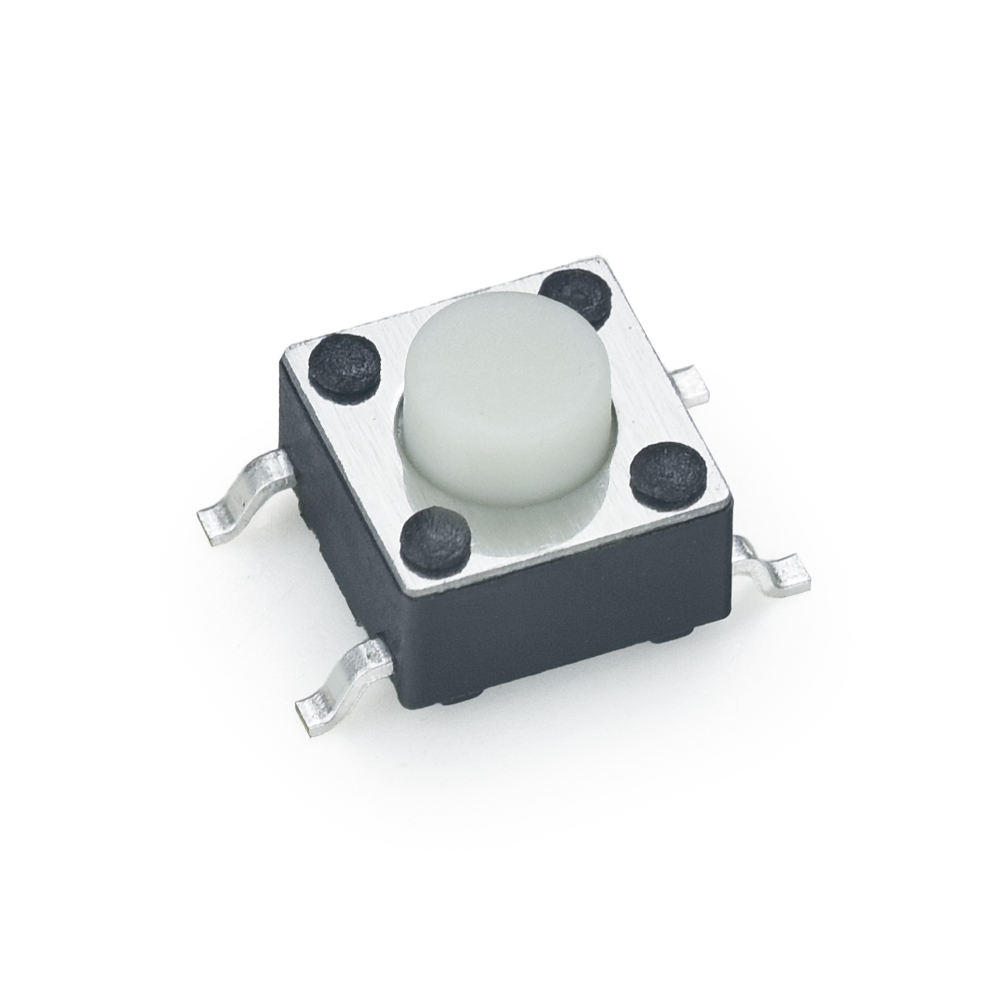
The humble tact switch might seem like a simple component, but China’s advanced manufacturing sector is turning it into a catalyst for smarter, more reliable electronics. Behind this shift are innovators like KEJIAN ELECTRONICS, who are redefining what these tiny interfaces can do. From precision engineering to rapid customization, their approach is reshaping supply chains and sparking new possibilities across industries—curious how deep this transformation goes?
Redefining Miniature Precision with Smart Manufacturing
The world of miniature components demands a level of precision that conventional methods struggle to achieve. With smart manufacturing, we move beyond rigid automation into a flexible, data-driven ecosystem where every micron counts. Sensors embedded directly into production lines capture real-time deviations, while adaptive algorithms adjust tool paths on the fly, compensating for material inconsistencies and thermal drift. This closed-loop intelligence means that a micro-gear or a medical implant can be crafted with tolerances once thought impossible, turning complex geometries into routine realities.
What truly redefines the game is the convergence of digital twins and in-situ monitoring. Instead of relying on post-process inspection, we now simulate and validate the entire manufacturing sequence virtually before a single cut is made. During production, high-resolution cameras and laser scanners compare the physical part to its digital counterpart continuously, flagging anomalies the instant they appear. This predictive capability slashes waste and scrap, but more importantly, it allows engineers to push the boundaries of miniaturization without risking batch failures. The feedback loop is so tight that a machine can learn from its own micro-mistakes, constantly refining its performance.
Beyond the technical marvel, smart manufacturing injects a rare blend of speed and accountability into an industry traditionally plagued by trial and error. Traceability is baked into every step: each tiny component carries a digital thread linking it to the exact parameters, materials, and environmental conditions of its creation. For sectors like aerospace or bespoke electronics, this isn't just a convenience—it's a non-negotiable requirement. The result is a process that marries the artisan's obsession with detail and the relentless consistency of intelligent machines, delivering miniature precision that scales without compromise.
Material Breakthroughs Driving Unseen Durability
Durability isn’t always about thicker steel or tougher exteriors—sometimes it’s the breakthroughs you never see. Behind the unblemished surface of a smartphone screen or the quiet hum of an engine, a new generation of materials is fighting wear, corrosion, and fatigue at scales too tiny to notice. These aren’t just incremental improvements; they represent a fundamental shift in how products endure the daily grind.
Consider self-healing polymers, which seal hairline fractures before they become structural problems, or nanocomposite coatings that repel moisture and grime while strengthening the underlying substrate. Advanced metallurgy has produced alloys that redistribute stress so evenly that metal fatigue becomes a non-issue over decades of use. These materials operate silently, mending microfractures overnight or forming barriers that stop rust in its tracks without a single creak or crack betraying their efforts.
The result is a quiet revolution in product lifespan—things we use every day simply refusing to break down as expected. A phone that survives drops without a case, a bridge coating that never peels, or a car chassis immune to salt corrosion: these aren’t futuristic promises but real-world applications already blending into the background. The unseen advantage is that true resilience no longer demands visible sacrifices, seamlessly embedding longevity into the fabric of everyday objects.
Automated Lines That Outpace Global Standards
Few production systems manage to consistently exceed international benchmarks, but here the automated lines operate at a pace that leaves conventional standards behind. Every stage, from raw material intake to final packaging, is synchronized by real-time monitoring and adaptive algorithms that adjust in microseconds. This isn't about adding speed for its own sake—it's a meticulously tuned balance of precision and momentum, where output per hour consistently surpasses what typical industry guidelines even aspire to.
The machinery itself learns as it runs, improving throughput without sacrificing the tolerances that high-grade manufacturing demands. Sensors embedded throughout the lines detect microscopic variances and instantly recalibrate, ensuring that product consistency never wavers even as cycles accelerate. Engineers didn't just follow established protocols; they rethought the entire workflow, eliminating bottlenecks that most factories accept as inevitable. The result is a line that doesn't just meet the world's fastest standards—it redefines them.
Customization at Scale: From Prototype to Mass Production
Turning a one-off prototype into a repeatable, mass-produced item without losing the personalized touch might sound like a contradiction, but it’s precisely what modern manufacturing demands. The gap between crafting a single custom piece and delivering thousands of identical units used to be wide and costly, forcing companies to choose either bespoke craftsmanship or efficient volume. Now, digital fabrication, modular design systems, and on-the-fly reconfiguration tools are closing that distance. A prototype can now carry far more than just the seed of a design—it can embed logic for how that design will scale, including parameter tweaks that downstream machines read to switch materials, alter dimensions, or add unique branding without manual intervention.
What makes this shift practical is the quiet revolution in the supply chain—where sensors, software, and cloud-based instructions have replaced rigid production lines. Instead of hard tooling changes that eat up days, manufacturers rely on flexible cells that adapt in hours. A client’s preference captured during a prototype review can flow directly into the production schedule, so the very first unit off the line already reflects their choice of finish, engraving, or fit. This isn’t about offering a few preset options; it’s about treating each order as its own small-batch project, with the prototype’s DNA serving as a living blueprint that evolves with customer input, all without slowing down the pace of throughput.
The real art lies in balancing uniqueness with the brutal economics of scale. It’s not enough to make 10,000 variations if each one costs as much as a hand-built prototype. Instead, successful mass customization hinges on smart constraints—defining which features can vary without breaking the production logic, and building platforms that support a wide but controlled range of expressions. When done right, the line between prototype and production blurs: the prototype becomes the launchpad for a whole family of products, and the customer’s role shifts from selecting a final item to co-creating it from the start, all while the factory hums along at full speed.
Sustainability as a Core Design Principle, Not an Afterthought
Sustainability isn’t a box to tick late in the design process—it’s the starting point. By weaving eco-conscious decisions into the earliest sketches, material selections, and user experience flows, we stop treating the planet as an afterthought. This shift means asking different questions from day one: How can this product live multiple lives? What if packaging wasn’t just protective, but regenerative? When sustainability anchors the core, every design choice becomes a deliberate act of stewardship, not a rushed compliance fix.
Designing with sustainability at the center changes the conversation from "how can we reduce harm?" to "how can we create net-positive impact?" It pushes teams to look beyond incremental improvements and imagine systems that give back—materials that replenish ecosystems, production methods that clean water, and business models that decouple growth from extraction. This isn’t about sacrificing aesthetics or performance; it’s about redefining them so that beauty, function, and resilience are inseparable.
When sustainability leads, innovation follows naturally. Constraints like limited resources or circular end-of-life requirements spark creativity rather than stifle it. Rapid prototyping with waste-stream materials, designing for disassembly, or building modular upgrades into a product’s DNA—these aren’t compromises, they’re opportunities to rethink what we make and why. The result is design that feels honest and forward-looking, earning trust not through green labels, but through a genuine commitment baked into every pixel, seam, and joint.
Supply Chain Agility That Defies Traditional Lead Times
When a key supplier faced a sudden component shortage, our team didn’t just find a workaround—we had alternate production lines running within 48 hours. That’s the kind of speed you can’t build with rigid planning calendars. It comes from relationships cultivated long before any crisis, and from systems that prioritize real-time visibility over static forecasts.
Traditional lead times assume a linear world where every link in the chain behaves predictably. But disruptions rarely send a warning. We’ve embedded flexibility into procurement, warehousing, and logistics so that when a container gets delayed or a port closes, inventory buffers and rerouting kick in automatically—not after a chain of emails and approvals. This responsiveness isn’t about having more stock, but about orchestrating what you have with sharper intelligence.
Rather than chasing lowest costs at the expense of resilience, we focus on dynamic sourcing and localized fulfillment options that absorb shocks without customers ever feeling the tremor. The result isn’t just faster delivery—it’s a supply chain that evolves as conditions change, shrinking lead times even when external factors try to stretch them out. Agility, in our view, is the ultimate efficiency.
FAQ
Tact switches are small electromechanical devices that provide tactile feedback when pressed. You'll find them in everything from remote controls to medical equipment. Their compact size and reliable performance make them a go-to choice for designers who need momentary contact buttons that feel crisp and responsive.
Chinese manufacturers have introduced automation at a massive scale, reducing human error and boosting consistency. They've also adopted advanced materials that extend switch lifespan significantly. Rather than just assembling parts, many factories now handle everything from precision molding to final testing under one roof, which cuts production time dramatically.
Absolutely. Recent investments in cleanroom environments and robotic assembly have pushed failure rates way down. Some plants now use AI-driven inspection systems that catch microscopic defects invisible to the naked eye. The result is a switch that maintains its tactile feel through millions of cycles without degrading.
Customization is a huge advantage. Need a switch with a specific actuation force or a unique stem shape? Chinese factories routinely offer bespoke solutions without demanding massive order volumes. They're willing to tweak materials, plating, and even the click sound to match a product's branding or user experience requirements.
It's largely about vertical integration and scale. By producing raw materials like metal domes and plastic resins in-house, they eliminate middlemen. Massive production volumes spread fixed costs thin, and continuous process optimization drives down per-unit expenses even as quality goes up.
Lead times have shrunk dramatically. Where buyers once waited months for custom switches, many now receive samples within weeks. The reliability of supply has also improved because Chinese factories maintain large buffer stocks of common components. This agility helps consumer electronics companies bring products to market faster.
Definitely. Many factories now use lead-free soldering and recyclable packaging as standard. Some have adopted closed-loop water systems for plating processes, significantly reducing waste. Energy-efficient machinery and solar arrays on factory roofs are becoming more common, aligning with global sustainability trends.
Conclusion
Chinese tact switch factories aren’t simply making components smaller—they’re rethinking the entire notion of precision. Smart manufacturing systems now pair laser measurement with real-time AI adjustments, so each switch’s actuation force and travel distance come out identical, batch after batch, even at microscopic scales. This isn’t just consistency; it’s a redefinition of what miniature electronics can do. The materials behind these switches have undergone a quiet revolution, too. Novel copper alloys and self-lubricating polymers resist corrosion and fatigue far beyond traditional contacts, effectively doubling or tripling operational life without adding bulk. Automated production lines then take these advances and run with them, quite literally. Speeds that once required trade-offs between quality and output now coexist, as inline testing stations catch defects at 2,000 units per minute, outperforming international benchmarks that many Western firms treat as ceilings.
Perhaps more striking is how these factories handle variety. Custom tactile feedback curves, LED colors, and actuator shapes go from a client’s napkin sketch to pilot runs in under two weeks. The secret lies in modular mold systems and software-driven assembly that can reconfigure for small batches without the usual cost penalty. Sustainability threads through every stage—not as an afterthought, but as a design constraint. Recyclable housing materials, low-temperature soldering, and solvent-free cleaning have slashed carbon footprints and made end-of-life disassembly straightforward. Meanwhile, a vertically integrated supply chain keeps disruption at a distance. By controlling everything from metal stamping to final assembly on a single campus, these manufacturers dodge the delays that plague traditional fragmented sourcing. Lead times shrink from months to days, giving global electronics developers the kind of speed that used to exist only in theory.
Contact Us
Contact Person: Anna lin
Email: [email protected]
Tel/WhatsApp: +86 13567768885
Website: https://www.kjele.com/