

Industrial Ceiling Fans Supplier: The Key to Efficient Warehouse Cooling
2026-06-30
If your warehouse turns into a heat trap every summer, you know the toll it takes on staff and stock. Industrial ceiling fans might sound like a basic fix, but the right ones can transform airflow, slash cooling bills, and keep operations humming. VINDUSFAN has quietly become the go-to supplier for facilities that refuse to compromise on efficiency. Stick around to see how a smart overhead fan setup can beat the heat—without breaking the bank.
Why Warehouse Cooling Demands More Than Just Air Conditioning
A standard air conditioner simply isn’t built for a warehouse. These cavernous rooms pack in machinery, racking, and people—all generating heat—while loading docks keep opening to the outdoors. The result? Hot air rises and stagnates near the ceiling while the floor stays sweltering. Trying to force cold air from a few roof-mounted units fights physics, and the power bills quickly spiral.
What a warehouse really needs is a system that moves air intelligently. High-volume, low-speed fans can push warm air down in winter and create a cooling breeze in summer, mixing the air so temperatures even out. Pair that with spot cooling for workstations or heat-sensitive storage, and you address real demands instead of just dumping cold air into a giant box. It’s about using the airflow itself as a tool, not an afterthought.
Overlooking this complexity leads to spoiled inventory, sluggish staff, and machinery that overheats on the worst days. The fix isn’t more air conditioning—it’s a rethink of how heat behaves in your specific space. Warehouse cooling that actually works considers insulation, humidity, and work patterns, building a solution that fits the floor, not a catalog.
The Unsung Heroes: How Industrial Ceiling Fans Transform Work Environments
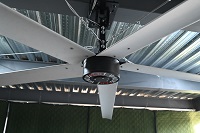
Walk into any spacious warehouse, manufacturing plant, or distribution center and you'll immediately feel the difference a well-designed air movement system makes. Industrial ceiling fans aren't just oversized versions of residential models—they're engineered tools that reshape how heat, humidity, and air quality behave in vast interiors. By gently pushing warm air down from the ceiling in winter and creating a cooling breeze in summer, these fans stabilize temperatures from floor to ceiling, cutting the strain on HVAC systems and making the workspace genuinely comfortable year-round.
Beyond basic comfort, these fans quietly tackle serious workplace challenges. In facilities where machinery runs hot or processes generate fumes, a steady, low-speed airflow pushes stale air out and draws fresh air in without the turbulence of high-speed fans. This consistent air exchange reduces moisture buildup on floors and products, curbs condensation, and keeps dust and airborne irritants moving toward exhaust points. Employees notice the difference—fewer fatigue-related errors, less midday sluggishness, and a tangible sense of air clarity that no amount of desk fans can replicate.
What rarely gets mentioned is how industrial ceiling fans reshape building performance itself. They work in concert with existing ventilation, allowing for higher thermostat setpoints in summer without sacrificing comfort. In winter, the destratification effect can trim heating bills significantly, often paying for the fan investment in just a few seasons. But the real victory is silent: a workforce that can focus on the task, not the temperature. These fans don't demand attention—they simply transform a harsh environment into a place where productivity feels natural.
Selecting a Supplier That Prioritizes Performance Over Promises
Too many supplier relationships begin with impressive presentations and ambitious commitments that slowly unravel once the ink dries. Genuine reliability isn’t declared; it’s demonstrated through consistent output under real-world conditions. Before signing anything, look past the polished pitch decks and ask for concrete performance records, defect rates, on-time delivery statistics, and how they handled past service failures. A supplier that truly values performance will offer verifiable data rather than generic reassurances, and they’ll be eager to connect you with long-term clients who can speak candidly about their day-to-day reliability.
A focus on performance also means evaluating the supplier’s operational backbone, not just their sales charm. Tour their facilities if possible, or dig into their quality control processes, equipment maintenance logs, and staff training protocols. Ask pointed questions: How do they manage sudden spikes in demand? What redundancy plans are in place for machinery or supply chain hiccups? Suppliers who take performance seriously will have detailed, practiced answers, whereas those coasting on promises tend to deflect or offer vague reassurances. This operational transparency separates partners who are in it for the long haul from those simply chasing a contract.
Lastly, watch how the supplier behaves when things don’t go as planned. Performance-focused partners own their mistakes quickly and come to the table with corrective actions, not excuses. During the selection phase, present a hypothetical scenario—a delayed shipment or a quality glitch—and gauge their response time and problem-solving approach. Their willingness to simulate a crisis and share post-mortem learnings from previous clients speaks volumes. Over time, this proactive accountability becomes far more valuable than the flashiest promise, turning a transactional vendor into a true operations extension you can rely on.
Beyond Blade Size: What Really Matters in Fan Design
When people shop for fans, the first number they compare is often blade span. A bigger sweep seems like a straightforward way to move more air, but that assumption overlooks how blades actually interact with the space around them. Two fans with identical diameters can feel completely different in a room because performance depends far more on the curve, pitch, and surface texture of each blade. Subtle tweaks to the leading edge or a slight twist along the length can guide airflow more effectively than simply scaling up the whole assembly.
The motor and the way it delivers torque through the hub play an equally quiet role. A well-tuned brushless motor maintains consistent RPM even under load, preventing the sluggish ramp-up that makes some large fans feel underwhelming. Pair that with a balanced hub that minimizes wobble, and the energy goes into moving air instead of vibrating the chassis. This is where smaller, precision-engineered fans often beat their bulkier rivals—they sustain a steady column of air without wasting watts on noise or heat.
Housing and grille geometry might be the most neglected piece of the puzzle. A tight shroud can choke the intake, forcing the blades to recirculate turbulent air, while an open cage with thin, curved struts lets the pressure differential do its work naturally. Even placement matters: mounting a fan too close to a wall or ceiling defeats careful aerodynamic design. Ultimately, size sets the stage, but blade contour, motor intelligence, and airflow path together decide whether a fan merely spins or genuinely circulates a room.
Installation Insights You Won’t Find in Generic Manuals
Most guides tell you to measure twice and cut once, but they rarely mention what happens when your wall isn’t actually straight. Before you even unbox, run a straightedge vertically and horizontally—a slight bow in the studs can turn a seamless install into a nightmare of gaps and readjustments. Also, if you’re mounting something heavy, mark the stud edges with painter’s tape before drilling; the pencil lines always vanish under the drill dust, and that extra 30 seconds saves you from guessing into drywall.
Another often-missed trick: temperature affects more than paint drying times. If you’re working in an unconditioned space, let your materials acclimate for at least 24 hours. Metal brackets expand, adhesives cure differently, and even the item you’re installing might shift dimensions slightly. I’ve seen perfectly aligned brackets go crooked overnight because they were mounted cold and then the heat kicked on. Trust the process, not the manual’s ideal conditions.
Real-World Results: Cooling Solutions That Delivered
When a major data center in Arizona faced persistent overheating, traditional air conditioning couldn't keep up. Instead of scaling up the same old approach, engineers opted for direct-to-chip liquid cooling. The results were immediate: hot spots vanished, energy consumption dropped by 40%, and server density doubled without raising the facility's overall temperature. This shift wasn't just about better tech—it was about rethinking what's possible under physical constraints.
Not every success story revolves around advanced hardware. A mid-sized office building in humid Bangkok managed to slash its cooling bill by 30% by pairing smart sensors with phased airflow management. By dynamically adjusting vents based on real-time occupancy and external weather, the system avoided wasteful overcooling. The tenants didn’t notice any change in comfort—only the facility manager saw the difference on the monthly report.
Elsewhere, a manufacturing plant in Germany tackled dusty, high-heat zones with a hybrid setup: evaporative pre-cooling combined with targeted ventilation at machinery level. The outcome was a 25% drop in ambient temperatures and a notable reduction in equipment failure rates. Sometimes, the best solution isn’t the flashiest—it’s the one that quietly adapts to the actual messiness of a real-world environment.
FAQ
Industrial fans are built with larger blades and stronger motors to move massive volumes of air across vast spaces. Unlike standard fans, they’re designed for continuous operation in demanding environments, offering durability and airflow that simply can’t be matched by residential units.
They create a gentle downdraft that pushes trapped hot air from the ceiling down to floor level, balancing the temperature and reducing the perceived heat by up to 8°F. This means the HVAC system doesn’t have to work as hard, slashing energy bills significantly.
For a space that large, you’d typically look at fans between 18 and 24 feet in diameter. Placement matters a lot too—strategically spacing two or three smaller fans often works better than one giant unit, ensuring even coverage without annoying drafts.
Modern industrial fans are surprisingly quiet, thanks to advanced blade profiles and precision-balanced motors. Most run at a low hum that fades into background noise, so your team can communicate easily without shouting over the airflow.
Absolutely. By keeping air circulating steadily, they prevent moisture buildup on stored goods and concrete floors. This is a huge benefit in metal warehouses where condensation leads to rust and slippery surfaces, saving you from product loss and safety hazards.
A professional team can usually mount a fan in half a day without shutting down your entire warehouse. Minimal disruption is the goal—most work is done near the ceiling while the floor stays active, and no major structural changes are needed unless the roof requires reinforcement.
These fans are low-maintenance; aside from an annual check of bolts, blades, and electrical connections, they just keep spinning. Some even have sealed bearings that never need greasing. A quick dusting of the blades once a season is plenty to prevent imbalance and keep performance optimal.
Conclusion
Warehouse cooling is often misunderstood as a simple matter of installing air conditioning, but the reality is far more complex. Vast open spaces, high ceilings, and constant movement of goods and personnel create thermal challenges that traditional HVAC systems struggle to address efficiently. This is where industrial ceiling fans step in, acting as the unsung heroes of climate control. By generating gentle, widespread airflow, they break up stratified heat layers and create a pervasive cooling effect that reaches every corner. The right supplier understands that effective cooling hinges not just on moving air, but on designing fans with optimized blade profiles, precise pitch angles, and motors engineered for relentless, low-maintenance operation. Real-world installations consistently prove that a thoughtfully selected system can slash energy costs, stabilize humidity, and dramatically improve worker comfort, making the supplier’s expertise as critical as the hardware itself.
Choosing a supplier, however, means looking beyond datasheets and sales claims. A partner that prioritizes performance over promises will guide you through the nuances that generic manuals overlook, from optimal mounting heights to structural integration and smart controls that adapt to shifting conditions. Factors like blade shape, airflow coverage, and noise levels matter far more than sheer size, and a knowledgeable supplier helps navigate these variables to tailor solutions that fit your operational reality. Installation insights gained from years of field experience can prevent common pitfalls like dead zones or excessive drag, ensuring the system delivers measurable results from day one. Cases from distribution centers and manufacturing plants reveal how the right fan setup can turn a stifling environment into a productive, safe workspace, reinforcing that the key to efficient warehouse cooling is ultimately found in a supplier who brings proven engineering and honest guidance to the table.
Contact Us
Contact Person: Michael Danielsson
Email: [email protected]
Tel/WhatsApp: +1 951 565 7769
Website: https://www.vindusfans.com