

ODM Fuse Holder Factory: Designing Custom Fuse Holders for Diverse Applications
2026-07-09
Behind every reliable electrical system is a component we rarely think about: the fuse holder. Yet when standard designs fall short, who do engineers turn to? Enter SINGI, an ODM fuse holder factory that doesn't just manufacture parts—it crafts custom solutions for the most demanding and diverse applications. From concept to production, this is where precision meets possibility.
Tailored Protection: Crafting Fuse Holders for Unique Circuit Needs
Every circuit tells a story of constraints and demands, and off-the-shelf fuse holders often miss subtle details that matter. Custom crafting begins with a deep dive into the application's electrical, thermal, and mechanical personality—whether it's a high-vibration automotive environment, a corrosive marine setting, or a space-constrained medical device. Material selection shifts from standard thermoplastics to reinforced ceramics, elastomeric seals, or even metal alloys that can withstand temperature swings from -40°C to 200°C. The contact design is equally thoughtful: gold-plated beryllium copper for low contact resistance in precision circuits, spring-loaded terminals that compensate for thermal expansion, or hermetically sealed chambers that exclude moisture and dust entirely.
Physical footprint customization goes beyond merely shrinking or enlarging a housing. It involves reimagining how the fuse holder integrates with the board or panel—snap-in features for tool-free assembly, right-angle orientations that clear tall components, or IP67-rated barriers that protect against wash-downs. In systems where current peaks are unpredictable, tailored solutions might incorporate monitoring leads or embedded sensors that detect fuse status without the need for external circuitry. By anticipating how the holder will age, designers can also incorporate arc-suppressing barriers and flared entrance designs that reduce insertion wear over thousands of cycles, ensuring that protection does not degrade with time.
The testing phase for a bespoke fuse holder is far more intense than for commercial equivalents. Prototypes undergo thermal shock cycling, salt spray exposure, and mechanical endurance runs that simulate years of harsh operation. Vibration profiles derived from actual field data reveal resonant frequencies that could loosen contacts, leading to a redesigned clamping mechanism or the addition of locking tabs. Electrical tests push beyond nominal ratings to verify that the holder can handle momentary inrush currents without arcing or hot spots. Every iteration moves closer to a component that feels native to the system—fitting its contours, answering its stresses, and protecting not just the circuit, but the entire narrative of reliability that the design team has painstakingly built.
From Concept to Production: The Journey of a Custom Fuse Holder
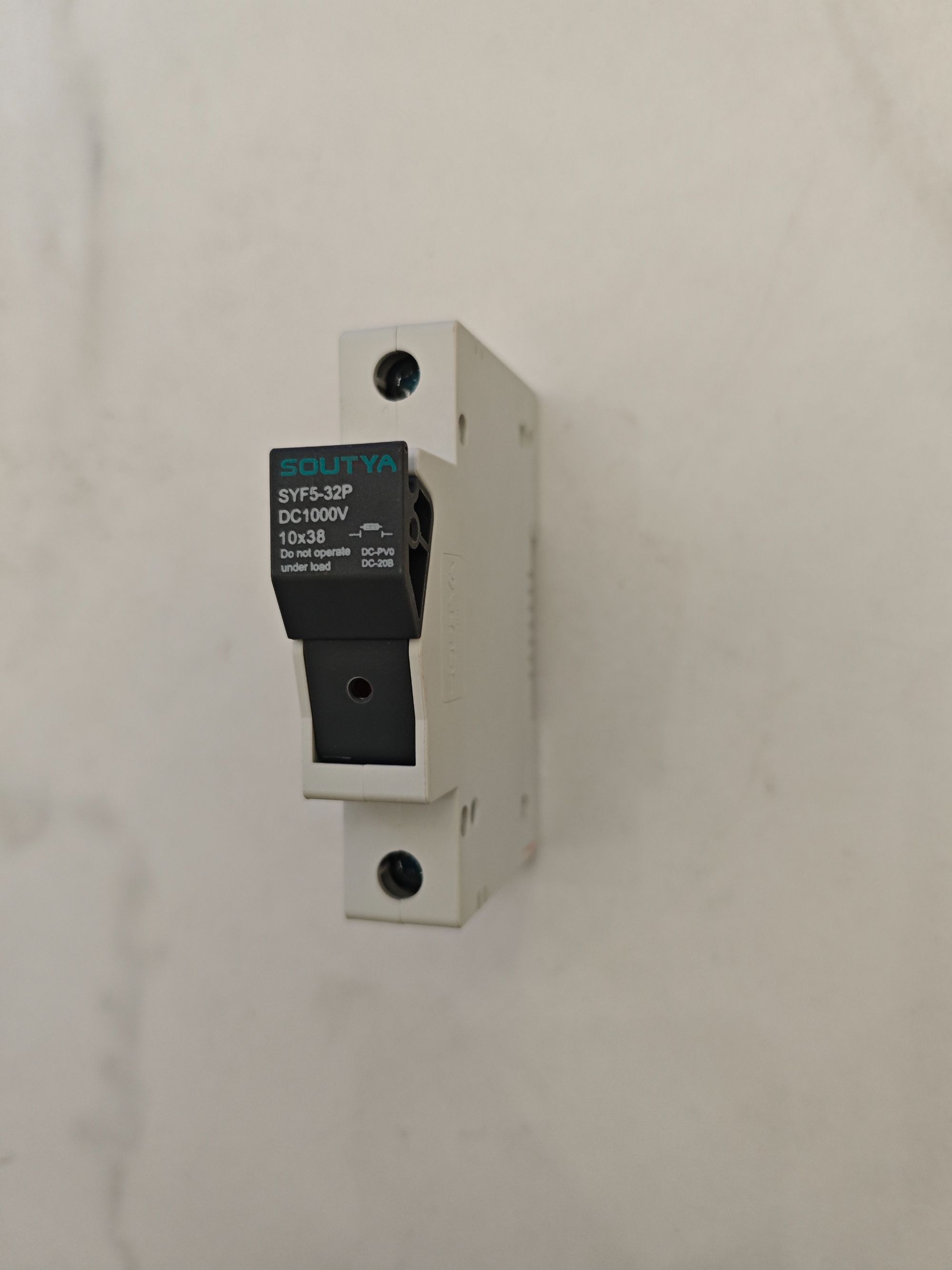
Creating a specialized fuse holder starts with a clear problem. Whether it's space constraints, extreme temperatures, or unusual voltage demands, the first step is a blunt conversation about what the standard parts can't do. Engineers sit down with the user, sketch rough ideas on a whiteboard, and sometimes hold existing components in hand to point out failures. It's less about grand visions and more about asking, "What exactly needs to be different?"
Once the requirements are nailed down, the design phase becomes a series of trade-offs brought to life. A 3D model might look perfect on screen, but the first physical prototype often reveals headaches: a contact that overheats, a housing that cracks during insertion, or a mounting ear that doesn't quite align. Tweaks happen fast—adjusting spring tension, swapping materials, reshaping a lever. There’s no magic formula; it’s iterative testing on the bench, sometimes with a heat gun or a vibration table, until the part holds up in ways the original off-the-shelf unit never could.
Moving into production is where trust gets built. The custom design has to survive not just functional tests but the chaos of real manufacturing: tooling that shrinks a plastic wall slightly more than predicted, or an automated assembly step that scuffs a terminal. Pilots runs are inspected with a critical eye, often leading to last-minute mold adjustments or a changed plating spec. When the first batch finally comes off the line and passes the same stresses the prototype did, it’s a quiet confirmation that the journey from a rough idea to a reliable, repeatable component is complete.
Material Matters: Choosing the Right Build for Extreme Environments
When designing gear for the world's most unforgiving places, the conversation starts not with features, but with the raw elements themselves. Standard stainless steel buckles in a maritime setting, for instance, quietly turn into brittle, stress-corroded disasters because of chloride attack. This forces a shift in thinking: instead of asking what material is strong enough, we need to ask what chemistry is stable enough when constantly bombarded by salt spray, UV radiation that shreds polymers, and thermal swings that turn ordinary seals into cracked liabilities. It's a fundamental puzzle where the environment dictates every subsequent choice.
The real art lies in dodging the trap of over-specification. Slapping a heavy titanium alloy onto everything seems safe, but its unforgiving stiffness can create stress risers in a dynamic system, and its galling nature seizes threads under the same vibrations it's supposed to withstand. A smarter path often leads to reinforced engineering thermoplastics in moving joints, where inherent lubricity and vibration damping outperform metal, or to a clever bimetallic marriage that puts a corrosion-proof skin over a fatigue-resistant core. The build becomes a deliberate assembly of contrasting behaviors, each chosen not for a lab-perfect ideal, but for how it genuinely fails in the field.
Validation is where the theoretical meets the brutal. There's no substitute for long-term, in-situ testing that goes well beyond the clean, accelerated cycles of a lab chamber. A composite weave that survives a textbook salt-fog test can de-laminate spectacularly after months of cyclic wetting and drying, where crystallizing salts act as microscopic wedges. True material selection is an iterative conversation with failure—examining a part that survived not because it was the strongest, but because it flexed just enough to shed ice, or dulled a crack front that would have shattered a harder alternative. The best choices are rarely the most obvious ones on a datasheet.
Precision Engineering in Miniature: Compact Designs for Modern Electronics
Shrinking electronics without sacrificing performance demands a level of precision that borders on obsessive. Modern devices cram more functionality into spaces that would have seemed impossible a decade ago, and the artistry lies in how each component earns its place. From the intricate layering of circuit boards to the micro-scale assembly of connectors, every micron counts. It’s not just about making things smaller—it’s about rethinking the very architecture of a device so that heat dissipation, signal integrity, and structural stability all coexist within a footprint you can balance on a fingertip.
The real magic happens in the details you never see. Take the flex circuits that bend around tight corners inside a wearable, or the laser-welded seams on a medical implant that must survive years of corrosion. These designs often push the limits of material science, combining metals, ceramics, and polymers in ways that defy traditional manufacturing. Engineers walk a tightrope between theoretical elegance and practical feasibility, iterating through countless prototypes where a misalignment of five microns can kill a project. The payoff, though, is a generation of electronics that disappear into their environments—whether it’s a sensor woven into fabric or a processor tucked into a hearing aid casing.
What’s often overlooked is how compact design forces a paradigm shift in reliability. When you can’t rely on bulky casings or generous spacing to manage stress, the entire system must be engineered to tolerate thermal expansion mismatches and vibration at a granular level. This means simulation tools get pushed to their limits, and testing regimes become miniature torture chambers that replicate years of wear in mere weeks. The result is a breed of electronics that not only fits in tight spots but also outlasts their larger predecessors—quietly powering the connected world without demanding attention.
Beyond the Standard: When Off-the-Shelf Just Won't Do
Standard solutions promise simplicity, but they often demand that your vision bends to fit their mold. You start with enthusiasm, only to find yourself trapped in a labyrinth of compromises—clunky workflows, features you’ll never use, and glaring gaps where your unique process should be. The friction builds quietly: a manual override here, a spreadsheet workaround there, until the tool that was supposed to empower you becomes a daily source of frustration. It’s not failure on your part; it’s the inevitable outcome of forcing a square peg into a round hole.
When off-the-shelf crumbles, the path forward isn’t to try harder with the same limited options—it’s to build something that breathes with your rhythm. Custom development strips away the excess and addresses the exact pain points you face, whether that’s connecting systems that refuse to talk to each other or automating a process that’s uniquely yours. This isn’t about reinventing the wheel; it’s about crafting a solution that fits so naturally you forget it’s there, turning complexities into invisible gears that purr in harmony with your goals.
Collaborative Innovation: Partnering with Engineers for Optimal Safety
Close collaboration with engineering teams transforms safety from a checklist into an integral part of design. When safety experts and engineers work side by side from the earliest stages, potential hazards are identified before they become baked into prototypes. This partnership fosters creative problem-solving, where constraints like ergonomics, materials, and functionality are balanced against real-world risk scenarios. Rather than retrofitting safeguards later, the team iterates together, testing assumptions and refining solutions until the product protects users without compromising performance.
Engineers bring deep technical knowledge, while safety professionals contribute a systemic view of failure modes and human factors. This cross-pollination leads to innovations that neither group would have reached alone—like a machine guard that doubles as an alignment tool, or a sensor system that anticipates operator fatigue. By embedding safety into the DNA of the development process, we avoid the friction of last-minute compromises and build trust that the final design is genuinely reliable. It's a proactive chemistry that relentlessly asks, "What could go wrong?" and then designs those risks out of existence.
FAQ
An ODM fuse holder factory specializes in crafting custom solutions from scratch, handling everything from initial design to final production, ensuring the fuse holders perfectly match your application's unique electrical and mechanical needs.
Absolutely. Our design team works closely with clients to develop fuse holders that withstand extreme conditions, such as high vibration, temperature variations, or corrosive environments commonly found in industrial settings.
We incorporate robust materials, precise engineering, and rigorous testing. Each design undergoes verification for current carrying capacity, dielectric strength, and endurance to meet international safety standards.
We can design a wide range including panel mount, PCB mount, inline, and battery fuse holders. From low-profile options for compact electronics to heavy-duty versions for power distribution, the possibilities are tailored to your requirements.
You're involved from concept to completion. We start with your specifications, share 3D models and prototypes, and incorporate your feedback at every stage to ensure the final product exceeds expectations.
Lead times vary depending on complexity, but we prioritize efficient project management. Typically, from design approval to prototype delivery, it can take a few weeks, with full production ramping up smoothly thereafter.
Yes, we have experience designing fuse holders that meet the stringent requirements of automotive and marine environments, including resistance to moisture, salt spray, and vibration, ensuring dependable performance.
We guide you through the certification landscape, ensuring your custom fuse holder complies with UL, IEC, or other relevant standards. We provide documentation and testing data to facilitate approvals.
Conclusion
An ODM fuse holder factory transforms the way industries approach circuit protection by replacing generic components with purpose-built solutions. Instead of forcing a standard part into a unique design, engineers collaborate directly with the factory to craft fuse holders that address specific electrical, mechanical, and environmental demands. This tailored approach starts with a deep dive into application realities—voltage spikes, space constraints, vibration, or extreme temperatures—and builds protection around them. From refining the first sketch to validating a production-ready sample, the journey blends hands-on prototyping with rigorous testing to ensure every contour and contact point serves a functional purpose.
Material selection becomes a strategic advantage, with options ranging from high-temperature thermoplastics to corrosion-resistant alloys, each chosen for endurance in harsh conditions. Compact designs are engineered with precision, packing robust protection into miniaturized footprints that suit modern electronics without sacrificing safety or ease of maintenance. When off-the-shelf holders fall short, the factory’s ability to create from scratch shines—redesigning terminals, mounting styles, and ingress protection to fit seamlessly into the final product. Throughout the process, close collaboration with design engineers drives innovation, turning a fuse holder into an integral safety feature rather than an afterthought. The result is a cohesive, application-driven component that performs reliably where standards cannot reach.
Contact Us
Contact Person: Jack
Email: [email protected]
Tel/WhatsApp: (+86) 13757759651
Website: https://www.singi.com