

ODM Milled Parts What to Know Before You Order
2026-10-23
Ordering ODM milled parts without a clear checklist is like driving blindfolded—you might get lucky, but the odds aren't in your favor. Small details like tolerance stacking, material callouts, and surface finish specs can turn a simple part into a costly nightmare, and most buyers don't realize until the parts are already in hand. That's where BOYIKUN comes in. We've compiled the hard-won lessons from thousands of milling projects to give you the straight talk on what to know before you hit 'order.' No fluff, no jargon—just the practical details that separate a smooth production run from a frustrating rework loop.
Material Selection Beyond the Spec Sheet
A tensile strength number on a datasheet rarely tells you how a polymer will behave after 10,000 thermal cycles in an engine bay. We often start with the spec sheet because it's convenient, but the real filtering starts when you talk to the shop floor and the supplier about lot-to-lot variation, moisture sensitivity, and what happens at the corner of the mold. This is where materials get selected or rejected, long before any formal design review.
Cost per kilogram can be misleading if you ignore scrap rates, machining time, or the lead time to replace a cracked batch. Some stainless grades that look similar on paper have very different work-hardening behavior; one might turn into a nightmare on a lathe while the other cuts clean. A colleague once swapped two "equivalent" 316 alloys and spent three weeks fighting tool wear and inconsistent threads. That kind of knowledge never appears on a data sheet.
Testing small coupons in the lab gives a false sense of confidence. Better to pull samples from the actual supply chain, run them through the same cleaning, coating, or welding steps, and see if the material still meets the spec at the end. If your design can tolerate a slightly lower yield in one direction but not the other, say so early. Otherwise you end up optimizing for a number that doesn't matter while ignoring the one that does.
Tolerances That Cost More Than They Should
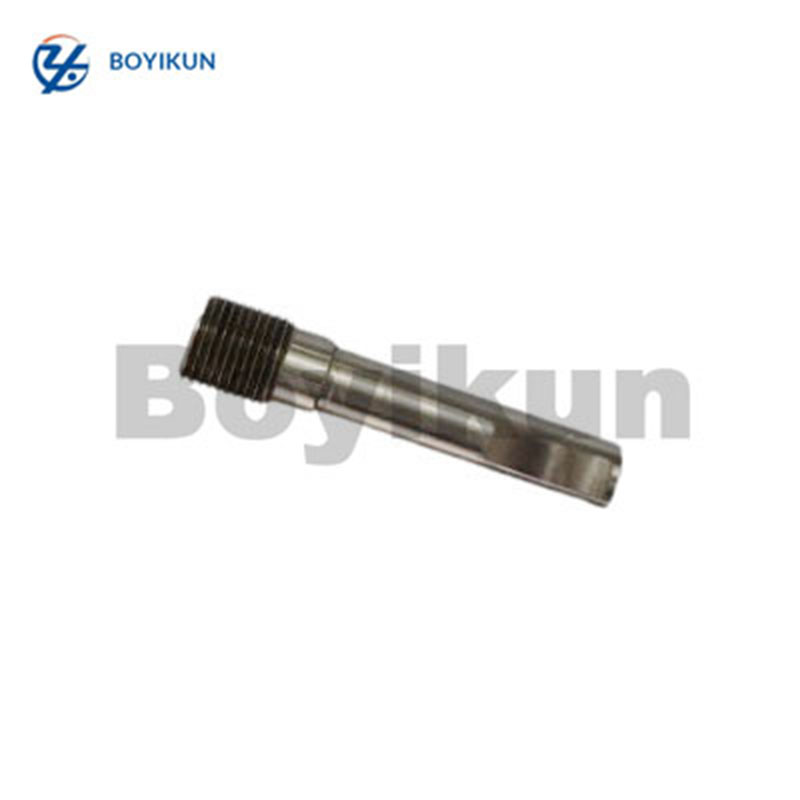
Tight tolerances often carry hidden costs that go far beyond the price of precision. When a drawing specifies ±0.005 mm on a feature that only needs ±0.05 mm to function, you are not just paying for extra machining time or higher-grade tooling—you are also paying for slower setups, more frequent inspection, and a higher scrap rate. Every unnecessarily tight dimension forces the manufacturer to chase microns that never mattered, and that effort shows up on the invoice in ways that are hard to spot line by line.
One of the least obvious expenses is the cost of rejecting good parts. A tolerance that is tighter than required will inevitably cause borderline components to be thrown away, even though they would have worked perfectly in the real world. This drives up material waste and lead times, while creating a cycle of over-inspection and rework that adds no value to the final product. In many cases, loosening a tolerance by a few microns can cut production costs by double digits without affecting performance at all.
The solution starts with questioning every dimension on the drawing. Ask what the part actually needs to do, not what the CAD software defaults to or what a previous engineer happened to specify. Engage with the shop floor early—machinists can often tell you which tolerances are cheap to hold and which ones will trigger expensive processes like grinding or EDM. By treating tight tolerances as a scarce resource rather than a sign of quality, you can eliminate costs that quietly eat into margins while delivering exactly the same function to the customer.
Surface Finishes With Hidden Tradeoffs
Matte black hardware looks sharp in photos, but the first touch leaves behind an oily smudge that refuses to wipe clean without a dedicated microfiber cloth. The low-gloss surface that hides fingerprints in the showroom becomes a magnet for them in daily use, and the only real fix is to stop touching it.
Brushed stainless steel does a fine job of disguising light scratches, yet those fine grain lines act like tiny gutters for kitchen grease and bathroom soap scum. A damp cloth just smears the residue sideways; restoring the original look often requires a solvent that also dulls the very texture you bought it for.
Soft-touch coatings feel almost velvet-like when new, but heat, humidity, and hand oils break them down faster than anyone expects. Within a couple of years, the surface can turn sticky, then start peeling along the edges—turning what was once a premium design detail into a sticky reminder of planned obsolescence.
Geometry Choices That Influence Toolpaths
The way a part is modeled directly shapes how the cutting tool moves across the stock. Sharp internal corners, for instance, force the CAM system to either leave excess material or make the tool plunge and change direction abruptly, which can lead to vibration and poor surface finish. Designers often overlook that a fillet radius slightly larger than the tool radius allows for smoother, more predictable tool engagement.
Thin walls and deep pockets introduce another layer of constraint. When wall thickness approaches the tool diameter, deflection becomes a real problem, and the toolpath must compensate with lighter stepovers or different approach angles. Deep cavities can restrict tool length, forcing the use of extended reach tools that chatter unless the path is carefully tuned. Even the orientation of a hole or slot relative to the machine axes matters, as it determines whether drilling cycles stay simple or demand complex multi-axis motion.
Overhangs and undercuts dramatically alter feasible strategies. If a geometry includes a shallow undercut, a simple 3-axis path might leave uncut material, whereas a slight redesign of the angle could enable a more efficient 5-axis swarf cut. Curved surfaces that transition gently between convex and concave regions let the software maintain a constant scallop height without excessive air cutting. Paying attention to these geometric details before programming saves time and reduces the need for manual edits on the shop floor.
Order Quantity Shifts the Pricing Equation
Traditionally, unit price stays constant while total cost climbs linearly with quantity. But in real business scenarios, once order volume crosses a certain threshold, the cost structure, production scheduling, and logistics methods all shift. Suppliers don't offer discounts out of generosity—they do it because marginal costs get spread thinner and cash flow improves. As a result, quantity itself becomes a negotiation lever, and the price curve stops being a straight line.
Large orders allow suppliers to buy raw materials in bulk, reduce changeover times, and boost equipment utilization. Those savings usually get passed on partially through tiered discounts or rebates. The key isn't the discount percentage—it's finding the supplier's cost inflection point and bidding at that volume where both sides benefit. Buyers need to understand the supplier's fixed-cost ratio: double the quantity and unit fixed cost might drop 30–40%, but suppliers rarely hand over all those savings voluntarily.
Smart buyers stop asking "what's the unit price?" and start asking "how does your total cost structure change at this volume?" Quantity-driven pricing moves the conversation from a simple price-per-unit battle to a joint optimization of total cost of ownership. Sometimes a larger order lets you demand more flexible delivery schedules or custom packaging, because suppliers are far more willing to accommodate their biggest accounts. The pricing equation's variables expand from unit price alone to a mix of volume, payment terms, and service levels.
Details to Send Before Requesting a Quote
A quote is only as accurate as the information behind it, so include the details that actually affect pricing and lead time. Start with a clear description of what you need—whether that’s a machined part, a custom enclosure, or a full production run—along with the expected quantity, target unit cost, and any hard deadlines. Attach 2D drawings, 3D files (STEP or IGES), or even a rough sketch with key dimensions; don’t assume a verbal description is enough.
Beyond geometry, specify the material grade, surface finish, tolerances, and any post-processing like anodizing, powder coating, or heat treating. If you have quality requirements—such as PPAP, ISO 13485, or first article inspection—state these upfront so the supplier can factor in documentation and testing costs. Mention any compliance standards (RoHS, REACH, FDA) that apply to your industry.
Also include a realistic annual volume or repeat order forecast, because tooling and setup charges spread very differently across 100 units versus 10,000. If this is a modification of an existing part, share the current version and explain what’s changing. The more complete your package is, the fewer back-and-forth emails you’ll need before getting a firm, comparable price.
FAQ
Depends on end-use environment. Aluminum is lighter, easier to machine, and often cheaper for prototypes. Stainless steel holds up to moisture, chemicals, and higher temperatures, but expect longer cycle times and more tool wear. If you’re unsure, send both material options to your supplier and ask for a quick manufacturability comparison.
Only tighten tolerances where mating parts or critical fits demand it. Calling every dimension ±0.001 inch adds cost and lead time without improving function. Most non-critical features work fine at ±0.005 inch or even looser. Ask your machinist which tolerances drive the price so you can relax anything that doesn’t affect performance.
If the part geometry is complex, the material is expensive, or the design hasn’t been tested in real assembly, run a small batch first. Prototypes catch issues with tool access, fixture holding, or minor geometry changes that would be painful to discover after paying for 500 units.
You can get anything from raw machined finish to anodizing, powder coating, bead blasting, or passivation. But not all finishes fit all materials. Anodizing works on aluminum but not steel. If the part has tight tolerances, ask how much thickness the finish will add—some coatings build up enough to affect fits.
Send a solid model in STEP or IGES, a PDF drawing with critical dims and tolerances, and a short note on quantity and lead time. Don’t send surface models or STL files unless the supplier specifically asks for them. Mark threaded holes, counterbores, and any surface finish callouts on the drawing rather than relying on model colors.
Depends on order size, material availability, and current shop load. For small quantities in common aluminum, many suppliers quote 1–2 weeks. If you need custom finishes or heat treatment, add another week. Always confirm whether the lead time starts after drawing approval or after payment.
Reduce deep pockets, small internal radii, and unnecessary tight tolerances. Deep features require long tools and slower feeds; tiny radii may require special cutters. Also check whether the quote includes material, finishing, inspection, and shipping. Ask for a breakdown so you can compare suppliers on the same basis.
If the parts go into a regulated, safety-critical, or high-wear application, yes. Request a mill test report for the raw material and a dimensional inspection report for the finished parts. For cosmetic or low-load consumer items, standard visual inspection is usually enough.
Conclusion
When sourcing ODM milled parts, the spec sheet rarely tells the whole story. Material selection goes beyond chemical composition and hardness—machinability, raw stock availability, and even how a grade responds to post-processing can shift your lead time and budget. A slightly stronger alloy might chew through end mills or warp after anodizing, while a more common variant holds tolerances better with less drama. Tolerances are another place money leaks. Calling out ±0.01 mm on a non-functional cosmetic surface is a fast way to double or triple the quote; instead, reserve tight bands for mating features and let the machinist relax everything else. Surface finishes carry hidden tradeoffs too—bead blasting can hide tool marks but rounds off sharp edges, while a mirror polish may make inspection harder by introducing glare. These three decisions ripple into each other, so it's worth thinking about them together before you send a drawing.
Geometry choices also steer the process more than most buyers expect. Deep pockets with sharp internal corners force small tools, slow feeds, and multiple setups, while leaving a fillet radius that matches a standard end mill can collapse cycle time. Thin walls and tall ribs vibrate, so adding a slight taper or support structure can actually reduce scrap. Order quantity changes the math dramatically: a prototype run of five pieces carries setup and programming overhead, while a production run of five hundred amortizes those costs but locks in tooling and inspection fixtures, meaning last-minute design changes get expensive. Before requesting a quote, send the full 3D model (STEP or native file), a clear callout of critical-to-function dimensions, the preferred material and surface treatment, expected quantity range, and a realistic delivery window. Skipping these details forces the shop to guess—and guesses get priced into the risk.
Contact Us
Contact Person: Xianchen Hu
Email: [email protected]
Tel/WhatsApp: 86-13248645200
Website: https://www.hexnb.com/