
OEM Carbonated Beverage Filling Machine Solutions for Custom Bottling Needs
2026-10-28
Every carbonated beverage brand dreams of a signature bottle that stands out on the shelf—but finding a filling line that adapts to your exact shape, size, and carbonation level is harder than it sounds. Most machinery forces you into standard molds, killing your creativity before the first bottle is even capped. That’s where Wanying Machinery changes the game: their OEM carbonated beverage filling machines are built around your custom bottling needs, not the other way around. From twist-off sport caps to slim aluminum cans, this post unpacks how tailored engineering can turn your unique packaging idea into a high-speed, leak-free reality.
Matching Fill Speeds to Your Product's Carbonation Personality
Dialing in fill speed isn't just about hitting a throughput target—it's about reading how your product behaves under pressure. A lively, highly carbonated beverage tends to get agitated when rushed, throwing foam and losing its sharp bite before the cap goes on. Slowing the fill, increasing counterpressure, or chilling the liquid a few degrees can keep that personality intact without sacrificing a clean seal.
On the other end, a gently carbonated or nearly still product usually tolerates faster fills without drama. The key is to treat carbonation as a character trait rather than a one-size-fits-all variable. Watch the fill line, listen for excess breakout, and adjust speed in small increments until the product settles exactly the way you want it in the bottle or can.
Custom Valve Design for Bottles That Defy Standard Line Layouts
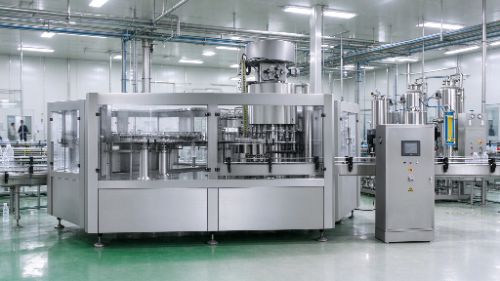
Standard filling lines are built around a simple assumption: bottles arrive in a straight row, evenly spaced, with identical neck heights and angles. Once that assumption breaks—say, with an oval bottle that must sit at a 15-degree tilt, or a slim container that forces tight center-to-center distances—the usual valve arrays start to fight the layout instead of working with it. Custom valve design removes that conflict by treating each bottleneck position as its own problem rather than forcing it into a fixed grid.
This often means rethinking the valve body itself, not just swapping a nozzle. A custom unit might use an offset stem, a shortened actuator, or a curved inlet path to reach a fill point that standard hardware cannot touch. The goal is to keep the seal, flow rate, and drip control intact while letting the valve fit into whatever space the bottle demands. In practice, that can mean a multi-head manifold with individually angled outlets, or a single servo-driven valve that follows a moving bottle through a curved section of track.
The real value shows up when a line no longer needs a costly rebuild just to handle an unusual bottle. Instead of adding conveyor twists, risers, or custom turret plates, the valve package itself absorbs the geometry. That shift keeps changeover simpler, reduces the number of wear parts, and lets a fill room run mixed bottle styles back to back without sacrificing accuracy or speed.
Tackling Foam and Oxygen Pickup in High-Speed Runs
High-speed filling lines expose every flaw in your foam and oxygen management strategy. When product moves through pipes at elevated velocity, pressure drops at bends and valve seats pull dissolved gases out of solution, creating micro-foam that collapses into sticky residues. Oxygen ingress follows the same weak points: imperfect seals, worn O-rings, and cavitation zones. Fixing these isn't about a single adjustment but about mapping where the fluid actually loses laminar flow.
Start by measuring dissolved oxygen at the filler bowl and again just before the fill valve. If the delta is small, your problem is downstream—likely entrained air at the filling nozzle or splashing in the container. A quick win is to reduce drop height and fine-tune the fill tube angle so product clings to the container wall instead of free-falling. For foam generated by shear, lower the pump speed a few percent or increase back pressure on the return line; even a 0.3 bar change can collapse unstable microbubbles.
Longer term, consider replacing sharp elbows with swept bends and adding a small deaeration tank after the pasteurizer. These changes reduce turbulence at the source and give entrained gas a place to escape before it reaches the filling valve. Track foam height and oxygen pickup per shift, not just per batch, to catch drift early. Small, deliberate changes—not big overhauls—keep high-speed runs stable without chasing your tail.
OEM Partnerships That Keep Your Recipe Details Under Wraps
When you hand off production to an outside manufacturer, the last thing you want is your proprietary blend winding up in a competitor's lab. A solid OEM partner signs strict confidentiality agreements before a single ingredient is weighed, and they often segment your project behind locked access within their facility. Some go further by using coded ingredient lists on the production floor, so even line workers never see the full formula spelled out.
Beyond paperwork, the right partner builds secrecy into their daily workflow. They keep your raw materials in dedicated storage zones, schedule runs so your product never shares a line with another client's batch, and limit recipe documentation to a need-to-know team. This kind of compartmentalization isn't standard everywhere—it's a sign you're dealing with a manufacturer who treats your formula as a genuine trade secret rather than just another job ticket.
What often gets overlooked is how OEM partners handle digital security. Recipe files, supplier specs, and batch records should live on encrypted servers with audit trails showing exactly who accessed what and when. If a partner can't walk you through their data protection protocols or hesitates to put confidentiality terms in writing, that's your cue to keep shopping. The goal isn't paranoia—it's ensuring your unique formula stays yours long after the first production run ships.
Modular Frames That Let You Add Stations as Demand Grows
Starting small doesn’t mean staying small. These frames are built so you can bolt on an extra station in an afternoon, not a full redesign. Need two workbenches today and five next quarter? The connectors and shared rails handle the shift without a hiccup.
Most setups force you to guess your future workload. Here, you just watch the floor. When orders pick up, you add a module, rebalance the flow, and keep moving. The frame’s load points are already waiting, so there’s no cutting, welding, or downtime to expand.
It’s the difference between buying furniture and growing a system. Your first station pays for itself, then the next one slots in cheaper because the backbone is already there. No wasted parts, no ugly retrofits—just a line that flexes with your actual demand.
On-Site Support Teams Who Have Worked With Stubborn Carbonation
Some batches of soda just refuse to behave. The carbonation level drifts either too flat or aggressively over-fizzed, and standard checks don't reveal an obvious culprit. On-site support teams who have worked with stubborn carbonation know that temperature control at the filler is only part of the story. They check the water deaeration system, look at the syrup-to-water ratio in real time, and trace any pressure drops along the line from the carbonator to the filling valves. Often, the issue hides in a worn seal, a slightly clogged sparger, or a sensor that has drifted out of calibration.
These teams bring a mix of diagnostic patience and hands-on experience. Instead of relying on a single cause, they test the carbonation tank pressure against the actual CO2 absorption in the bottle, measure the headspace after capping, and compare those readings with temperature logs from the past several hours. One common trick is to run a short pause-and-restart cycle on the filler while watching for a pressure surge. That surge, even if small, points to a back-pressure valve sticking or a filler bowl level sensor misreading. Stubborn carbonation rarely has a single smoking gun.
What sets the best on-site teams apart is their willingness to stay until the line runs stable over multiple shifts. They document every adjustment, tag the exact CO2 supply manifold setting, and leave a simple troubleshooting card for the local operators. The goal isn't just to fix today's run but to build a repeatable method for the next time a tank of syrup behaves differently or a pump starts to cavitate under load. That practical, calm approach is what turns a chronic carbonation headache into a controlled process.
FAQ
It typically includes the entire line from bottle rinsing and filling to capping and labeling, with options for carbonation tanks, inline mixers, and conveyors. We often configure the filler head count, valve type, and control system around your specific bottle geometry and production targets. For customers who already have some equipment, we can also supply just the filler module and integrate it with existing lines.
We use isobaric filling, which keeps the bottle under counter-pressure while the beverage enters. The filler bowl is pressurized with CO2, and the vent tube releases only the displaced gas, not the product. Temperature control is also important; we typically keep the product below 4°C before filling. Our nozzles are designed to reduce turbulence, so you don't end up with excessive foaming.
Yes, but that requires change parts and usually a different filling valve setup. Some clients run a mixed line by swapping star wheels, guide rails, and valve stems. It's not instant, but a well-trained crew can switch formats in under an hour for standard sizes. If you need daily switches, we recommend separate filler modules or a quick-change design from the start.
From 200 ml slim cans to 2-liter PET bottles, and even odd-shaped glass containers. The key is designing the neck handling and star wheel pockets to match your specific container. We ask for sample bottles or CAD files early in the process, so the infeed screw, grippers, and filling height can be tuned. Highly tapered or embossed bottles may need extra centering guides.
Sugar-based drinks create biofilm quickly, so the filler needs regular CIP (clean-in-place) cycles. We design the product path with minimal dead legs, use sanitary diaphragm valves, and include spray balls in the filler bowl. The exterior washdown can be automated with a recirculating detergent system. For aseptic or extended shelf life products, we offer an enclosed filling chamber with HEPA-filtered air.
Typical lines range from 2,000 to 36,000 bottles per hour. The filler head count is the main lever, but line speed also depends on capper and labeler throughput. For small-batch craft producers, we can build a compact 8-head filler that runs at 3,000 BPH. For large co-packers, a 60-head rotary filler with servo-driven capping can exceed 30,000 BPH.
We offer remote diagnostics via VPN, on-site commissioning, and spare parts stocked in regional hubs. Most issues can be resolved with a video call, but we also have field engineers in many countries. Training is included for operators and maintenance staff, with documentation in English or the local language. We also provide preventive maintenance schedules customized to your production calendar.
Conclusion
When you're filling beverages with real carbonation, a one-size-fits-all machine rarely keeps up with how different recipes behave. Some drinks hold CO2 quietly at low temps; others froth the moment they hit a filler bowl. The right OEM solution starts by matching line speed to that specific carbonation personality, because pushing a delicate sparkling water through a high-speed setup meant for aggressive sodas just creates waste. It also means valve geometry that adapts to unusual bottle shapes and neck finishes instead of forcing your container into a standard layout. The payoff shows up in foam control and oxygen pickup: tuned vent tubes, gentle product paths, and filler pressure curves that keep dissolved oxygen low even when the line is running flat out.
Beyond hardware, a strong OEM partner respects that your recipe is proprietary. That means engineering teams work under confidentiality, and custom builds don't leak your formulation details to competitors. Modular frame design lets you start with a compact footprint and add rinsing, capping, or dosing stations later without ripping out the whole line. And when a particular carbonation level fights back—spiking foam, inconsistent fill heights, CO2 breakout in the bowl—on-site support crews who have handled stubborn batches can tune the system until it settles. The result is a filling line that treats your product as the spec, not an afterthought.
Contact Us
Contact Person: Tyson
Email: [email protected]
Tel/WhatsApp: +8613396971296
Website: https://www.wanyingmachinery.com