

OEM Gel Pads: Custom Comfort and Support for Any Application
2026-10-29
When off-the-shelf gel pads fail to match the exact contours of your product, you’re left compromising on both comfort and performance. That’s where OEM gel pads step in—tailored to fit any application, from medical cushions to industrial vibration damping. At Kunbao, we’ve seen how bespoke gel formulations and precision molding turn ordinary supports into standout components. But what really goes into crafting a custom pad that holds up under pressure, heat, and repeated use? Let’s explore the design possibilities that most manufacturers overlook.
Designing Around Your Product's Exact Contours
When a product has an unusual silhouette, standard rectangular packaging often leaves too much empty space. Instead of forcing the item into a generic box, designers can map the outline directly—creating a cavity that mirrors every curve, notch, and edge. This approach not only holds the product more securely during transit but also gives the unboxing moment a sense of precision. The foam or molded pulp can be cut using digital templates derived from the product's CAD file, so the fit is exact down to the millimeter.
The real payoff comes in how the package feels in hand. A tailored cavity reduces shifting, which means less abrasion on polished surfaces and fewer returns from cosmetic damage. It also opens the door to slimmer outer cartons, since you're no longer padding out voids with filler. For products with complex contours, like power tools or medical devices, this kind of contour-hugging interior can reduce material use while making the protective layer look intentional rather than improvised.
From Orthotics to Industrial Damping, One Gel Plays Many Roles
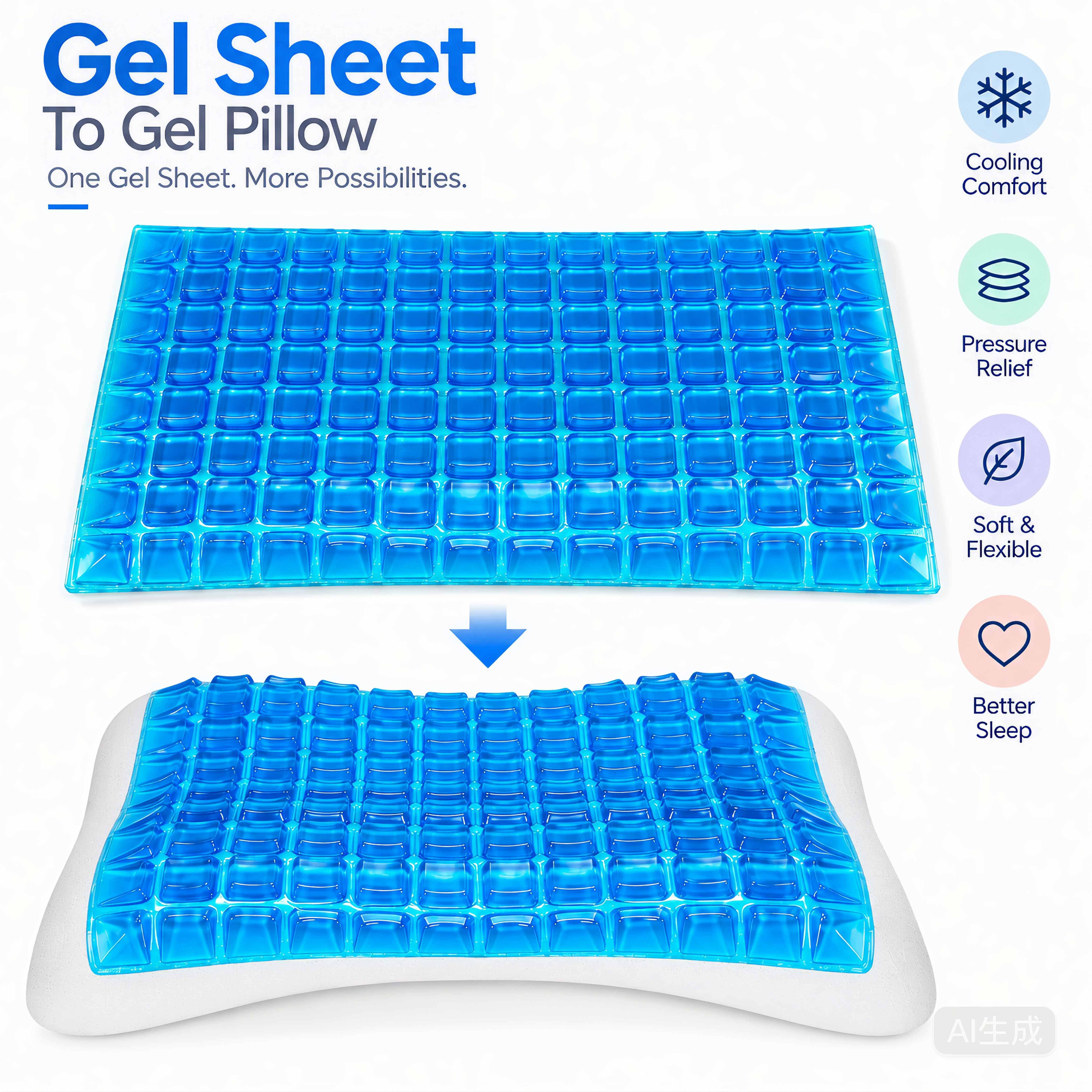
The same gel that cushions a heel in a custom orthotic also quiets the shudder of heavy machinery. It starts as a viscoelastic polymer, tuned at the molecular level to absorb energy whether it comes from a foot strike or a vibrating press. In a shoe insert, that means spreading impact over milliseconds, reducing peak pressure without feeling squishy. On a factory floor, the identical material sits between steel plates, converting high-frequency jolts into low-grade heat. No redesign, no reformulation—just a shift in thickness and geometry.
What makes this possible is a narrow band of damping behavior that stays consistent across temperatures and load speeds. Most foams stiffen in the cold or bottom out under sustained force. This gel doesn’t. It flows slowly under long-term pressure, like a liquid trapped in a solid scaffold, yet snaps back fast enough to handle repetitive shocks. That’s why one batch can be die-cut into orthotic pads, injection-molded into anti-vibration mounts, and extruded as gaskets for electronics—each part exploiting the same core property but shaped for a different kind of abuse.
Engineers often overlook that crossover. They search for a “medical-grade” material or an “industrial” one, not realizing the performance spec is nearly identical. The gel’s durometer, rebound rate, and compression set land in the same range for a walking boot as for a turbine housing. The difference is mostly in certification paperwork and surface finish. Once that clicks, the supply chain simplifies: one raw material, several forming processes, dozens of end uses from rehabilitation clinics to automotive assembly lines.
Pressure Mapping Reports That Leave No Guesswork
Numbers on a page can only tell you so much about how a person interfaces with a seating surface. Our pressure mapping reports turn raw sensor data into a clear visual narrative, highlighting exactly where load concentrates, how posture shifts over time, and which adjustments actually make a measurable difference.
Instead of wading through spreadsheets or guessing at the meaning of a heat map, you get a straightforward breakdown of peak pressure zones, asymmetry patterns, and stability trends. Each report is built around the specific questions you bring to the table, so the findings connect directly to the next decision you need to make.
The result is a tool that removes interpretation guesswork. You can see inside the interface without needing to become a sensor expert, and you can compare before and after states with enough clarity to act confidently on the data.
Tooling Costs That Don't Punish Small Orders
The old assumption that tooling costs only make sense for high-volume production is quietly falling apart. Modular tool designs, shared fixture libraries, and quick-change setups now let small batches avoid the crushing upfront expense that used to come with custom molds or dies. Instead of treating a tool as a sunk cost tied to one job, shops are building systems where the same base plates and standard components get reused across different parts. That shift alone removes a huge barrier for companies that only need a few hundred units.
Soft tooling and 3D-printed fixtures have also changed the math. A printed jig or a low-cost urethane mold won't last forever, but it doesn't have to. For short runs, paying a little more per part is far cheaper than committing to a hardened steel tool that would take years to amortize. The key is matching the tool's lifespan to the order size, not defaulting to the most durable option. Small orders stop being punished when the tooling is designed to be disposable or easily modified.
Some suppliers now offer tooling as a service, charging per use or leasing the equipment rather than demanding a full buyout. This flips the cost structure from a fixed investment into a variable expense, which lines up much better with unpredictable demand. Small-batch customers can finally pay for only what they actually run, without carrying the weight of idle tooling between orders. It's a practical shift that makes low-volume production genuinely competitive.
Surviving Autoclaves, Freezers, and Chemical Washes
Some materials laugh at the autoclave's 121°C steam bath, while others curl up and die after one cycle. It's not just about surviving the heat, though. The pressure swing and that final drying phase can crack seals and warp thin plastic just as effectively as the temperature itself. If a component is going to sit in a freezer at -80°C right after being autoclaved, the thermal shock is a separate test entirely.
Chemical washes are sneakier. A quick rinse with 70% ethanol might be fine for most plastics, but repeated exposure to stronger solvents or detergents will slowly eat away at surface finishes and weaken structural bonds. You won't always see the damage until a handle snaps or a gasket starts leaking. The order matters, too: autoclaving after a solvent wash can drive residual chemicals deeper into porous materials.
Designing for survival means thinking about all three stresses as a package, not isolated events. Materials like polypropylene and certain grades of stainless steel handle most cycles well, but even they have limits. Check the fine print on chemical compatibility charts, and when in doubt, run a sacrificial test piece through the exact sequence you plan to use. It's cheaper than finding out mid-experiment.
Five Days From CAD to First Article
Turning a fresh CAD model into a physical first article within five working days sounds ambitious, but it hinges on a tightly orchestrated sequence: design for manufacturability checks within hours, immediate toolpath generation, and machine time booked before the file even lands. Instead of waiting for a formal production slot, your geometry moves straight into a dedicated fast-track cell where setup sheets and probing routines are prepared in parallel. That overlap is what compresses the usual two-week wait into a single workweek.
The real bottleneck in most shops is not cutting metal; it is the queue. By pre-staging raw stock, standardizing fixture plates, and keeping a small buffer of common tooling loaded, the first article can begin machining the moment the CAD file is approved. Any minor revisions are handled without stopping the line because the post-processor runs in the background and updates the program on the fly. The result is not a rushed part, but a controlled sprint where every hour is accounted for.
Customers usually expect a prototype in three to four weeks, so receiving a fully inspected first article on day five changes how they plan downstream assembly and testing. That speed comes from disciplined parallel workflows, not from cutting corners. Whether it is a complex bracket or a multi-sided housing, the five-day window is achievable when the shop treats CAD data as the only handoff needed.
FAQ
Off-the-shelf gel pads come in fixed shapes and thicknesses, which limits how well they fit a specific product. OEM pads are made from your CAD or physical sample, so the outline, edge bevel, and surface finish match the final device exactly—no trimming or awkward gaps.
Yes. The tooling isn't limited to simple rectangles or circles. Channels for airflow, cutouts for sensors, and contoured profiles are all possible. We typically review a drawing or 3D file first to flag any areas that might tear during demolding.
Medical seating, orthotics, sports protective gear, wheelchair positioning, and industrial anti-vibration mounts are all common. The same base gel can be tuned very differently—say, a soft heel cup versus a firmer equipment pad—so one material family covers a wide range.
Firmness is usually matched to the load and contact area. A pad under a bony prominence needs lower Shore hardness to spread pressure, while a pad under a machine foot might be firmer to prevent bottoming out. We often send trial samples in two or three durometers so you can test them in the real application.
It distributes pressure more evenly than standard foam because the gel flows slowly under load. That reduces peak pressure points, which is especially helpful for long periods of sitting. The pad also returns to its original shape after the load is removed, so it doesn't pack out the way some foams do.
Yes, you can choose a bare gel surface, a TPU film, or a fabric cover. For medical use, a polyurethane film is often preferred because it's easy to clean and resists moisture. Fabric covers add breathability but may need a removable design for laundering.
With the right material selection, a well-designed pad can last for years. The main failure points are usually sharp edges on the mating part or prolonged exposure to extreme heat. We test for compression set and tear strength during development to catch those issues early.
It usually starts with a drawing or sample and a quick discussion about the application. From there we quote tooling and unit costs, produce a prototype mold if needed, and send test parts. After approval, production molds are cut and we run a small pilot batch before full production.
Conclusion
When an off-the-shelf pad won't sit flush against a curved orthotic shell or a vibration-prone machine housing, the difference comes down to how well the gel follows the part. Our process starts with the digital contours you already have—CAD geometry, scans, even a physical sample—and translates them into a pad that mirrors every recess and ridge. Pressure mapping data then shows where load concentrates before the first prototype is cut, so the final part isn't guessed at; it's tuned. That same gel formulation moves easily from a heel cup that cushions a diabetic foot to a damping layer inside a lab instrument, because the material is selected for its durometer and rebound rather than a single market category.
Small-batch production doesn't have to mean swallowing a massive tooling bill. We build molds that match the order size, so a run of 50 pads or 500 pads stays reasonable. Once molded, the pads are expected to handle harsh cycles—autoclave steam, deep freezers, aggressive chemical washes—without delaminating or hardening. And speed matters when a design is still evolving: a CAD file sent Monday can be a first article in your hands by Friday. That combination of contour accuracy, measurable pressure relief, broad material behavior, low upfront cost, and quick iteration is what makes an OEM gel pad fit the application instead of forcing the application to fit the pad.
Contact Us
Contact Person: Catherine Peng
Email: [email protected]
Tel/WhatsApp: +86-13434169510
Website: https://www.kbcoolgel.com/