

OEM Portable Ozone Machine Benefits and Features Explained
2026-09-14
Portable ozone machines are quickly becoming a must-have for anyone serious about eliminating odors, germs, and allergens on the go. But not all units are created equal—especially when it comes to OEM designs. From ozone output and safety controls to compact durability, the right features can make or break your product line. If you're evaluating OEM portable ozone machines, LUFUTATECH stands out for its customizable engineering and proven reliability. Let's explore the key benefits and features that set their machines apart.
The Real Reason Portable Ozone Machines Are Popping Up in More Homes
The machines themselves have gotten smaller and cheaper, but that alone doesn't explain why they are suddenly sitting in hall closets and laundry rooms. A bigger shift is happening in how people think about indoor air. Opening a window used to feel like enough. Now, after spending more time at home with pets, cooking odors, and damp basements, homeowners are realizing that some smells don't just fade—they cling to fabrics, carpet padding, and even wallboard. A portable ozone unit offers a way to reach those embedded odors without drenching the house in scented sprays or scrubbing every surface by hand.
What sets these devices apart from typical air purifiers is that they don't simply trap particles. Ozone reacts with the molecules that cause stubborn smells—think smoke residue, mildew, or a litter box that has seen better days. It can penetrate into upholstery and cracks where a filter-based machine never goes. For many households, that means finally dealing with a used car smell in the garage or a guest room that still carries last year's cooking experiments. The appeal isn't magic; it's chemistry aimed at the source rather than the symptom.
Of course, ozone needs to be used with common sense—run it in an unoccupied space, then air things out. But that small inconvenience hasn't slowed adoption. People like having a tool that tackles a specific, stubborn problem instead of masking it. There is also a quiet satisfaction in reclaiming a musty closet or a smoke-scented armchair without calling in a professional service. That do-it-yourself mindset, combined with units that finally fit a modest budget, is likely why more homes are giving these machines a permanent shelf.
OEM vs. Generic: What Actually Changes in a Portable Ozone Unit
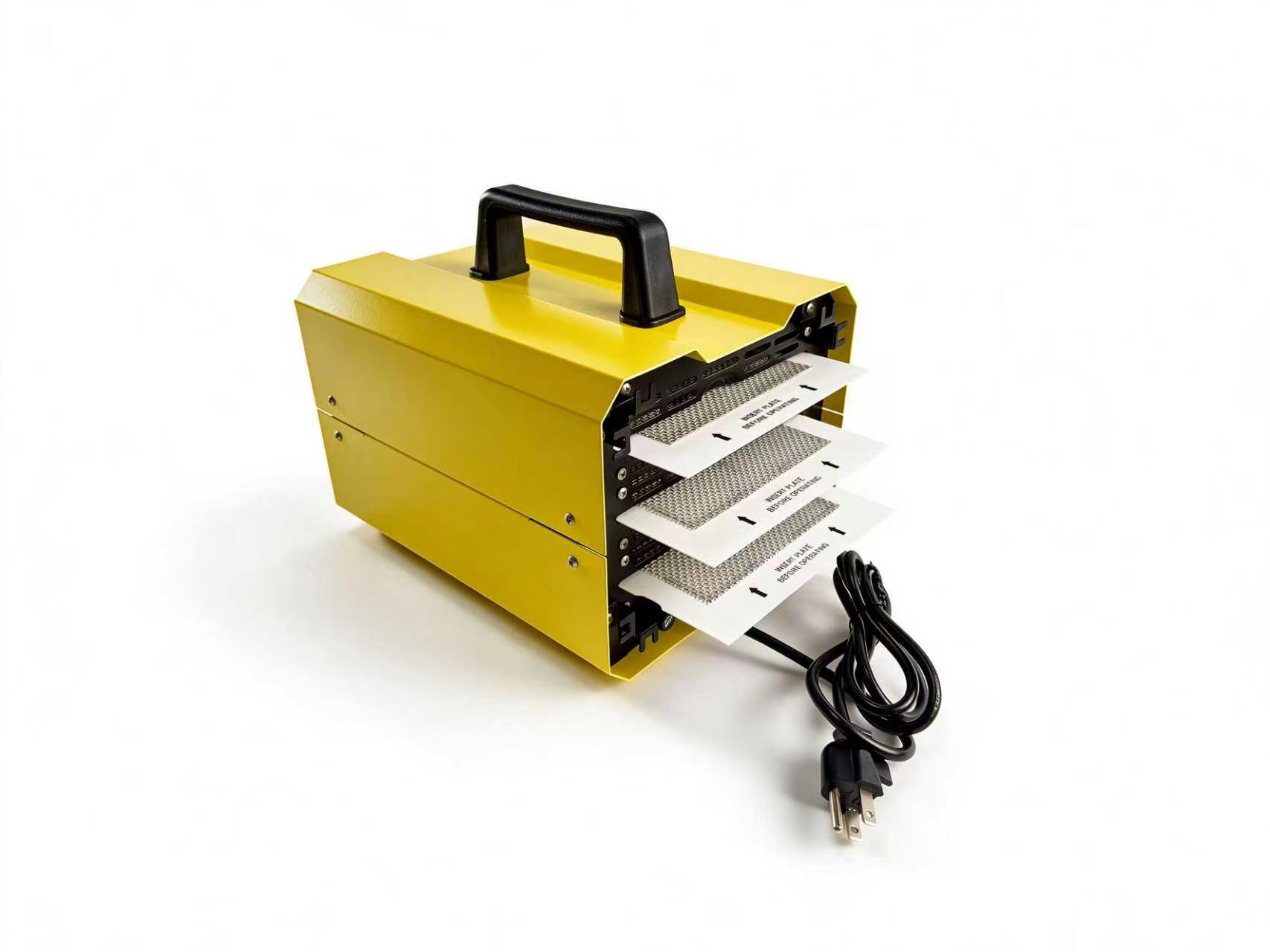
Most of the obvious differences show up in the parts you never see. Generic portable ozone units often source the corona discharge cell from whatever batch is cheapest that month, so the gap between electrodes, the ceramic coating thickness, and even the mesh density can shift noticeably from one production run to the next. An OEM unit, by contrast, usually keeps those tolerances tight because the company has to stand behind the rated output. In practice, that means the generic machine may still produce ozone, but it can drift hotter or weaker than the dial suggests, and it tends to degrade faster once dust and humidity start creeping into the housing.
Another change is material compatibility and basic fail-safe behavior. Ozone is aggressive, especially in a small enclosed space, and it will chew through cheap gaskets, thin plastic clips, and unprotected wiring over time. OEM designs typically swap in silicone seals, ozone-rated tubing, and a more conservative duty cycle on the power supply so the unit doesn’t cook itself. Many generic versions skip that step and simply reuse a shell that looks identical, which is why some of them develop hairline cracks around the outlet after a few months or start emitting a sharp electrical smell.
Finally, there is the control side. A calibrated unit will adjust the fan speed and ozone plate voltage together, so the advertised milligram-per-hour figure actually means something in a closed room. Generic controllers often run the plate at full power while the fan runs at one fixed speed, regardless of what the display says. That mismatch is hard to spot without a sensor, but it changes how long you need to run the machine and how safe the re-entry time really is. OEM units also tend to have replacement plates available, while generic ones are treated as disposable once the output drops.
Five Features That Separate a Reliable Portable Ozone Machine from the Rest
A dependable portable ozone generator rarely relies on a simple on/off switch. Instead, it gives you a way to fine-tune ozone output for the actual room size, often through a rotary dial or stepped settings. That adjustability matters more than most people expect—too little ozone leaves odors untouched, while too much can linger long after the treatment. The best units also include a real-time sensor readout or at least a clear indicator of the selected concentration, so you are not guessing whether the space has been properly treated.
Build quality is another tell. Reliable machines use ozone-resistant seals, tubing, and internal chambers made from materials like stainless steel or PTFE-lined components. Cheaper models often hide ordinary rubber and plastic parts that degrade quickly under continuous ozone exposure, eventually producing a sour smell or cracking after a few dozen cycles. The fan and transformer in a solid portable unit are also designed for extended run times without overheating, which keeps output steady instead of fading halfway through a job.
Finally, safety interlocks separate serious equipment from the rest. A trustworthy portable ozone machine will not start unless a built-in delay is set, giving you time to leave the room. Many also include a motion detector or door sensor that pauses operation if someone enters. After the cycle finishes, the unit either waits for ozone to break down or warns you how long to ventilate before returning. Run-time counters and maintenance reminders are common on reliable models, helping you track when the ozone plate or filter needs replacement rather than discovering a loss of performance mid-treatment.
From Hotel Rooms to Gym Bags: Everyday Scenarios Where Ozone Shines
Hotel rooms are notorious for holding onto odors long after the guest has gone. Even with fresh linens and a wiped-down bathroom, the carpet fibers, curtains, and mattress can keep traces of smoke, sweat, or wet dog. Running an ozone generator in a sealed room for an hour or two gets into those porous surfaces and breaks down the molecules responsible for the smell, rather than just covering them up. The result is a neutral, clean backdrop that doesn't smell like a perfume counter.
The same principle works on a smaller scale with gym bags. A few damp shirts or a pair of running shoes can turn a duffel into a breeding ground for bacteria and mildew. Ozone treatment inside a closed bag or a compact box neutralizes the odor at its source, so you don't have to wash the bag after every workout. It's especially handy for people who keep a packed bag in the car or at the office, where airing things out isn't always an option.
Addressing the Safety Elephant in the Room for Portable Ozone Generators
The biggest issue with portable ozone generators isn't whether they work—it's that most buyers never learn what ozone actually does to lung tissue. These devices are often marketed for use in bedrooms, cars, or small offices, yet a confined space is exactly where ozone concentration can climb past safe limits within minutes. Unlike a filter that traps particles, ozone chemically reacts with whatever it touches, including the lining of your airways.
If you decide to use one anyway, the rule of thumb is simple but strict: run the unit only when the space is empty, then air it out thoroughly before re-entering. For a small room, that might mean waiting several hours, not just a few minutes. Cheap models without an adjustable output or timer make this harder to control, and that's where accidental overexposure happens.
Look for independently tested units that carry a recognized certification for ozone emissions—California's limit of 0.05 parts per million is a good benchmark. Be wary of vague terms like "activated oxygen" or "nature's purifier" on the label; these often hide the fact that the machine produces ozone at levels far above what any public health agency would consider safe for occupied spaces.
A Practical Checklist for Picking an OEM Portable Ozone Machine That Lasts
I've seen too many portable ozone units fail within six months because buyers picked the cheapest option without opening the case. Before you commit to an OEM model, ask for the actual discharge chamber design. Ceramic plates and stainless steel electrodes tend to hold up far better than thin aluminum or wire-mesh setups, especially if the machine will run for hours at a stretch in humid environments. Also check whether the power supply is potted or otherwise sealed; exposed boards corrode quickly and turn a bargain into a paperweight.
Longevity isn't just about materials, it's about thermal management. Portable ozone machines produce real heat, and a unit with no fan or undersized vents will degrade its own output gradually. Ask the factory what the continuous-duty rating is and what ambient temperature they test for. If they can't answer that, move on. The same goes for replacement parts: a cheap machine with a proprietary fitting or a glued case means you can't swap a worn O-ring or clean the feed gas filter. Look for modular construction, common tubing sizes, and a maker that is willing to sell you spare electrode assemblies without arguing.
Finally, test the machine before you sign off on a bulk order. Run it at the claimed output for at least a couple of hours with an ozone meter nearby. The actual concentration should be within 10-15% of the spec sheet, not half. Listen for arcing or buzzing from the high-voltage section, and check the housing temperature with the back of your hand. If the shell is too hot to touch after an hour, that's a warning sign for internal components. A machine that lasts is usually a little heavier and a little louder than the flimsy ones because it has real metal, real airflow, and room to cool, not a thin plastic shell wrapped around a fragile core.
FAQ
A portable unit earns its keep by slipping into places a larger machine can't. You can toss it in a gym bag, run it inside a car after a rainy week, or place it in a hotel room that smells musty. Because it's lightweight and often battery-powered, you're not tied to an outlet, which means freshening a closet or a pet corner becomes a five-minute task rather than a whole afternoon project.
The core technology is the same, but an OEM unit is built by a manufacturer that lets another company put its own name on the housing. This matters because the buyer can often request small changes, like a different timer range, a specific cord length, or a custom color. For shoppers, that can mean finding a machine that matches their exact use case instead of settling for whatever the big retail brands decided to include.
Yes, and they're worth taking seriously. Ozone is a strong oxidizer, so you should never sit in the same room while the machine is running. Let it finish its cycle, then air the space out for at least 30 minutes before anyone enters. Keep it away from pets, plants, and anything with delicate rubber or fabric, and don't use it continuously for hours on end just because the device is small.
It can, as long as the output matches the space. A tiny unit rated for 50 square feet will struggle in a large van, but in a standard sedan or a bathroom it can break down odors at the source. The key is using the right run time: 20 to 40 minutes for a car with lingering smoke or food smells, then a full airing out. It won't deep-clean surfaces, but it does eliminate the odor molecules rather than masking them.
A built-in timer is non-negotiable, since you'll want to set it and leave the room before the ozone builds up. Adjustable output helps when you only need a gentle refresh instead of a full shock treatment. A rechargeable battery or USB-C port makes it truly portable, and a low-noise fan matters if you're using it near a hallway or in an office after hours. Solid housing that doesn't crack when tossed in a bag is also worth checking.
Less often than most people think. For maintenance, a 15-minute cycle once a week in a car or small closet is usually plenty. If you're dealing with a strong odor like mildew or pet urine, do one longer treatment, air the space out, and then wait a few days before repeating. Overusing ozone can dry out rubber seals and fade certain fabrics, so treat it like a reset button rather than a daily air freshener.
Not really. Most portable models just need the ozone plate or ceramic plate wiped down with a dry cloth every month or so, depending on humidity. If there's a removable filter, rinse it and let it dry completely before putting it back. Avoid using water or cleaning sprays near the electrical parts, and store the unit in a cool, dry place when not in use. That's about all the upkeep required.
For a business, OEM gives control that retail products don't. A car detailing shop might want its logo on the unit and a shorter timer preset for quick turnarounds. A cleaning company could order machines in a specific color to match its vans. The margins are usually better because you're buying directly from the source, and you can build a product line around your own warranty and support instead of competing on a shelf with identical big-box units.
Conclusion
The growing presence of portable ozone machines in homes isn't just a fad tied to wellness trends. People are discovering that a unit built by an OEM manufacturer often delivers far more consistent output than generic white-label versions. Where a generic device may drift in ozone concentration or burn out its plate within months, an OEM unit typically comes with tighter quality control around the corona discharge cell, the fan speed calibration, and the timer circuitry. That matters because ozone's usefulness depends entirely on predictable dosage. A machine that overproduces turns a room into an irritation risk; one that underproduces does nothing. Reliable models stand out through a handful of practical details: a ceramic or quartz plate that resists corrosion, an adjustable timer that refuses to run indefinitely, a fan that pushes ozone into the air without overheating, a housing that doesn't crack after repeated travel, and a control interface simple enough for a tired traveler to use at midnight.
Real-world use cases explain the popularity spike. Hotel rooms, rental cars, gym bags, closets, and even shoes benefit from a short ozone cycle that neutralizes odors at the molecular level rather than masking them. But safety is the elephant that cannot be ignored. No portable ozone generator should be marketed as a device to use while people or pets are present. The best ones include delayed start functions, clear warnings, and automatic shutoff, allowing a room to air out before re-entry. When choosing an OEM portable ozone machine, look beyond the wattage claim. Check plate material, replaceable parts, cord length, and whether the manufacturer provides actual output data instead of vague marketing numbers. A unit designed for repeated cycles should not feel disposable. If the housing feels flimsy or the timer dial turns with no resistance, walk away. A good device earns its place in your travel kit by being boringly reliable and easy to forget until the next odor problem appears.
Contact Us
Contact Person: Paul Luo
Email: [email protected]
Tel/WhatsApp: 0086-19966314501
Website: https://www.lufutatech.com