

Small Magnet Wholesale Sourcing Made Simple for Buyers
2026-09-03
Sourcing small magnets in bulk often means juggling inconsistent specs, hidden minimums, and slow lead times—until you find a supplier that actually understands buyer pain points. DAWA cuts through that noise by turning wholesale magnet procurement into a simple, transparent process. This guide lays out what to look for and how to avoid the usual headaches, so your next order goes smoothly.
Where Small Magnet Orders Go Wrong—and How to Steer Clear
When you place a small order for custom magnets, the first thing that usually slips is dimensional tolerance. Suppliers may treat low-volume jobs as fill-in work, so you get parts that are slightly under or over size. If the magnets must fit into a pocket or align with a sensor, those fractions of a millimeter stack up fast. Another frequent failure point is plating: thin or uneven nickel-copper-nickel layers flake off early, and no one notices until the magnets are already glued into an assembly.
Material grade is another quiet killer. A supplier might quote N35 when they actually ship N33 or a remelted blend, and while the data sheet looks fine, the pull force drops noticeably. For small orders, you rarely have the leverage to demand full lot certificates, so you end up discovering the difference only when a prototype fails or a customer returns a unit. Also watch for inconsistent magnetization direction—especially with axially magnetized discs or blocks. A few degrees of tilt changes the field pattern enough to mess up a Hall sensor reading.
How to steer clear. Ask for a pre-production sample from the actual batch, not a stock photo or a "similar" piece. Request measured values for key dimensions, plating thickness, and surface gauss at a defined air gap. If the supplier hesitates or says it's not possible for small quantities, move on. Build a short list of magnet vendors who explicitly handle low-volume custom work and don't treat it as an afterthought. It costs a little more per piece, but it's far cheaper than tearing down a failed assembly or losing a client over a magnet that should have been right the first time.
Neodymium vs. Ferrite: Choosing the Right Small Magnet for Your Product
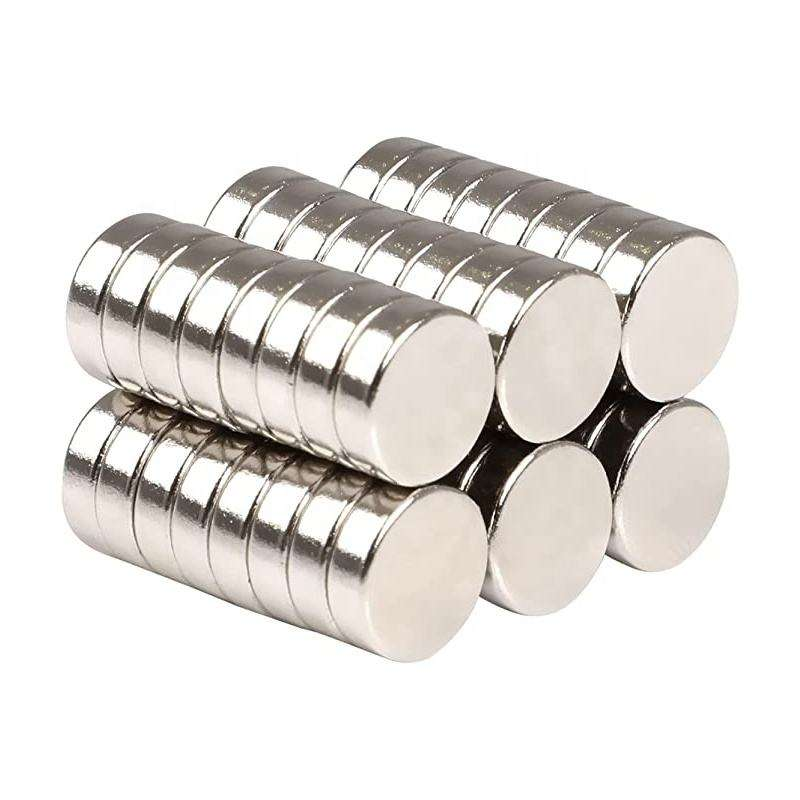
When you're picking a small magnet for a product, the first thing to consider is how much pull you actually need. Neodymium magnets punch far above their weight—they hold tight even in tiny sizes, which makes them ideal for compact electronics, clasps, or medical devices where space is at a premium. Ferrite magnets, on the other hand, are the workhorses of the budget world. They're weaker per cubic inch, but they cost pennies, resist corrosion naturally, and can handle heat without losing their grip as quickly.
Temperature and environment often tip the scale. Neodymium loses strength fast above 80°C unless you buy a high-temp grade, and it rusts if the nickel coating gets scratched. Ferrite laughs at moisture and keeps working up to 250°C, though it may crack under physical shock. So if your product lives outdoors, near salt water, or next to a motor that runs hot, ferrite might be the safer bet—even if you need a slightly larger magnet to match the same force.
Finally, think about the cost per unit of holding force. A tiny neodymium disc can replace a much larger ferrite block, saving you enclosure space and shipping weight, but the raw material price is higher. For high-volume toys, refrigerator magnets, or simple sensors where a gentle pull is enough, ferrite wins on price and durability. For wearable tech, hidden closures, or miniaturized actuators, neodymium's compact power justifies the extra expense. Test both with your actual housing—a magnet that's perfect on paper can feel completely wrong once it's inside a plastic shell.
Custom Small Magnets on a Budget: Getting Unique Shapes Without the Markup
Skip the custom mold fees by building your own shaped magnets from off-the-shelf parts. Grab a pack of small neodymium discs or squares, then cut a thin sheet of galvanized steel or acrylic into whatever silhouette you need. A drop of epoxy or super glue holds the magnet to the back, and you've got a fridge magnet that looks factory-made but cost you pocket change.
If you want a thicker, more finished look, try embedding the magnet in a two-part resin or air-dry clay. Press a small magnet into the back of a silicone mold, pour in your material, and pop it out once cured. Sand the edges, hit it with spray paint, and nobody will guess it started as a plain disc.
For batch jobs, find a local laser cutter or sign shop that will cut acrylic or wood shapes for a few dollars per sheet. You supply the magnets and glue, they handle the precision cutting. You end up with dozens of custom-shaped magnets for less than what a single custom-molded sample would cost from a factory.
Vetting Wholesale Magnet Suppliers: A Practical Checklist That Works
Start by demanding the magnet’s actual grade and coating spec—N35, N42, or N52 with NiCuNi, zinc, or epoxy—not a vague “strong rare earth” label. Ask for coercivity and maximum operating temperature data that match your application, then have them confirm batch-level pull force and dimensional tolerance reports before quoting. A supplier who will not share these numbers is usually reselling mixed-grade stock with inconsistent plating thickness.
Next, test how they respond to a tough technical question. Ask about edge chipping on small sintered parts, salt spray hours for the coating, or demagnetization curves at 80°C. If they answer vaguely or take more than two business days without a clear follow-up, that delay will repeat when a shipment fails. Place a small trial order and measure a random sample yourself—tolerance drift and weak spots show up fast when you cut open a magnet or pull-test ten pieces from different boxes.
Finally, pin down logistics and post-sale accountability. Confirm whether they stock locally or drop-ship from an unnamed factory, because that changes lead time and who owns a warranty claim. Ask how magnets are packed to prevent chipping during transit, and get a written return or replacement policy for a batch that falls outside agreed specs. No checklist is complete until the supplier proves they can handle a failed batch without turning it into a month-long email thread.
Shipping Small Magnets Without Surprises: Packing and Freight Realities
Small neodymium magnets punch far above their weight, and that's exactly what makes them a headache in transit. A palm-sized stack can generate a field strong enough to scramble compass readings on an aircraft if it isn't packed right. The first reality check is that many carriers treat magnets as "magnetized material" under dangerous goods rules, even when they're tiny. You'll need to know the milligauss reading at a set distance from the package surface — often 2.1 meters for air freight — and keep it under the carrier's threshold, usually around 0.00525 gauss.
Packing isn't just about cushioning against impacts; it's about positioning magnets so their fields cancel. Alternating north and south poles and adding a steel "keeper" plate across the faces can drop the external field dramatically. Cheap foam and a cardboard box won't cut it, no matter how small the magnets are. Instead, use a rigid inner container lined with steel sheet or a dedicated shielding box, then pack that inside an outer carton with at least 50 mm of non-magnetic filler on all sides.
Freight reality bites hardest at the counter. Ground shipping is often more forgiving, but if the magnets go by air, you'll likely need a "not restricted" declaration from a qualified packer or test report showing compliance with IATA packing instruction 953. Some couriers refuse magnets outright, while others accept them only under a specific service. Always attach a magnetized material label if required, and keep the package away from other sensitive cargo like pacemakers or credit cards in the same consignment.
Your First Bulk Magnet Order: What to Include and What to Skip
When you're placing your first bulk magnet order, the temptation is to spec every magnet like it's going to the moon. That drives cost up fast. Instead, nail down the three things that actually change performance: the pull force you need, the max temperature it'll see, and the coating if it's used outdoors or in contact with moisture. Skip chasing ultra-tight dimensional tolerances unless your assembly genuinely can't handle a half-millimeter wiggle. Most standard tolerances work fine and keep the quote reasonable.
Also, send a photo or short video of the magnet in its actual application, not just a CAD file. Suppliers often spot mismatched grades or unrealistic specs that a drawing won't reveal. Skip exotic plating when standard nickel does the job, and avoid ordering tiny 'test' batches from five different factories. You'll waste time comparing samples that all claim the same grade. Instead, pick one or two vendors and ask for a batch consistency sheet; that tells you more than a pile of individual magnet test reports.
FAQ
You will usually find neodymium, ferrite, and samarium cobalt options. Neodymium dominates because of its strength-to-size ratio, but ferrite is cheaper for basic uses like fridge magnets or simple closures.
Ask for a mill certificate and request a small trial batch. Reputable suppliers will share pull-force data and coating thickness details without hesitation. If they dodge these requests, keep looking.
It depends on the size and grade, but many factories accept 1,000 to 5,000 pieces for standard small magnets. Custom runs often start around 10,000, though some suppliers will do 5,000 with a surcharge.
Yes, many suppliers use shared molds for common shapes like discs, blocks, and rings. For fully custom profiles, expect a tooling charge, but it is often waived if your order volume is high enough to make it worth their while.
Request clear photos of the actual production line, not just stock images. Ask about their testing process and how they handle magnetization consistency. Also confirm who is responsible if a batch arrives with weak spots or cracked plating.
Plastic blister trays or magnetic shielding boxes for strong grades. If you are shipping by sea, moisture-resistant packaging matters more than people expect, because salt air can ruin coatings before the goods even reach you.
Most established suppliers offer paid samples. It is worth paying for air shipping so you can test pull force, coating adhesion, and dimensional accuracy yourself instead of trusting a spec sheet.
Look for RoHS and REACH compliance at minimum. If you are in the US and the magnets might end up in children's products, check for CPSIA as well. Ask for actual certificates, not just a supplier's word.
Conclusion
Buying small magnets in bulk often starts with excitement and ends with a costly lesson: a box of cracked neodymium discs, mismatched pull forces, or a shipment that costs more to clear customs than the magnets themselves. The first fix is to remember that small magnet sourcing is not about finding the cheapest listing—it’s about matching the exact material, grade, and tolerance to your product’s real-world use. Neodymium gives you strong pull in a tiny size but needs a protective coating and careful handling; ferrite is cheaper and corrosion-resistant but far weaker. If your design calls for a non-standard shape, don’t assume custom tooling is out of reach—many wholesalers already carry common custom molds, and ordering a minor tweak from an existing die can cost little more than off-the-shelf stock. Before you send a single dollar, vet the supplier with a simple checklist: ask for a recent third-party material report, confirm their plating thickness and coating type, request photos of actual packing methods, and get a written answer on how they handle chipped edges or short shipments.
The second half of the journey is where most buyers bleed money: freight and first-order missteps. Small neodymium magnets are surprisingly heavy for their size, and air freight uses volumetric weight, so a shoebox-sized parcel can trigger triple the rate you planned. Always ask for sea freight or consolidated land shipping if your timeline allows, and insist on plastic compartment boxes with foam dividers instead of loose magnets in a poly bag—loose magnets attract each other violently in transit and shatter. For your first bulk order, skip the temptation to order every possible grade and size. Pick one core spec, order a slightly larger quantity of that single spec than you think you need, and include a clear written tolerance for dimensions and pull force in your purchase order. This keeps the supplier focused, reduces inspection costs, and gives you a reference batch to test in real products before scaling up. In short, small magnet sourcing becomes simple when you treat it as an engineering decision with a shipping plan—not a price hunt.
Contact Us
Contact Person: Kelvin Lo
Email: [email protected]
Tel/WhatsApp: 0769-88561131
Website: https://dawamagnetic.com/