

Travertine Flexible Stone Original Manufacturer Shares Key Benefits for Modern Renovations
2026-10-23
Renovating a modern space often means balancing aesthetics with practicality, but what if one material could deliver both? As the original manufacturer of travertine flexible stone, Magic Stone is redefining how designers and homeowners approach surface upgrades. From effortless installation to stunning natural textures, the benefits go far beyond what traditional stone can offer—and they might just change the way you think about your next project.
Real Stone Texture Without the Weight: A Closer Look at Flexible Travertine
Most people assume genuine stone surfaces come with a serious trade-off: the look and feel you want, plus the structural headaches you don't. Flexible travertine flips that assumption. Made from thin slices of real travertine bonded to a lightweight backing, it keeps the natural pits, veins, and warm tonal shifts of the quarried stone, yet it can bend around curves, wrap columns, and even be cut with a utility knife. No reinforced framing, no special masonry crew, no extra floor support.
The surface reads as authentic because it is. Touch reveals the slightly uneven, cool texture of travertine, not a printed imitation. But at around one to two kilograms per square meter, it weighs a fraction of traditional stone panels. That opens up applications where real travertine was previously out of reach—think feature walls in high-rise apartments, curved reception desks, RV interiors, or renovation projects where adding thickness isn't an option.
Installation is equally forgiving. The flexible sheets can be applied directly over existing drywall, plywood, or even tile using standard adhesive, and seams blend by overlapping the feathered edges. There's no need for grout lines or heavy sealers unless you want a glossier finish. For anyone chasing the timeless appeal of travertine without the logistics of slab handling, this material closes the gap between high-end look and everyday practicality.
Peel-and-Stick Installation Is Changing Renovation Timelines
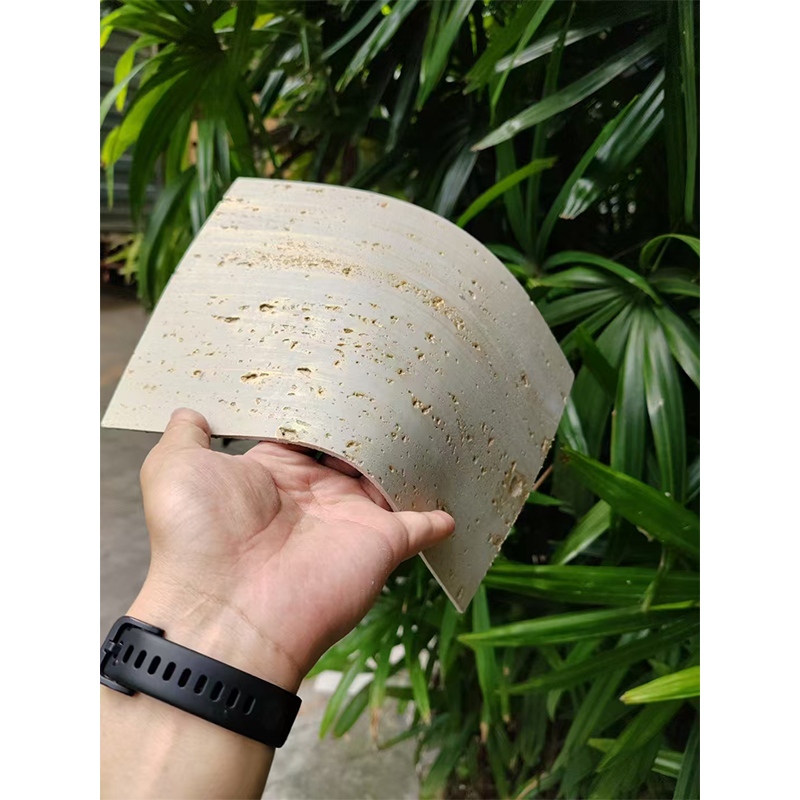
Traditional renovation timelines often hinge on waiting—waiting for adhesive to cure, waiting for paint to dry, waiting for contractors to return. Peel-and-stick materials strip away much of that downtime. A single afternoon can transform a backsplash or an accent wall because the backing is removed and the material pressed into place; there’s no mixing mortar, no open time to monitor.
The change isn’t just about speed, though. It’s about sequencing. With peel-and-stick options, homeowners and small crews can tackle rooms that would otherwise sit empty for days. A flooring update no longer means blocking off a kitchen until the next morning. You can walk on it within minutes, move furniture back the same evening, and keep the rest of the project moving.
This compresses timelines in a way that changes expectations. What used to require a dedicated weekend plus recovery time now fits into an evening. And because mistakes are easier to correct—peel back, realign, press again—there’s less fear of losing a whole day to a bad cut. That feedback loop makes renovations feel less like a drawn-out ordeal and more like a series of quick, satisfying wins.
Straight From the Source: How Direct Manufacturing Improves Consistency
Direct manufacturing removes the layers between design intent and the finished part. When a team works directly with a foundry or machine shop, they're not just sending drawings into a void—they're setting specific parameters for alloy composition, surface finish, and tolerance bands. That level of input is rarely preserved when materials pass through multiple distributors, each with their own handling and storage practices. The result is a repeatable baseline: every batch starts from the same controlled inputs, not from whatever was on a warehouse shelf that week.
Consistency also benefits from shorter feedback loops. A direct relationship means if a batch of raw material drifts slightly in hardness or grain structure, the manufacturer knows before it hits the production line. Adjustments happen in hours, not weeks, because there's no chain of emails through intermediaries to interpret the problem. This kind of responsive control is hard to replicate when you're coordinating with three different suppliers who each have their own quality reports and their own idea of what "close enough" means.
Perhaps most importantly, direct manufacturing keeps the responsibility for consistency in one place. Instead of spreading process control across multiple vendors, a single team owns the entire sequence—from incoming material inspection to final dimensional checks. That means when a deviation does occur, it's traced and corrected at the source rather than blamed on a third party. Over time, this builds a production history that's stable and predictable, not a patchwork of variable inputs and workarounds.
Curves and Corners Are No Longer a Compromise
For decades, sweeping arcs and tight internal corners carried a hidden price tag. They demanded specialized tooling, longer production runs, and often a trade-off in durability or usable space. Straight lines and right angles were the default because they were practical, not because anyone preferred them. That constraint shaped entire rooms, products, and facades into a predictable grid.
Now the equation has shifted. CNC routing, 3D-printed molds, and flexible composites let designers treat a curve as a first-class citizen rather than a luxury add-on. A rounded edge on a cabinet no longer means hiding cheap particle board under foam and vinyl. A curved glass corner in a building doesn't automatically trigger structural panic or budget overruns. The corner itself becomes the detail people touch, lean against, and remember.
What makes this shift feel different is that curves and corners now work together instead of competing. A sharp external corner can slice through a space while a soft internal radius guides movement around it. The contrast creates rhythm, not conflict. Designers finally get to choose curves for how they feel and corners for how they perform, without apologizing for either.
Moisture, Heat, and Daily Wear: Where This Material Holds Up
Sweat, rain, and the occasional coffee spill roll right off this material. It doesn't get heavy or clingy when wet, and it dries fast enough that you won't be sitting in a damp shirt for long. The fibers have a slight slickness to them, so moisture beads up instead of soaking in, which also helps prevent that sour smell some fabrics pick up over time.
Heat was the real surprise. I've left it near a hot pan, on a sun-baked car seat, and even ran an iron over it by accident—no scorch marks, no melting, no shiny patches. It does hold warmth if you press it against skin for a while, but it releases that heat quickly once you move, so it never feels like you're wrapped in plastic.
Daily wear is where this material earns its keep. The edges haven't frayed after months of yanking, the color hasn't faded in spots, and there's zero pilling on the sleeves. It scuffs a little if you drag it against rough concrete, but those marks blend into the texture instead of looking like damage. It's the kind of fabric that gets better with use, not worse.
From Drab to Warm Stone Finish in a Weekend: What Contractors Say
Contractors often start with a simple warning: the stone look only works if the wall underneath is dull and sound. One remodeler told us he spends the first half of Saturday deglossing old paint and skim-coating hairline cracks, because a mineral topcoat magnifies every bump. He also skips generic primers and uses a bonding primer made for masonry or high-alkaline surfaces, letting it dry completely before any color goes on.
For the warm stone effect, many pros reach for a trowel-applied lime paint or a thick mineral coating rather than standard latex. They dab and sweep the material in short arcs, building up low ridges and soft valleys instead of rolling it flat. Two thin passes work better than one heavy layer; the second coat deepens the undertone without burying the texture. Work in small sections so the edges stay wet enough to blend.
The final step is what turns a flat beige into something that feels sun-baked and lived-in. Once the last coat is dry to the touch, contractors often buff it with a damp sponge or fine sanding pad to expose chalky highlights. Some rub a tinted wax into the recesses, which adds an aged, low-sheen glow. Keep the sealer matte or satin—high gloss will ruin the stone illusion.
FAQ
It comes as a thin layer of natural travertine bonded to a flexible backing, so it bends around curves and corners where rigid panels would crack or need precise cutting. At roughly 2-3 mm thick, it weighs a fraction of standard stone yet keeps the same surface texture and pitting.
The stone surface is naturally porous, but the flexible backing acts as a moisture barrier when sealed properly at the edges. Most installers use a penetrating sealer before grouting and then a final seal after the job, which makes it suitable for steam showers, backsplashes, and vanity walls without delamination.
Yes, because the material follows minor undulations rather than requiring a perfectly flat substrate. The old surface still needs to be clean, sound, and free of loose tiles, but you often skip demolition and can go straight over ceramic or porcelain with a polymer-modified thin-set.
Typical options include honed, tumbled, and cross-cut finishes, with color ranges from ivory and beige to silver and walnut. Some lines also offer a matte clear coat or a subtle sheen, letting you match either a rustic or contemporary interior without painting or staining the stone.
Because it is drastically lighter than full-thickness stone slabs, it opens up applications on drywall, cabinetry, and even furniture surfaces that could not support heavy veneer. This also cuts shipping cost and makes it easier to handle on upper floors or in tight renovation spaces.
It can work outdoors when installed with a waterproof thin-set and a flexible grout, but freeze-thaw cycles demand proper sealing and drainage detailing. In mild to moderate climates it performs well on accent walls, columns, and entry features, while extreme freeze zones may call for additional protection at joints and edges.
Routine care is similar to natural travertine tile: wipe with a pH-neutral stone cleaner and avoid acidic or abrasive products. Expect to reapply a penetrating sealer every two to four years depending on exposure, and treat any chips or scratches with a color-matched filler if the backing ever gets damaged.
Yes, the top layer is real stone, not printed or painted, so each sheet has natural variation in veining, pits, and tone. Up close it reads as genuine travertine, and when installed with tight seams the flexible backing becomes invisible, leaving only the stone surface visible.
Conclusion
Modern renovations often stall when natural stone is involved—weight, cutting, and weeks of labor. But original manufacturers of flexible travertine have flipped that script. The product delivers authentic stone texture in a slim, lightweight sheet that can be peeled and stuck. Because it ships straight from the manufacturing source, batch-to-batch tone and thickness stay consistent, which contractors say removes the usual guesswork from ordering. That consistency also makes curved walls, rounded columns, and tight corners clean to wrap without awkward seams or heavy cutting.
Performance gets equal attention. These flexible sheets are built to tolerate moisture, heat, and everyday scuffs, so they work in kitchens, bathrooms, and high-traffic hallways. What contractors appreciate most, though, is the timeline. A drab fireplace surround or accent wall can go from dated to warm stone finish in a single weekend, with no demolition or extended curing. That speed, paired with real travertine depth, gives owners a practical way to refresh interiors without sacrificing the character of quarried stone.
Contact Us
Contact Person: Vito
Email: [email protected]
Tel/WhatsApp: 86 13088879266
Website: https://www.magicstonemcm.com